Resins Explained: Common Types, Properties, and Industrial Uses
Author
Date Published
Reading Time

Why do resins matter across so many industries?
Resins sit behind countless finished products, yet many material discussions stop at broad labels. That creates confusion when performance, compliance, and sourcing choices need closer comparison.
In practical terms, resins influence strength, flexibility, heat resistance, adhesion, chemical durability, and processing behavior. Those traits affect product life, production cost, and even logistics planning.
For market tracking, resins also matter because feedstock shifts, environmental rules, and regional capacity changes often move prices quickly. Understanding the material basics makes those signals easier to read.
What exactly is a resin, and how is it usually classified?
A resin is a polymer-based material used as a core ingredient in plastics, coatings, adhesives, composites, sealants, and electronic components. Some resins are natural, but industrial use is mostly synthetic.
The simplest way to classify resins is by behavior during processing. Thermoplastics can be melted and reshaped. Thermosets cure into a fixed structure and cannot be remelted.
That difference matters more than it seems. It affects recycling options, tooling methods, repairability, and whether the final application needs flexibility or permanent structural stability.
The most common resin families
Several resin types appear repeatedly in industrial searches and sourcing lists. Each one solves a different performance problem.
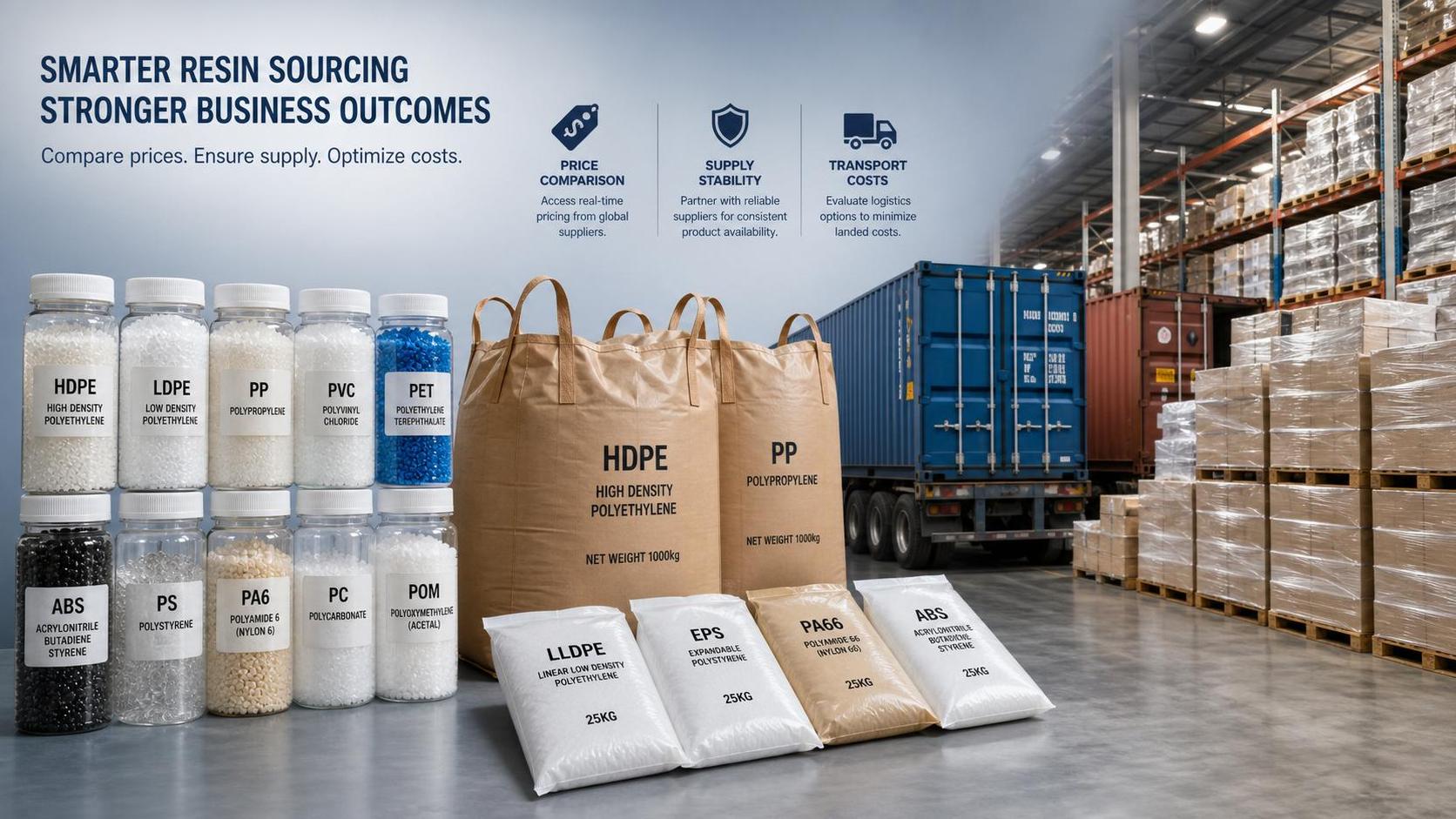
- Polyethylene and polypropylene: widely used in packaging, containers, films, and consumer goods.
- PVC: common in pipes, cable insulation, profiles, and construction products.
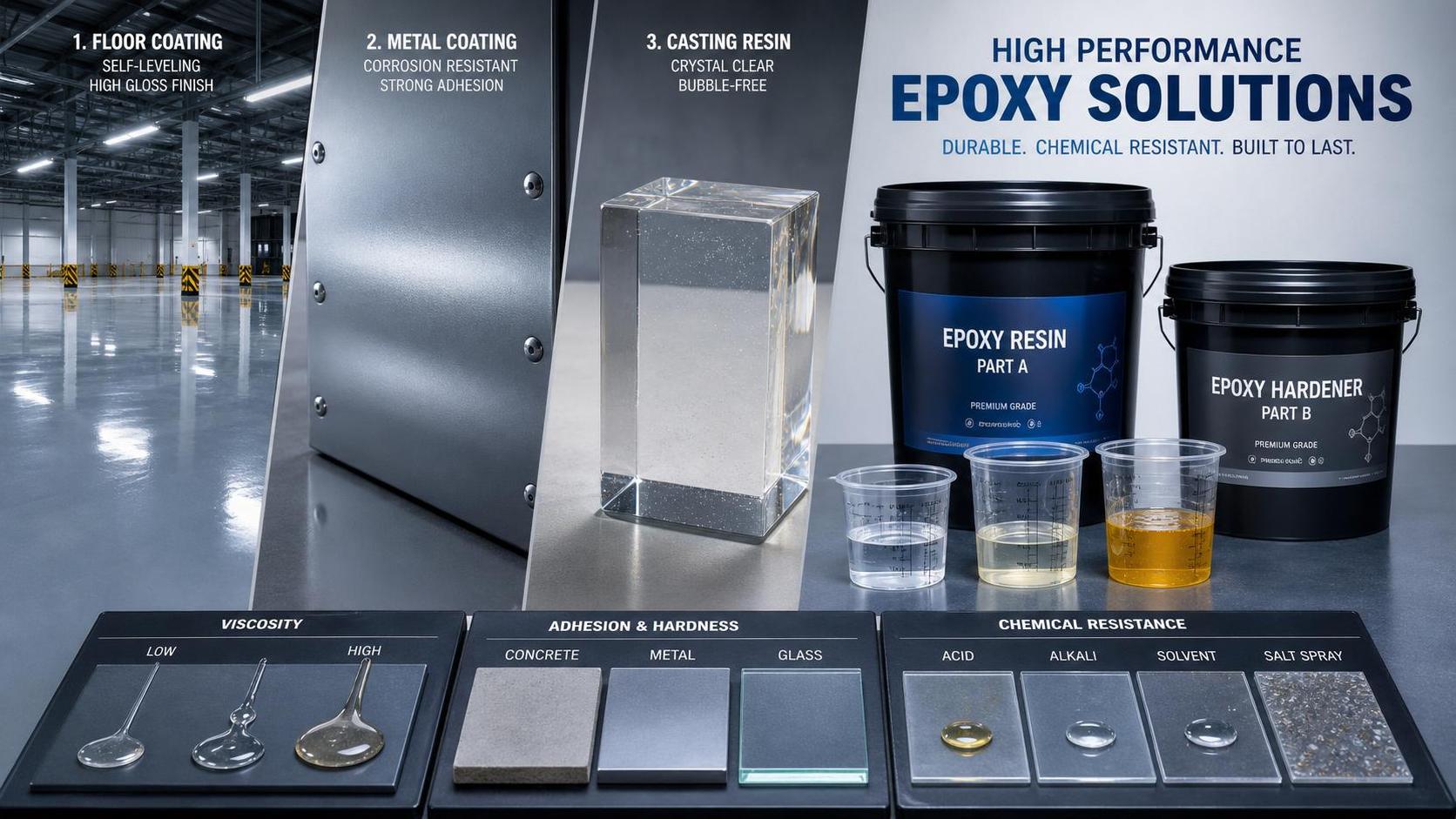
- Epoxy resin: valued for adhesion, electrical insulation, and chemical resistance.
- Polyester resin: often used in composites, panels, and fiberglass parts.
- Phenolic and urea resins: used in laminates, molded components, and wood adhesives.
How do common resin types differ in real applications?
Material data sheets help, but application logic is usually clearer when properties are linked to use. The table below gives a quick comparison.
In short, no resin is universally better. The right choice depends on which property matters most after the product leaves the factory floor.
Which resin properties should be checked before comparing offers?
A low headline price can be misleading if the resin does not match the application. More useful comparisons start with a few technical checkpoints.
- Mechanical needs: tensile strength, impact resistance, rigidity, and dimensional stability.
- Thermal limits: service temperature, heat distortion, and curing conditions.
- Chemical exposure: solvents, moisture, oils, acids, or UV contact.
- Processing fit: molding, extrusion, lamination, casting, or coating method.
- Compliance signals: REACH, RoHS, food-contact rules, or fire standards where relevant.
More experienced sourcing reviews also check lot consistency, shelf life, packaging format, and regional supply continuity. These points often decide whether a resin works smoothly at scale.
Where do buyers and researchers misread resin selection?
One common mistake is treating a resin family as a single product. In reality, grades within the same family can vary widely in viscosity, fillers, additives, and performance.
Another issue is focusing only on laboratory properties. Actual results depend on curing conditions, mold design, additives, and downstream fabrication settings.
It is also easy to overlook market-side risks. Resin supply can tighten because of feedstock volatility, plant maintenance, freight disruption, or regulatory shifts in specific regions.
That is why resin analysis often works best when product knowledge is paired with market tracking. Material suitability and supply stability should be reviewed together.
How should the next comparison step be approached?
A practical next step is to write down the application environment before reviewing any resin quote. That includes load, temperature, exposure, process method, and required certifications.
Then compare two or three resin options against the same decision points. This usually makes tradeoffs around cost, durability, and processing much easier to see.
For ongoing research, it also helps to follow resin price movements, policy changes, and supply chain updates. Those signals often explain why one material becomes easier or harder to source.
Resins are not just raw materials. They are decision variables that connect product performance, manufacturing efficiency, compliance, and market timing. Better comparisons start with that broader view.
Technical Specifications
- How to verify Global Industrial Insights sourcing informationAuthor :Industrial Machinery Editorial Team
- Which thermoplastic elastomers stay flexible at low temperatures?Author :Polymers & Rubber Editorial Team
- Which Shore hardness suits soft touch TPE for handheld grips?Author :Polymers & Rubber Editorial Team
Expert Insights

Chief Security Architect
Dr. Thorne specializes in the intersection of structural engineering and digital resilience. He has advised three G7 governments on industrial infrastructure security.
Core Sector // 01
Security & Safety
- How do different types of resins compare in UV resistance?Author :Chemical Industry Editorial Team

- Which resin types suit composite parts exposed to high temperatures?Author :Chemical Industry Editorial Team

- How to verify REACH compliance for epoxy resin before purchaseAuthor :Chemical Industry Editorial Team

- Resins Explained: Common Types, Properties, and Industrial UsesAuthor :Chemical Industry Editorial Team

- How to Compare Resin Prices: What Really Affects Material Cost and Supply RiskAuthor :Chemical Industry Editorial Team

- Epoxy Resins for Flooring, Coatings, and Casting: How to Choose the Right TypeAuthor :Chemical Industry Editorial Team

- Why Epoxy Resins Fail to Cure Properly: 7 Causes and Practical FixesAuthor :Chemical Industry Editorial Team