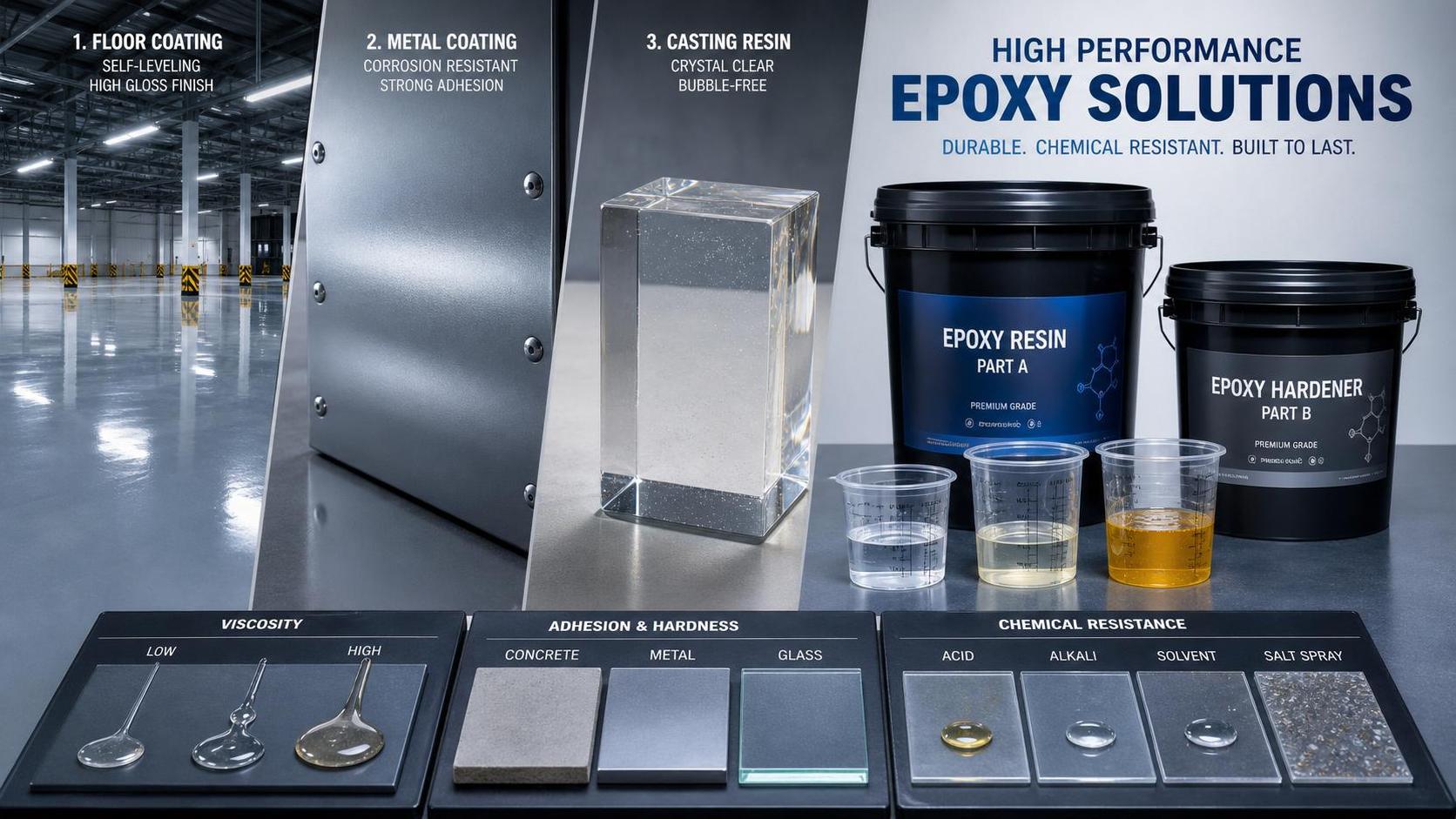
Why Epoxy Resins Fail to Cure Properly: 7 Causes and Practical Fixes
Author
Date Published
Reading Time
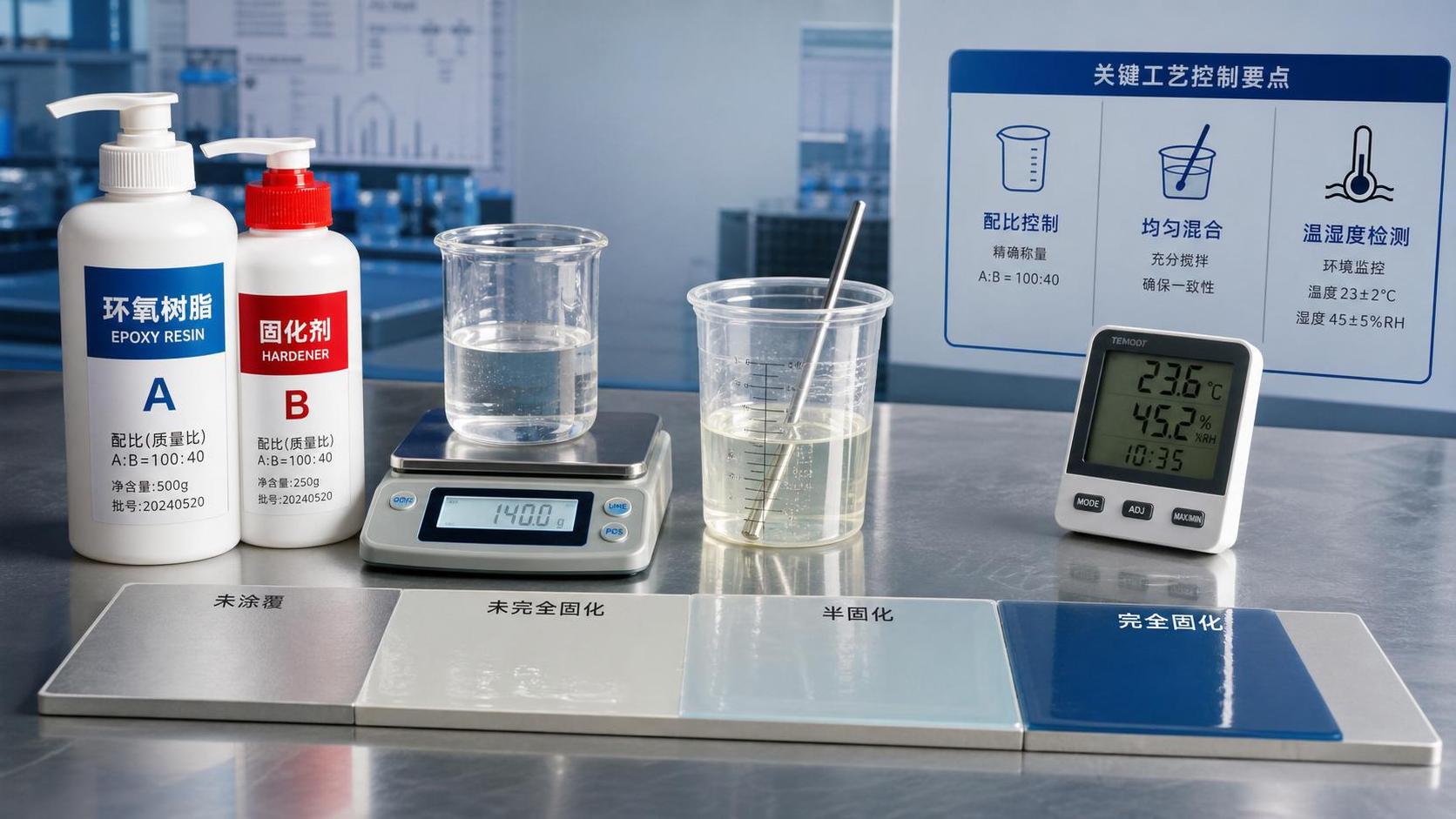
Why curing problems in epoxy resins rarely come from one cause
When epoxy resins stay tacky or soft, the loss is rarely limited to appearance. Bond strength drops, coating resistance falls, and repair costs rise quickly.
In actual applications, curing failure often reflects a mismatch between material behavior and site conditions. That is why the same epoxy resins can perform well in one job and fail in another.
A workshop floor, a marine repair, and an electrical potting task do not stress curing in the same way. The judgment point changes with temperature, moisture, mixing accuracy, film thickness, and timing.
For anyone tracking product knowledge, sourcing risk, or application quality, these differences matter. They affect material selection, rework exposure, and whether a supplier claim holds up in real use.
Different working conditions change what epoxy resins need
The most common mistake is to read a technical data sheet as if curing were automatic. In practice, epoxy resins cure within a processing window, not under all field conditions.
Indoor bonding jobs usually depend on accurate ratio control and stable room temperature. Outdoor coating work is more sensitive to dew point, substrate moisture, and sudden temperature swings.
Fast-turn maintenance adds another pressure point. Short schedules encourage thicker pours or rushed mixing, which can create uneven heat buildup and incomplete reaction.
Seven causes appear often, but not with equal weight
1. Incorrect mix ratio
This is still the leading cause with epoxy resins. Even small ratio errors leave unreacted material, especially in small manual batches.
Use calibrated scales or controlled dispensing. Volume mixing is only reliable when the formulation specifically allows it.
2. Incomplete mixing
A correct ratio can still fail if the container walls and bottom are not fully scraped. Soft spots often trace back to localized unmixed hardener.
For critical work, transfer the first mix into a second clean container and blend again.
3. Low temperature
Cold conditions slow reaction speed sharply. What looks like failure may actually be delayed curing, but production schedules usually cannot wait.
Check both room temperature and substrate temperature. Cold steel or concrete can hold the reaction back even when the air feels acceptable.
4. Excess humidity or surface moisture
This issue is common in coatings and repair work. Moisture can cause blush, cloudy surfaces, or poor intercoat adhesion with epoxy resins.
Confirm the dew point margin before application. Dry storage alone does not protect a damp substrate.
5. Expired or poorly stored materials
Aging changes viscosity and reactivity. In supply chains with long transit times, shelf-life discipline matters more than many expect.
Review production date, storage history, and container condition before blaming the process.
6. Wrong film thickness or batch size
Thin films may cure slowly in cool air, while deep pours can overheat and cure unevenly. The same epoxy resins do not behave identically at every mass.
Match the formulation to the intended depth, spread rate, and open time.
7. Contamination from tools or surfaces
Oil, amine residue, solvent traces, and release agents can disrupt cure or weaken the final bond. This is more common in maintenance environments than in controlled production.
Use clean tools, verified cleaners, and surface preparation suited to the substrate.
Where the diagnosis changes from one job to another
A sticky tabletop coating and a soft adhesive joint may look similar, but the root cause may differ. The first often points to humidity or low temperature. The second often points to mixing error.
Electrical encapsulation raises another issue. Thick sections can trap heat, so the cure may be fast in the center and incomplete near edges if the process is poorly controlled.
In field repairs, the judgment should include logistics as well. Material exposed to temperature swings during transport may arrive usable on paper but unstable in practice.
Misjudgments that create avoidable rework
- Assuming all epoxy resins share the same curing window.
- Checking ambient air, but not the substrate temperature.
- Focusing on unit price while ignoring shelf life and transit exposure.
- Using generic solvents that leave residues affecting cure.
- Treating indoor test results as proof for outdoor performance.
These mistakes matter because epoxy resins are often chosen for durability. A weak cure can stay hidden until load, moisture, or chemical exposure reveals the defect later.
Practical fixes worth applying before the next batch
Start with a simple control sheet. Record batch ratio, ambient temperature, substrate temperature, humidity, pot life, and cure time for each job.
Where conditions vary, run a small confirmation batch first. This is especially useful when epoxy resins come from a new source or arrive after long-distance shipping.
It also helps to define acceptance checks early. Surface tack, hardness development, gloss change, and adhesion results should be reviewed against the actual use condition.
The most reliable next step is to map each application setting, compare curing limits, and verify handling conditions before full-scale use. That reduces waste and makes epoxy resins perform closer to their stated potential.
Technical Specifications
- How to test melt flow consistency in batches of recycled plasticsAuthor :Polymers & Rubber Editorial Team
- When does a cast resin transformer need high-altitude derating?Author :Electrical Components Editorial Team
- How to verify Global Industrial Insights sourcing informationAuthor :Industrial Machinery Editorial Team
Expert Insights

Chief Security Architect
Dr. Thorne specializes in the intersection of structural engineering and digital resilience. He has advised three G7 governments on industrial infrastructure security.
Core Sector // 01
Security & Safety
- How do different types of resins compare in UV resistance?Author :Chemical Industry Editorial Team

- Which resin types suit composite parts exposed to high temperatures?Author :Chemical Industry Editorial Team

- How to verify REACH compliance for epoxy resin before purchaseAuthor :Chemical Industry Editorial Team

- Resins Explained: Common Types, Properties, and Industrial UsesAuthor :Chemical Industry Editorial Team

- How to Compare Resin Prices: What Really Affects Material Cost and Supply RiskAuthor :Chemical Industry Editorial Team

- Epoxy Resins for Flooring, Coatings, and Casting: How to Choose the Right TypeAuthor :Chemical Industry Editorial Team

- Why Epoxy Resins Fail to Cure Properly: 7 Causes and Practical FixesAuthor :Chemical Industry Editorial Team