Guangzhou Qingfanxiang Secures Multiple Patents for Smart Lubricant Production, Enhancing Additive Dosing Precision and Batch Consistency
Author
Date Published
Reading Time
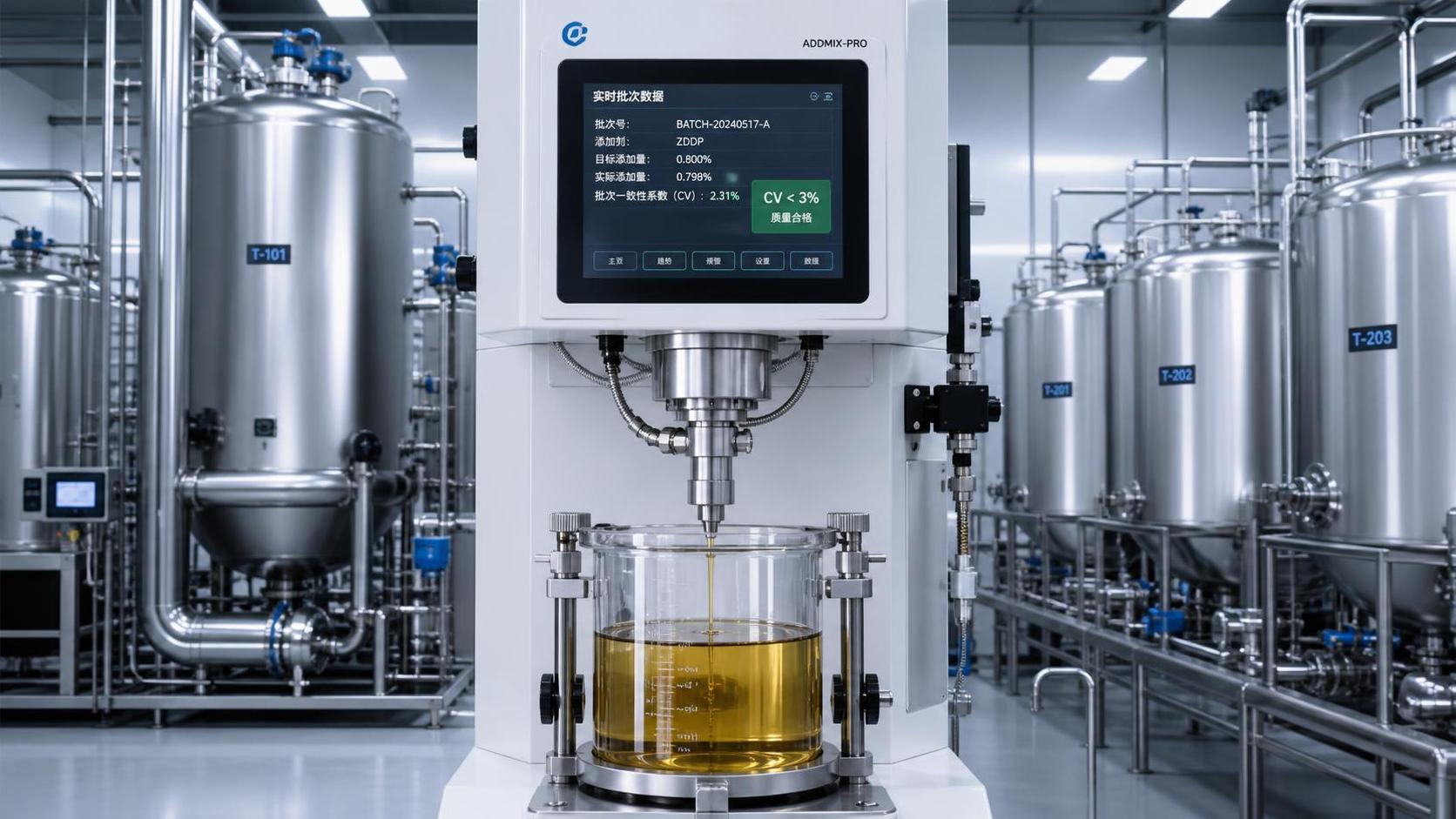
Although the exact timing of the patent grants has not been specified, Guangzhou Qingfanxiang Material Technology Co., Ltd., a recognized national high-tech enterprise, has recently secured a series of patents for intelligent lubricant production systems. The core technologies cover an additive quantitative dosing and mixing device and a surface tension testing and analysis system. These innovations have been applied to the mass production of high-density lubricants and graphene composite lubricants, achieving a key improvement in batch-to-batch consistency with a coefficient of variation (CV) of less than 3%. This development is particularly significant for lubricant exporters and manufacturers under increasing pressure to meet stringent international quality standards, as it directly impacts trade compliance, certification requirements, and supply chain reliability.
Patent Portfolio Targets Production Precision and Quality Control
According to the provided information, the patents obtained by Guangzhou Qingfanxiang center on a lubricant additive quantitative dosing and mixing device and a surface tension testing and analysis system. These technologies are already in commercial use for the production of high-density lubricants and graphene composite lubricants. The documented result is a reduction in batch-to-batch variability to a CV of less than 3%, a metric that is crucial for ensuring consistent product performance in demanding industrial applications. This achievement is a direct outcome of the company's R&D efforts and is currently being utilized to support the quality stability of export orders.
Implications for Exporters, Manufacturers, and Supply Chains
Enhanced Export Compliance and Documentation
For lubricant exporters, the ability to demonstrate a batch CV of less than 3% is a strong asset. Many international clients and regulatory bodies in key markets require documented evidence of consistent quality. This patent-backed capability can simplify the process of meeting technical specifications in trade contracts, reducing the risk of rejection or penalties. Exporters may now find it easier to align their quality documentation with the requirements of major importers, particularly in the automotive, aerospace, and heavy machinery sectors where lubricant performance is critical.
Raw Material and Additive Procurement
The improved precision in additive dosing has direct implications for raw material procurement. Companies that supply additives or base oils to lubricant manufacturers using these systems may see more stable demand patterns. However, they must also be prepared to meet tighter quality specifications for their own inputs, as the new mixing technology can better detect and react to inconsistencies. Procurement teams should verify that their suppliers can provide additives with consistent purity and physical properties to fully leverage the benefits of the new dosing system.
Manufacturing and Production Line Integration
For other lubricant manufacturers, this development signals a shift toward smart production. Companies that have not yet invested in automated dosing and real-time quality analysis may need to reassess their production lines to remain competitive. The integration of surface tension analysis as a quality control tool also suggests a move toward more precise, physics-based testing methods, which could become a new standard in the industry. Manufacturers should evaluate their current quality control processes and consider whether to adopt similar technologies to enhance their own batch consistency.
Strategic Priorities for Industry Participants
Review Certification and Compliance Documentation
Companies in the lubricant supply chain should review their current certification and quality documentation. The ability to prove a CV of less than 3% may become a competitive differentiator in export markets. Businesses should ensure their quality management systems (e.g., ISO 9001) are updated to reflect these new capabilities if they adopt similar technologies. For those working with Guangzhou Qingfanxiang, it is prudent to request updated test reports and certificates for any products manufactured using the new patented systems.
Monitor Future Official Statements and Tender Requirements
Given that the event time is not specified, it is unclear whether these patents have been fully integrated into commercial production or are still in the early stages of rollout. Industry participants should monitor official announcements from Guangzhou Qingfanxiang and any updates to technical standards for lubricants. Procurement tenders, especially from large OEMs or government projects, may begin to reference batch consistency metrics like CV. Companies should be prepared to adjust their bidding documents and technical proposals accordingly.
Assess Supply Chain and Delivery Cycles
The ability to produce more consistent batches can reduce the need for rework and quality testing, potentially shortening production lead times. However, the initial integration of new equipment may require adjustments. Buyers should communicate with suppliers to understand how these changes will affect delivery schedules. For companies that rely on just-in-time inventory, the improved consistency could reduce the risk of production delays caused by substandard incoming lubricant batches.
Editorial Analysis: A Signal of Technology-Driven Compliance Shift
From an industry perspective, the Guangzhou Qingfanxiang patent news is more appropriately understood as a technology-driven signal of a shift toward more rigorous quality compliance in lubricant manufacturing. Rather than a new regulation, this is a development that enables companies to meet existing and future quality standards more effectively. The key takeaway is that the industry is moving toward measurable, data-backed quality metrics, such as CV, which are likely to be increasingly referenced in future trade rules and customer specifications. The absence of a specific event date means that the immediate impact is still evolving, but the direction is clear. Companies should watch for how this technology influences certification standards, particularly for high-performance lubricants used in international trade. The lack of detailed official source links in the input means that stakeholders must independently verify the patent status and commercial application details through official channels.
Outlook: A Measured Step Toward Quality Standardization
In summary, this patent news represents a concrete step forward in lubricant production technology, with direct implications for quality consistency and export compliance. It is not a sudden regulatory change, but rather a practical tool that can help companies align with the increasing global demand for documented, verifiable product quality. The industry should view this as a signal to invest in similar precision manufacturing and quality control technologies. At this stage, it is most appropriate to understand this as a market development that supports existing compliance frameworks, with the potential to influence future trade and certification requirements. Continued observation of how this technology is adopted by other manufacturers and how it is referenced in procurement documents is warranted.
Source Notes and Verification Guidance
This article is generated based on the user-provided input: the news title, event time (unspecified), and event summary. The fact content is limited to the information contained in that input. Typical sources for such information include official patent filings, company announcements, and industry media reports. As specific official source links were not provided in the input, readers and industry participants are advised to independently verify the details of Guangzhou Qingfanxiang's patent portfolio and the commercial application of its technologies through official databases (e.g., national patent offices) or direct inquiries with the company. Continued monitoring of industry standards, certification body updates, and trade documentation changes is recommended to fully assess the long-term impact of this development.
- Last One:Methyl Methacrylate Supply: Navigating Regulatory Standards and Export Compliance for Industrial ApplicationsAug 31, 2026
- Next Article:Multiethylene Polyamine Supply Update: Regulatory and Compliance Considerations for Epoxy Curing Agents and N-Containing Extreme Pressure AdditivesAug 31, 2026
Technical Specifications
- How to test melt flow consistency in batches of recycled plasticsAuthor :Polymers & Rubber Editorial Team
- When does a cast resin transformer need high-altitude derating?Author :Electrical Components Editorial Team
- How to verify Global Industrial Insights sourcing informationAuthor :Industrial Machinery Editorial Team
Expert Insights

Chief Security Architect
Dr. Thorne specializes in the intersection of structural engineering and digital resilience. He has advised three G7 governments on industrial infrastructure security.
Core Sector // 01
Security & Safety
- How supply disruptions in the manufacturing supply chain affect lead timesAuthor :Global Industrial Core Editorial Team

- Can Global Industrial Insights price tracking be relied on for sourcing?Author :Global Industrial Core Editorial Team

- EU Revises ICE Ban: 90% Target Replaces 100% Phase-Out, Extending Lubricant Demand Through 2030+Author :Global Industrial Core Editorial Team

- Methyl Methacrylate Supply: Navigating Regulatory Standards and Export Compliance for Industrial ApplicationsAuthor :Global Industrial Core Editorial Team

- Guangzhou Qingfanxiang Secures Multiple Patents for Smart Lubricant Production, Enhancing Additive Dosing Precision and Batch ConsistencyAuthor :Global Industrial Core Editorial Team

- Multiethylene Polyamine Supply Update: Regulatory and Compliance Considerations for Epoxy Curing Agents and N-Containing Extreme Pressure AdditivesAuthor :Global Industrial Core Editorial Team

- DuPont Delrin® POM 150 NC010 Now Available Domestically, Offering 20% Cost Reduction Over Traditional PlasticsAuthor :Global Industrial Core Editorial Team

- 2026 China Cable Lubricant Market CAGR Estimated at XX%, Power and New Energy Emerge as Key Growth EnginesAuthor :Global Industrial Core Editorial Team