How to Choose Thermoplastic Elastomers for Seals, Grips, and Overmolding
Author
Date Published
Reading Time
How to Choose Thermoplastic Elastomers for Seals, Grips, and Overmolding
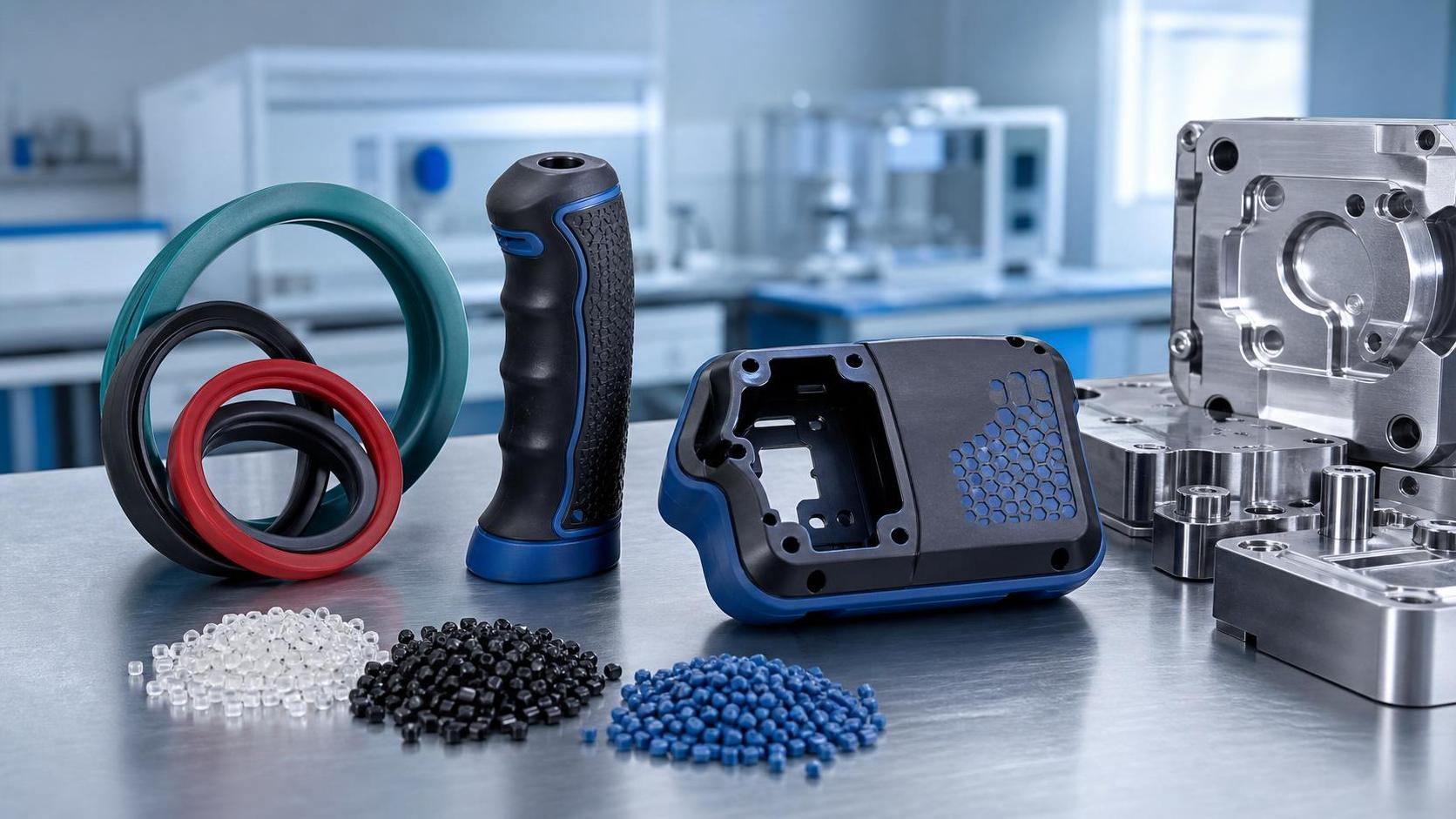
Choosing the right thermoplastic elastomers can directly affect sealing reliability, grip comfort, process efficiency, and long-term product performance.
The real challenge is not finding a soft material.
It is matching hardness, chemical resistance, adhesion, and cost to the actual job.
For seals, grips, and overmolding, thermoplastic elastomers behave very differently under pressure, heat, fluids, and repeated handling.
A practical selection process helps avoid trial-and-error, tooling waste, and early field failures.
Start with the End-Use Conditions
Before comparing grades, define what the part must survive.
This sounds basic, but many selection mistakes begin here.
For sealing parts, focus on compression set, temperature range, and media exposure.
For grip surfaces, look at softness, dry and wet feel, abrasion resistance, and skin-contact expectations.
For overmolding, bond strength and processing compatibility usually matter as much as softness.
Useful questions include:
- Will the part contact oils, cleaners, water, or UV?
- Is the load static, repeated, or impact-driven?
- Does the product need soft touch, sealing force, or both?
- Which substrate will the thermoplastic elastomers bond to?
When these conditions are clear, material screening becomes much faster and more defensible.
Match the Material Family to the Application
Not all thermoplastic elastomers are built for the same purpose.
TPE, TPV, TPU, and SEBS-based compounds can overlap, but their strengths are different.
A quick application view helps narrow the field:
For example, TPV often works well in automotive-style sealing environments.
TPU may suit grips or overmolded parts needing better wear resistance.
SEBS-based thermoplastic elastomers are often chosen for soft touch and appearance.
Check the Four Properties That Usually Decide the Outcome
1. Hardness
Hardness affects feel, sealing force, and assembly fit.
Softer grades improve comfort and conformability, but may reduce dimensional stability.
Higher hardness can improve support, but may weaken grip comfort or sealing performance.
2. Chemical and Environmental Resistance
Many thermoplastic elastomers look fine in the lab but fail after fluid exposure.
Check resistance to oils, grease, cleaners, sweat, humidity, and UV if relevant.
This is especially important for tools, appliances, transport parts, and outdoor assemblies.
3. Adhesion to the Substrate
In overmolding, poor adhesion can erase every other advantage.
Test the grade against PP, ABS, PC, PA, or the actual resin in use.
Data sheets help, but tool design and molding conditions also change bond strength.
4. Processability and Cost
A good material still needs to run cleanly in production.
Review melt flow, drying needs, cycle time, scrap behavior, and color consistency.
Lower resin cost does not always mean lower system cost.
Frequent rejects or slow cycles can make cheap thermoplastic elastomers expensive.
Use an Application-Based Screening Method
A structured shortlist usually works better than chasing one “best” material.
- Define the top three performance needs.
- Eliminate materials that clearly miss temperature or chemical targets.
- Compare candidate thermoplastic elastomers by hardness and processing fit.
- Run prototype tests with the final geometry and real substrate.
- Review total cost, including yield, tooling, and warranty risk.
This method keeps material selection tied to performance, not supplier claims alone.
Common Selection Mistakes to Avoid
Several mistakes show up repeatedly across sealing, grip, and overmolding projects.
- Choosing by Shore hardness only.
- Assuming all thermoplastic elastomers bond equally well.
- Skipping fluid or aging tests because the first samples look acceptable.
- Ignoring processing limits at commercial production speed.
- Comparing resin price without checking total manufacturing impact.
In practical sourcing decisions, these errors usually cost more than the initial material premium.
Final Decision Criteria
The right thermoplastic elastomers are the ones that meet performance targets consistently in real production.
For seals, prioritize sealing retention and environmental durability.
For grips, balance tactile quality with wear and cleaning resistance.
For overmolding, give extra weight to adhesion and process stability.
A disciplined comparison of thermoplastic elastomers reduces sourcing risk and improves product confidence.
The most reliable next step is simple: shortlist candidates, test them in the real application, and let measured performance make the final call.
Technical Specifications
- How to test melt flow consistency in batches of recycled plasticsAuthor :Polymers & Rubber Editorial Team
- When does a cast resin transformer need high-altitude derating?Author :Electrical Components Editorial Team
- How to verify Global Industrial Insights sourcing informationAuthor :Industrial Machinery Editorial Team
Expert Insights

Chief Security Architect
Dr. Thorne specializes in the intersection of structural engineering and digital resilience. He has advised three G7 governments on industrial infrastructure security.
Core Sector // 01
Security & Safety
- What Should Buyers Do When TPE Quality Varies Between Batches?Author :Polymers & Rubber Editorial Team

- Which TPE Grade Is Best for Stable Supply?Author :Polymers & Rubber Editorial Team

- What drives the cost of a renewable polydimethylsiloxane production plant?Author :Polymers & Rubber Editorial Team

- What Are Thermoplastic Elastomers and How Do They Compare with Rubber?Author :Polymers & Rubber Editorial Team

- How to Choose Thermoplastic Elastomers for Seals, Grips, and OvermoldingAuthor :Polymers & Rubber Editorial Team