Which compliance standards apply to imported granite for building projects?
Author
Date Published
Reading Time

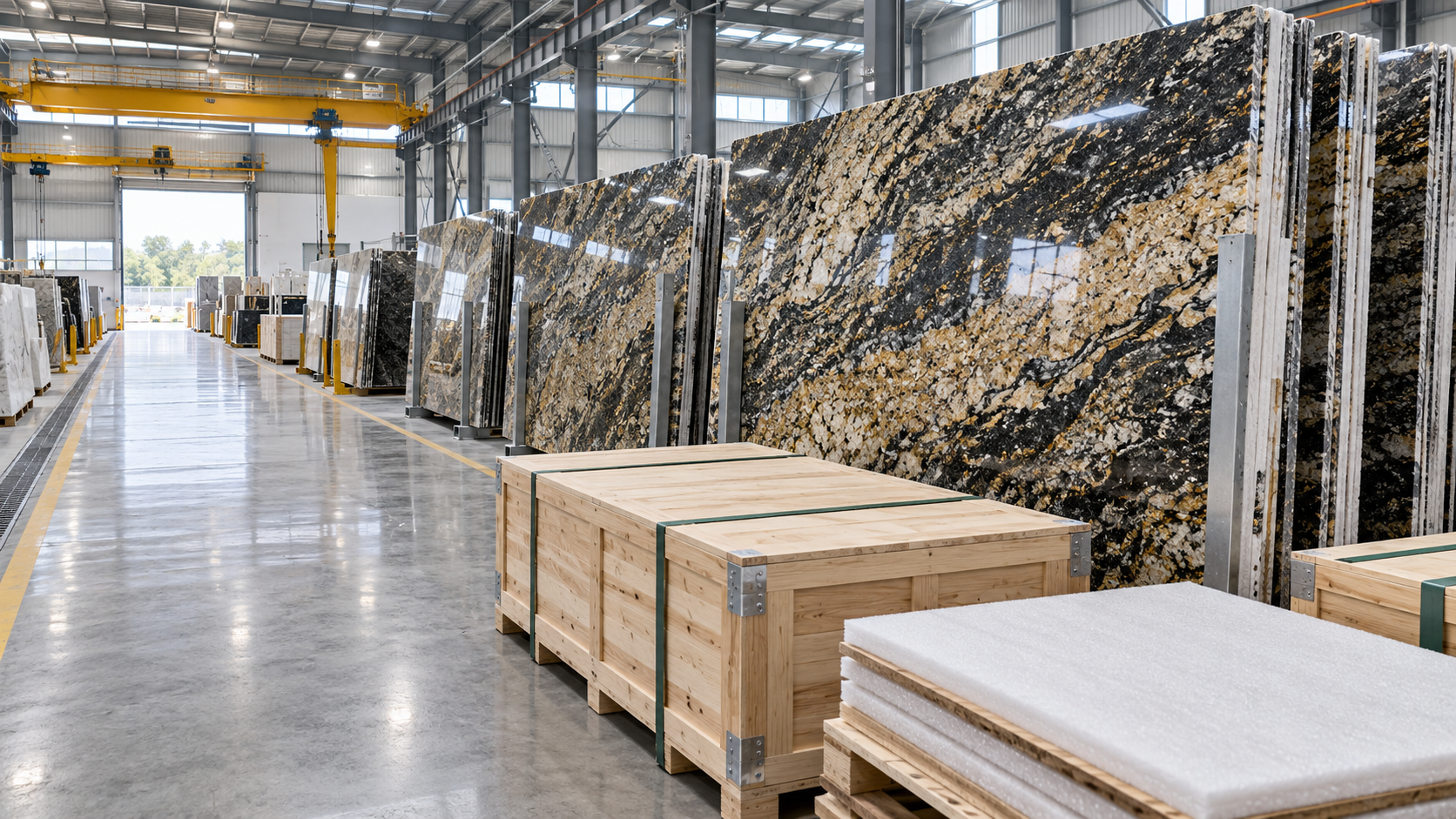
Imported granite is not governed by one universal certificate. The applicable compliance standards depend on where the stone will be installed, the importing country, the project specification, and the local building code. A granite slab that is acceptable for an interior feature wall may need a very different evidence package from stone used on an exterior facade, public stair, transit platform, or wet-floor entrance.
For building projects, the practical task is to verify five areas together: the stone’s technical suitability, the test method behind the claimed performance, traceability and import documents, environmental or chemical restrictions, and the approval requirements of the authority or design team. Treating these as separate procurement tasks often creates delays after the material has already been selected.
Start with the installation, not the quarry name
“Granite” is a commercial description rather than a complete performance specification. Natural stone sold under that name can vary in mineral composition, porosity, strength, color stability, fissuring, and response to weather. Compliance therefore begins with the proposed application.
This is why a supplier’s general test report should not be treated as automatic project approval. The report must relate to the same stone variety, finish, thickness range, and intended use. A test result for a flamed paving finish does not establish slip performance for polished lobby flooring, and a result for a thick paver does not automatically support a thinner facade panel.
Technical standards: what the project team needs to see
Most granite compliance reviews involve a combination of recognized natural-stone product standards and test methods. The exact standard family differs by market, but the technical questions are consistent: Is this material strong enough? Does it absorb water at a level suitable for its exposure? Will it resist wear? Is the finished surface safe under expected conditions? Can it be fixed and supported as designed?
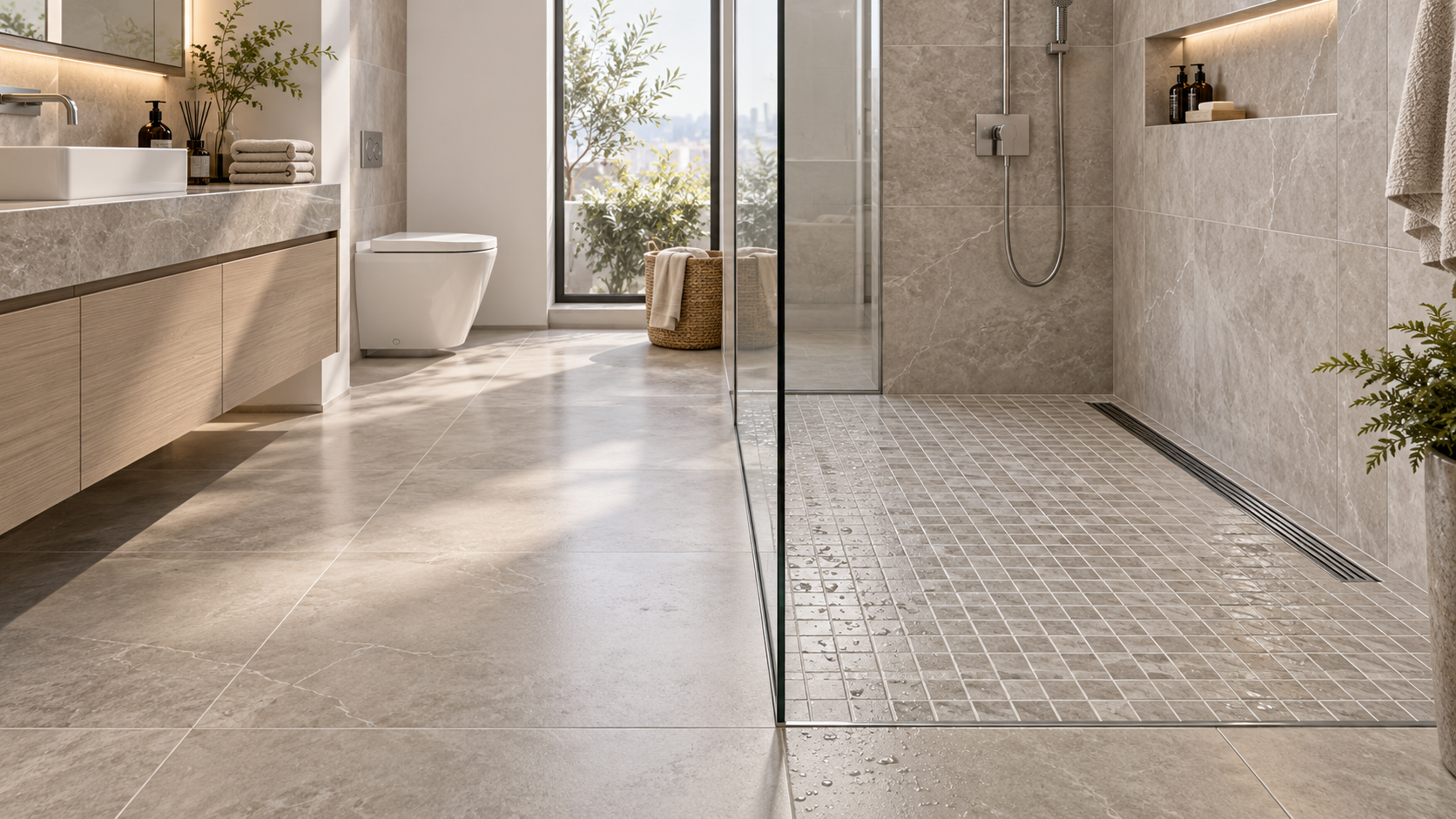
For floors and paving, abrasion resistance and slip resistance usually deserve early attention. A stone can look durable in a sample room yet become difficult to manage in a heavily used entrance, especially where rainwater, cleaning residues, or snowmelt are expected. The specified finish should match the walking condition. Honed or polished surfaces may be appropriate in controlled, dry interiors, while external routes often require a textured finish selected with drainage, cleaning, and accessibility requirements in mind.
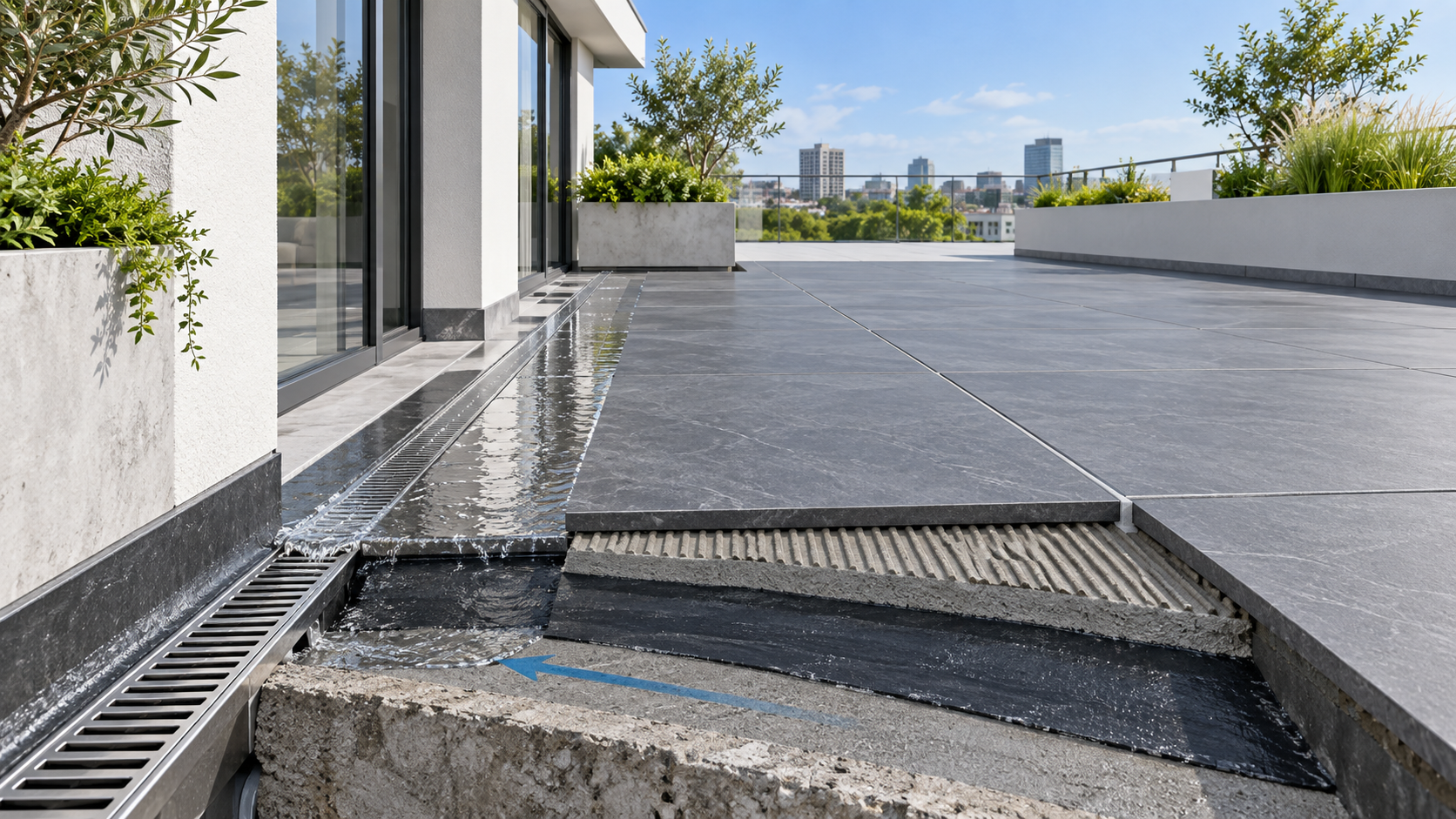
Water absorption matters because absorbed moisture can affect staining, durability, and behavior under freeze-thaw exposure. It should be considered alongside the installation system. A dense stone is not a substitute for correct drainage, movement joints, bedding, sealant selection, or facade cavity design.
For cladding, strength data alone is incomplete. Panel dimensions, thickness, cut-outs, kerfs, anchor locations, and the supporting structure all influence the final assembly. The relevant compliance evidence may include stone testing, anchor-system documentation, engineering calculations, mock-up results, and installation method statements. In this application, the installed system is what must perform, not simply the slab in isolation.

Product conformity is different from project acceptance
A frequent mistake is to ask whether imported granite is “certified” and stop there. Product conformity documents can show that a material has been assessed against a relevant product standard or declared performance framework. They do not replace the project’s own acceptance process.
Project approval normally brings together the architect’s stone schedule, structural and facade requirements, fire strategy where relevant, accessibility criteria, procurement specifications, and local code obligations. The required submittal package may include samples, quarry or factory information, test reports, fabrication drawings, finish samples, batch-control procedures, and proposed cleaning or maintenance guidance.
In practice, the most useful document is not the longest certificate. It is a coordinated submittal that lets the reviewer trace each claimed property back to the exact material and intended location. If the supplier changes quarry block, factory, finish, thickness, or panel geometry after approval, the original evidence may no longer cover the delivered product.
Import paperwork and material traceability should be planned early
Customs clearance and building compliance overlap, but they are not the same process. Importers typically need commercial and transport documentation that accurately identifies the goods, quantity, origin, value, and tariff classification. Building teams need evidence that the goods delivered match the approved stone.
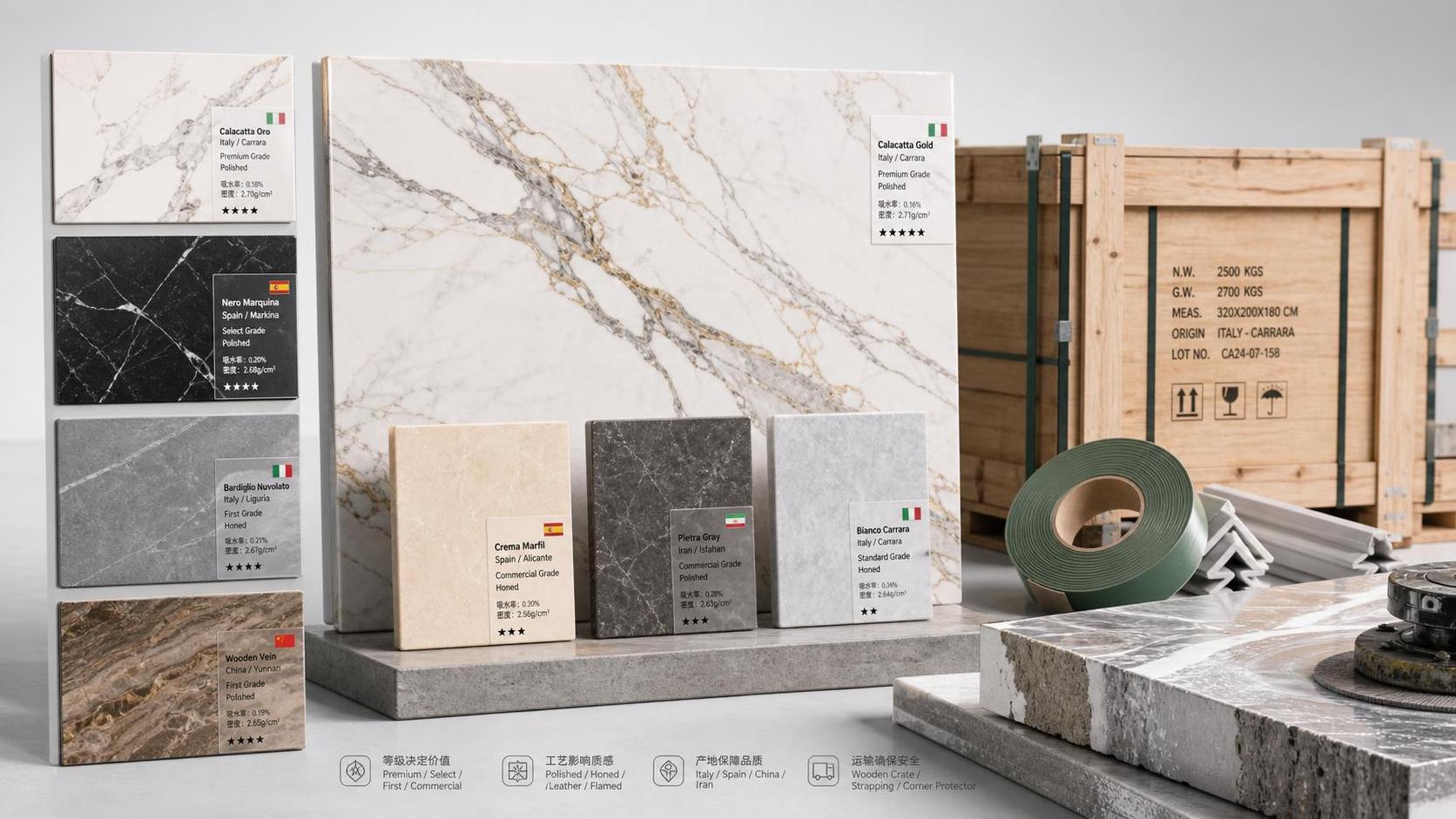
That connection is especially important for natural stone because visual variation is inherent. A broad commercial name can cover materially different quarry zones or batches. Project teams should define what must remain consistent: source quarry, color range, finish, thickness tolerance, panel coding, and replacement-stock expectations. A physical control sample can be useful, but it should be supported by written acceptance criteria rather than treated as the only reference.
Origin documentation may also matter beyond customs. Public projects, institutional buyers, or private sustainability programs can impose sourcing, labor, or supply-chain transparency requirements. These are usually contractual or project-specific rather than inherent properties of granite. Include them in the procurement schedule from the beginning, because they are difficult to reconstruct after cargo has shipped.
Environmental and health-related requirements are often location-specific
Natural stone is commonly perceived as a simple, inert building material, yet a project may still impose environmental compliance standards. These can relate to declared material content, restricted substances in associated products such as sealers or adhesives, indoor air considerations, responsible sourcing requirements, waste documentation, or green-building submittals.
Granite itself may also be subject to project questions about naturally occurring radioactivity or radon-related concerns. Whether testing is needed depends on the jurisdiction, building type, client policy, and intended interior use. This should be treated as a defined project requirement, not as an assumption based on the word “granite.”
Do not overlook the materials surrounding the stone. A compliant slab can still be part of a non-compliant installation if the adhesive, backing, sealant, coating, or insulation system fails applicable fire, emissions, or chemical requirements. For interior cladding and facade systems, review the assembly rather than collecting documents only for the visible stone.
Use the right evidence for the claimed property
Compliance problems often arise from evidence that sounds relevant but does not answer the specification. A generic factory certificate may confirm production controls but say nothing about slip resistance. A polished sample may demonstrate appearance but not frost durability. A test report may be valid for another finish, thickness, or product format.
Before issuing a purchase order, match each required claim to the supporting document:
- Material identity: quarry or source reference, commercial name, batch identification, and visual control sample.
- Performance: reports for the properties relevant to the installed application, using recognized test methods accepted by the project.
- Fabrication: shop drawings, tolerances, edge details, reinforcement where used, and panel marking.
- System safety: anchorage, structural, waterproofing, and fire-related evidence where the installation requires it.
- Import and supply chain: origin, shipping, customs, and any contractual sourcing records.
- Delivery control: inspection process for shade range, dimensions, damage, finish, and batch traceability on arrival.
This approach prevents a common late-stage dispute: the material may comply with a broad product description while failing a narrow, project-critical requirement.
Common specification traps
Writing “granite” without defining the finish and use
That description leaves too much open. A robust specification identifies the finish, dimensions, thickness, installation location, expected exposure, and acceptance criteria. It should also state whether equivalent source material is permitted. Without this, suppliers may price different material grades or finishes that cannot be fairly compared.
Using a single sample to approve a variable natural product
A hand sample is useful for color and texture direction, but it cannot represent all veining, mineral spots, fissures, or shade movement in a large shipment. Larger control panels, range boards, or pre-installation dry layouts can reduce disagreement where appearance is critical.
Assuming a test result transfers across formats
Changing a slab to a thin tile, adding a cut-out, altering a flame-textured surface, or selecting a different resin treatment can change relevant performance or appearance. The approval record should identify the final product format, not only the raw block or original slab.
Leaving compliance review until after fabrication
By that point, a missing test or unsuitable finish can force costly rework, re-procurement, or redesign. Review the compliance matrix before production begins, then inspect again when the first production batch is available.
A workable sequence for imported granite procurement
Begin by dividing the stone schedule by application: interior dry areas, wet floors, exterior paving, facade cladding, and specialist uses. Assign the performance and documentation requirements to each category rather than applying one blanket requirement to every item.
Next, ask the design and regulatory stakeholders which standards, declarations, tests, and approvals are mandatory for the project location. Translate those requirements into supplier submittals with clear deadlines. This is the point where trade-policy updates, shipping risks, and source availability should be considered alongside technical approval; a compliant source that cannot maintain lead times or batch consistency is still a project risk.
Then approve representative samples and documentation before committing to full production. For complex facade or public-realm work, coordinate stone fabricator, installer, engineer, and design reviewer around the final details. Finally, maintain a receiving inspection process that compares delivered material with the approved submission, instead of relying only on paperwork issued before shipment.
The best compliance outcome is not a folder full of certificates. It is imported granite that can clear the border, match the approved specification, perform in its installed environment, and remain traceable if questions arise during construction or later maintenance.
Technical Specifications
- Which wire mesh for fencing suits high-security boundary projects?Author :Metals & Fabrication Editorial Team
- What to verify before choosing a screw manufacturer in IndiaAuthor :Metals & Fabrication Editorial Team
- How to assess quality consistency from a granite exporter in BrazilAuthor :Construction Materials Editorial Team
Expert Insights

Chief Security Architect
Dr. Thorne specializes in the intersection of structural engineering and digital resilience. He has advised three G7 governments on industrial infrastructure security.
Core Sector // 01
Security & Safety
- How to assess quality consistency from a granite exporter in BrazilAuthor :Construction Materials Editorial Team

- Which compliance standards apply to imported granite for building projects?Author :Construction Materials Editorial Team

- How to choose ceramic tiles for bathroom floors with better slip resistanceAuthor :Construction Materials Editorial Team

- When are porcelain wall tiles the right choice for shower walls?Author :Construction Materials Editorial Team

- How to choose porcelain floor tiles for high-traffic areasAuthor :Construction Materials Editorial Team

- How to choose a cutting machine for stone based on slab thicknessAuthor :Construction Materials Editorial Team

- When are porcelain tiles for outdoor spaces at risk of cracking?Author :Construction Materials Editorial Team

- Marble Stone Price: What Changes Cost Across Grade, Finish, and Origin?Author :Construction Materials Editorial Team