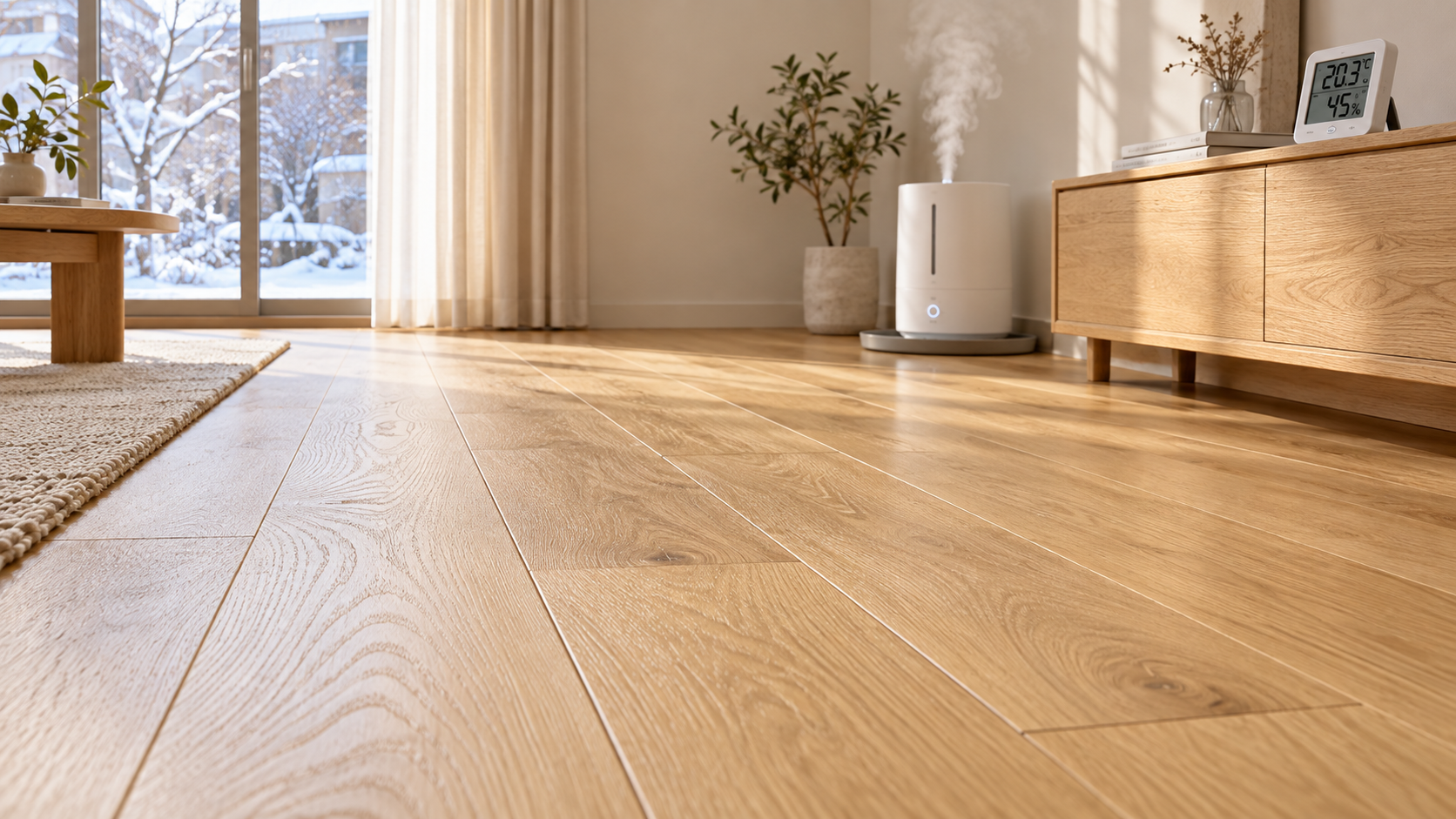
Winter gaps in oak wood flooring usually appear because indoor air becomes drier, causing boards to lose moisture and shrink across their width.
The most effective prevention is steady indoor humidity within your flooring manufacturer’s recommended range. Small seasonal gaps often need monitoring, rather than immediate repair.
Before reaching for wood filler, check humidity and watch how the floor changes. Permanent repairs can create problems when boards expand again in warmer weather.
This guide explains how to reduce winter shrinkage, recognize normal movement, and decide when gaps need professional assessment instead of another round of filling.
Why does oak flooring develop gaps when the heating comes on?
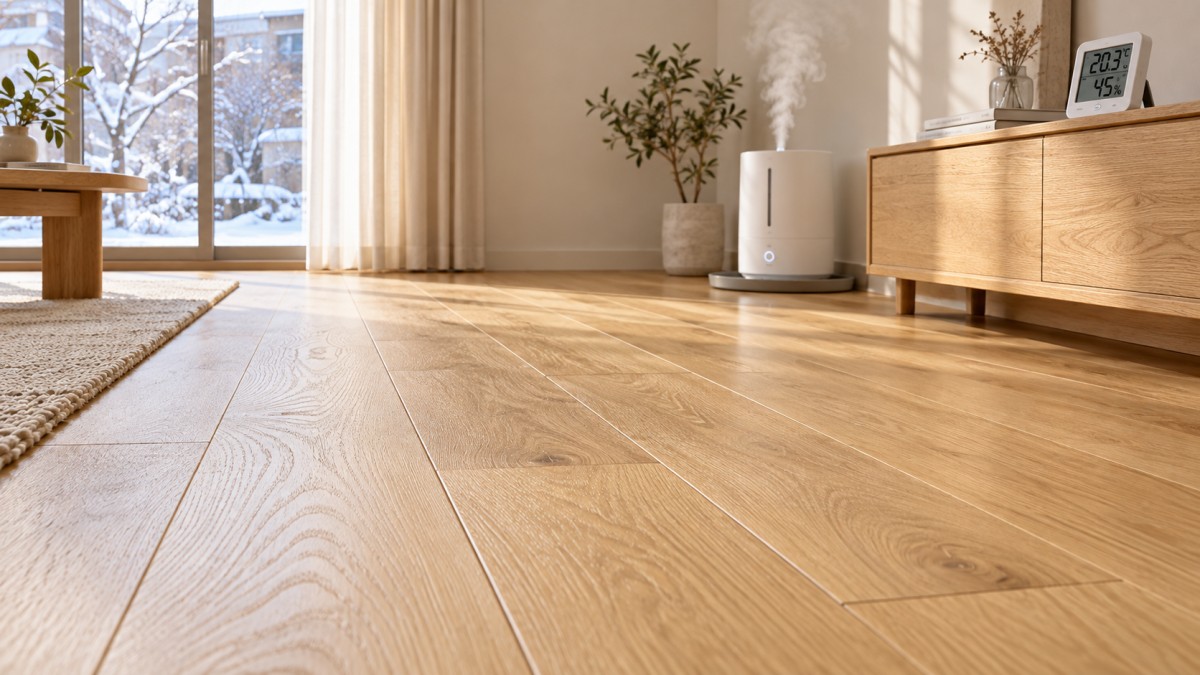
Oak exchanges moisture with surrounding air throughout its service life. When indoor relative humidity falls, the wood gradually dries and contracts, opening spaces between boards.
Heating does not automatically remove moisture from the air. However, warming incoming cold air lowers its relative humidity unless additional moisture enters the home.
This explains why gaps often appear during the heating season, even when the floor looked tight throughout summer and there is no obvious defect.
Movement occurs mainly across the grain, so board width matters. Wider solid oak planks generally show greater individual width changes than narrower comparable boards.
Engineered oak flooring usually moves less because its layered construction improves dimensional stability. It can still develop gaps when conditions exceed the product’s limits.
The realistic goal is to limit excessive seasonal movement. Keeping every joint completely invisible throughout winter may be impossible, particularly with older solid floors.
Start with humidity measurements before changing anything
Place a digital hygrometer in the affected room, away from radiators, direct sunlight, open windows, and humidifier outlets, which can distort the reading significantly.
Record relative humidity and room temperature morning and evening for one or two weeks. Include the coldest days, when indoor conditions may become driest.
Check your flooring warranty or care guide for its specified humidity range. Many products recommend approximately 35–55% relative humidity, but requirements vary by manufacturer.
Treat that range as an example, not a universal setting. Some products specify different limits, and building conditions may restrict safe winter humidity levels.
If you cannot identify the flooring brand, ask the installer or a qualified wood flooring professional to recommend suitable conditions for your particular floor.
A second hygrometer can help identify inconsistent readings. Consumer devices sometimes differ enough to affect decisions, so compare them before making substantial humidity adjustments.
Photograph several representative gaps beside a ruler and date each image. Tracking the same locations reveals whether movement follows humidity changes or remains persistent.
How to raise humidity without creating another problem
If readings fall below the recommended range, a properly sized humidifier can help. Choose equipment for the room volume and expected air leakage levels.
A portable unit may suit one affected room. Several connected rooms or an entire house may require multiple units or a professionally installed central humidifier.
Use a humidistat to control output, and increase humidity gradually within the approved range. Avoid running equipment continuously without checking actual room conditions regularly.
Clean the humidifier and replace filters according to its instructions. Poor maintenance can introduce contaminants, while mineral deposits may reduce performance or create dust.
Watch windows, exterior corners, and other cold surfaces for condensation. Persistent moisture means the building may not tolerate the chosen humidity during that weather.
Reduce humidifier output if condensation develops, and seek advice if it continues. Protecting the floor should not come at the expense of damp building materials.
In very cold climates, consult an HVAC specialist about balancing humidity, ventilation, and the building envelope. A single humidity target may not suit every house.
Do not wet the floor to add moisture. Excessive mopping, steam cleaning, or standing water can damage finishes and cause localized swelling or distortion.
Will changing the heating settings help?
Maintain a reasonably steady indoor temperature that suits your flooring instructions and household needs. Large temperature swings make humidity control harder and can complicate monitoring.
Turning the thermostat unusually high will not close winter gaps. Without added moisture, warmer air can have lower relative humidity and encourage further drying.
Avoid directing portable heaters at the floor. Concentrated heat can create unusually dry spots, particularly around board edges, vents, and areas beside external doors.
Keep heating outlets unobstructed and follow guidance on furniture placement. Redirecting airflow may reduce localized exposure, but do not alter the system without suitable advice.
For oak installed over underfloor heating, follow the flooring manufacturer’s maximum surface temperature and operating instructions. The permitted limit depends on the specific product.
Use the specified commissioning procedure and gradual temperature adjustments. Ask the installer to check controls if gaps are concentrated over particular heating zones or circuits.
Check rug restrictions before covering heated floors. Some rugs and underlays trap heat, increasing local temperatures beyond what the flooring system was designed to tolerate.
Which gaps are seasonal, and which need attention?
Small gaps distributed fairly evenly across a floor, appearing during dry weather and narrowing during humid months, are often consistent with normal seasonal movement.
However, gap width alone does not establish whether the floor is performing acceptably. Board dimensions, installation method, moisture history, and manufacturer tolerances all matter.
A gap that seems modest between wide planks may have a different explanation from the same opening between narrow strips, especially if only one joint moves.
Persistent openings that remain through a more humid season deserve investigation. They may reflect installation conditions, fastening problems, subfloor movement, or excessive previous drying.
Pay particular attention to abrupt changes, loose boards, raised edges, or new movement underfoot. These signs suggest that humidity adjustment alone may be insufficient.
Dark staining, musty odors, or gaps appearing after a leak warrant a moisture investigation. A floor can experience water damage and later develop shrinkage gaps.
For a recently installed floor, notify the installer promptly and retain your humidity records. Check warranty reporting deadlines before attempting repairs that could affect assessment.
Should you fill winter gaps in oak wood flooring?
Usually, wait until you understand whether the gaps are seasonal. Filling openings while boards are at their driest can leave insufficient room for later expansion.
When humidity rises, rigid filler may crack, loosen, or be squeezed out. It can also leave visible residue and make the eventual repair more difficult.
General household caulk is rarely a good default for joints between floorboards. Appearance, finish compatibility, durability, and future refinishing all need careful consideration beforehand.
Do not hammer boards together or add screws simply to close visible spaces. These actions can damage joints or interfere with the installed flooring system.
If gaps remain after conditions stabilize, a flooring specialist may recommend localized repairs, suitable filler, wood slivers, or board replacement, depending on the cause.
Older floors sometimes have established gaps that owners choose to retain. Repair decisions should consider comfort, debris accumulation, appearance, and the floor’s overall condition.
Where openings create a trip or splinter hazard, seek prompt assessment. Waiting for seasonal recovery is inappropriate when the surface has become unsafe to use.
What can prevent gaps before the next winter?
Begin monitoring before the heating season starts, while indoor conditions are still moderate. Early readings reveal the seasonal trend before noticeable gaps begin to develop.
Service existing humidification equipment and replace required consumables before cold weather arrives. Check that its sensor reflects conditions in occupied rooms, not just nearby ductwork.
Address obvious drafts around windows and doors using appropriate weatherproofing. Reducing uncontrolled air leakage can make indoor humidity easier to maintain during cold weather.
Keep required ventilation operating and avoid blocking air inlets to retain moisture. Any ventilation adjustments should account for indoor air quality and combustion appliance requirements.
Continue normal cleaning with products approved for your finish, using minimal water. Surface polish and extra finish coats cannot reliably prevent seasonal moisture exchange.
If replacing flooring, discuss board width, solid versus engineered construction, heating compatibility, and expected indoor conditions with the supplier before choosing solely by appearance.
New flooring should be installed only after site conditions and moisture measurements meet product requirements. A fixed acclimation period alone does not prove readiness.
Installation details also matter, including suitable expansion space, subfloor preparation, and the correct fastening or adhesive system. These should follow the specific manufacturer’s instructions.
When should you call a flooring professional?
Arrange an inspection if gaps keep widening despite stable recommended humidity, remain unusually concentrated, or appear alongside loose boards, distortion, staining, or suspected moisture problems.
A useful assessment considers indoor humidity records, flooring moisture content, subfloor conditions, installation method, and seasonal history. One photograph rarely establishes the underlying cause.
Ask the professional to explain whether the proposed repair addresses seasonal movement or a separate defect. Request product compatibility details before approving fillers or adhesives.
For floors over underfloor heating, share operating temperatures and heating schedules as well. Coordinated advice from the flooring installer and heating specialist may be necessary.
A practical winter routine for your oak floor
Check humidity regularly, keep heating reasonably consistent, and adjust humidification within the limits of both your flooring guidance and your home’s tolerance for moisture.
Compare dated gap photographs over the season rather than reacting to daily changes. Wood responds gradually, so improvement may take time after conditions become stable.
The best way to protect oak wood flooring is to manage its environment and investigate unusual movement early. Reserve permanent repairs for gaps with an identified cause.