What Should Buyers Check Before Importing Wood Flooring?
Author
Date Published
Reading Time
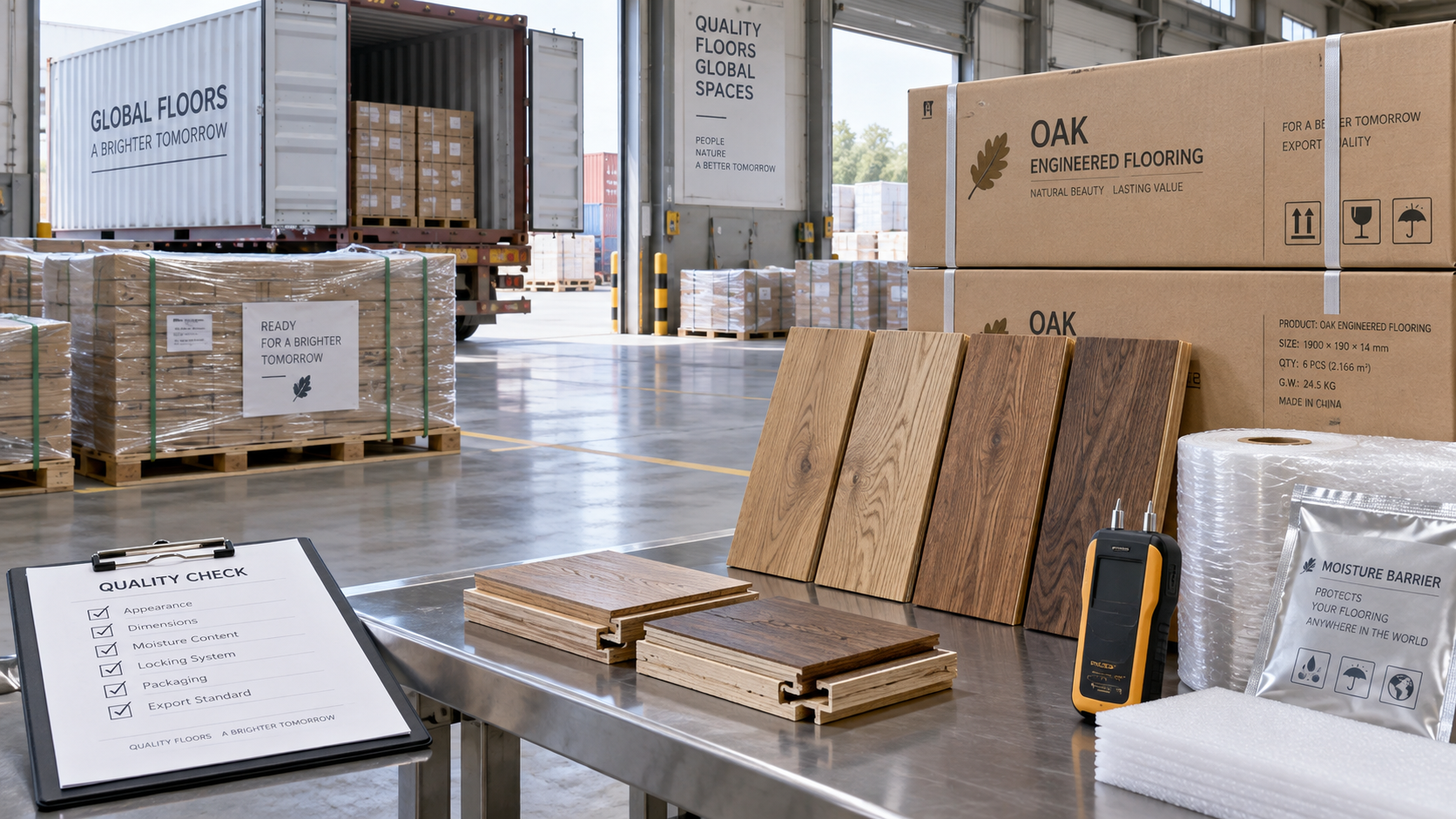
A container of wood flooring can look acceptable in a showroom sample yet create expensive problems after arrival: boards may be too wet for the destination climate, the finish may not match the approved sample, cartons may be crushed, or the shipment may be held because the paperwork does not match the product. The practical answer to what should I check before importing wood flooring? is to verify the product, supplier, compliance route, and shipment controls as one connected process—not as separate tasks handled after the purchase order is issued.
Before paying a deposit, buyers should have written confirmation of the flooring construction, species, grading, dimensions, moisture target, finish, packaging, inspection method, trade terms, documents, and destination-market requirements. A low unit price has little value if the goods cannot be cleared, installed properly, or accepted by the intended customer.
Start with the flooring specification, not the product name
“Oak flooring,” “engineered wood flooring,” and “hardwood plank” are broad commercial descriptions. They do not tell a buyer enough to compare quotations or determine whether the product is suitable for a residential project, retail program, or distribution channel. Ask the supplier to convert the offer into a detailed specification sheet before you compare prices.
For solid flooring, confirm the species, board thickness, width, length range, machining profile, grade, surface treatment, and intended installation method. For engineered flooring, the construction needs closer scrutiny because performance depends on more than the visible veneer. Confirm the wear-layer species and thickness, core material, number and orientation of layers where relevant, backing material, total thickness, and edge profile.
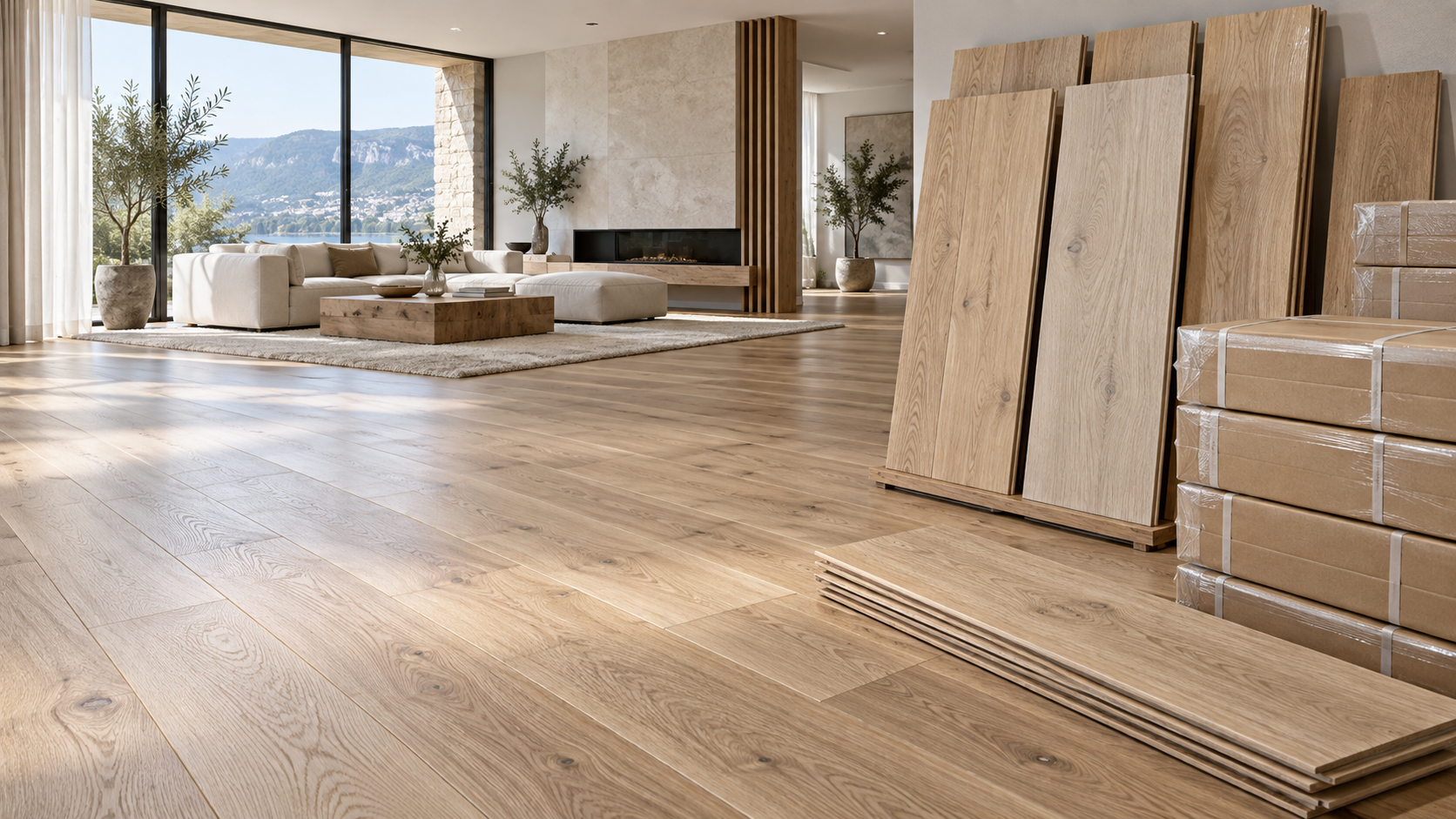
Do not rely only on an online image or one display board. Timber is a natural material, so variation is normal; the important point is to establish what range is commercially acceptable. Retain approved samples, signed specifications, and any agreed reference photos as part of the purchase documentation. A sample is useful only when it is tied to a written definition of the shipment.
Check whether the wood and construction fit the destination environment
Flooring failures often appear after delivery rather than at the port. Cupping, gaps, movement, delamination, checking, or finish issues can be linked to a mismatch between the product’s moisture condition, construction, storage history, and the building environment where it will be installed.
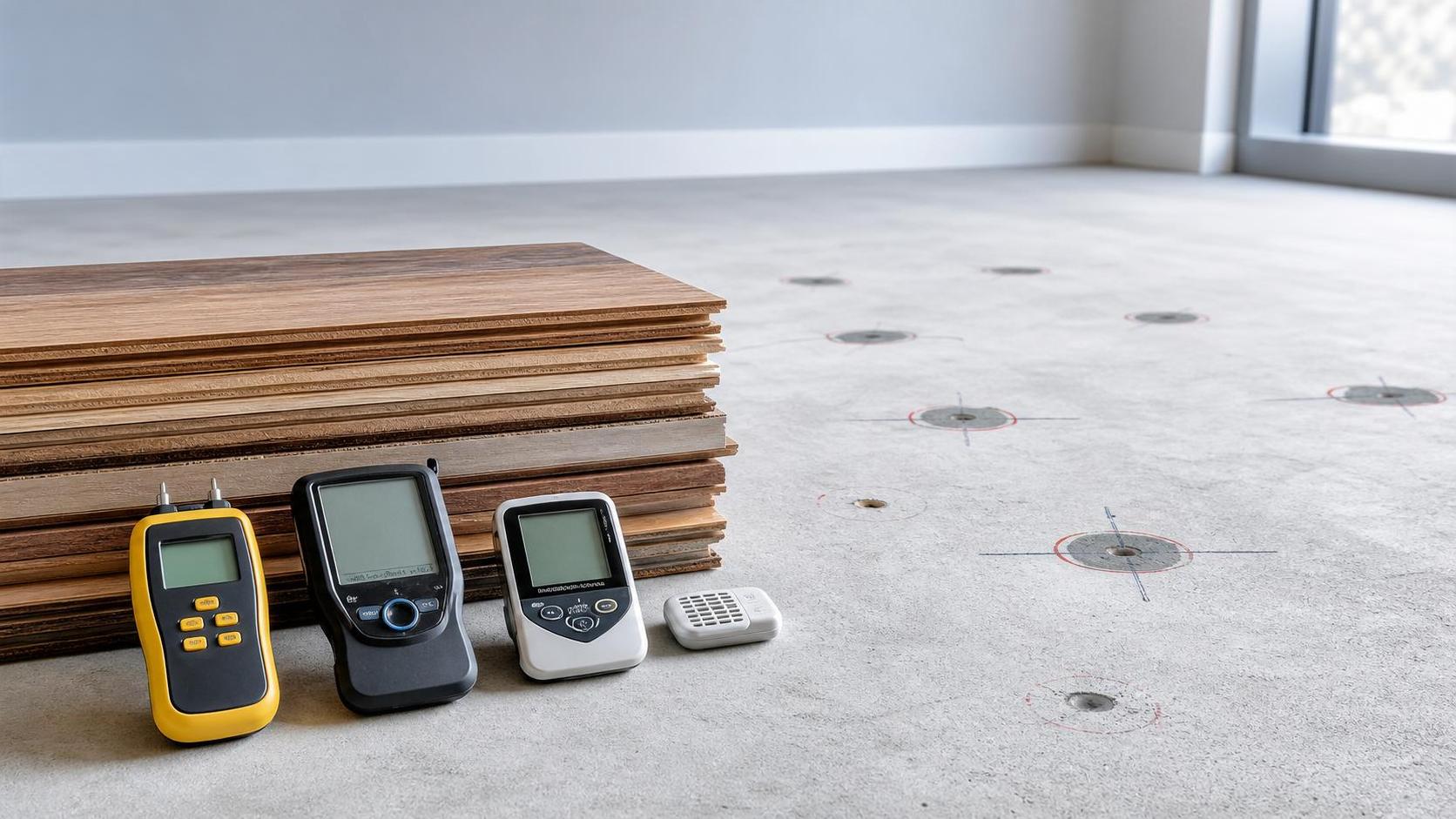
Ask for the product moisture-content target and the method used to measure it. The right target is not universal. It depends on the wood species, flooring construction, the climate at destination, and expected indoor conditions. A supplier should be able to explain how boards are conditioned before packing and how moisture is checked during production. If the answer is simply that the flooring is “dry,” request a measurable specification and a test record format.
Engineered flooring may offer improved dimensional stability compared with a solid board, but it is not automatically suitable for every environment. Confirm whether the product is approved for the intended subfloor, radiant heating arrangement if applicable, and glue type or installation system. Also ask about limitations: maximum site moisture, required acclimation, acceptable temperature range, expansion gaps, and any restrictions on wet areas or basements.
Storage conditions matter before installation as well. Cartons left in a humid warehouse, exposed to rain during unloading, or stored directly on a concrete floor can absorb moisture even when the factory product was within specification. Import planning should include instructions for the receiving warehouse and downstream customers, especially where flooring will be held for an extended period.
Separate visual grade from actual defects
One of the most frequent sourcing disputes is a disagreement over whether an issue is a natural feature or a manufacturing defect. A rustic grade can legitimately include knots, cracks filled with putty, color variation, and shorter lengths. It should not be used as a vague excuse for warped boards, damaged tongues, poor coating adhesion, excessive filler loss, or inconsistent machining.
Define acceptable quality in practical terms. The agreement should state the visible face grade, permissible defect types, measurement tolerances, acceptable proportion of short boards if relevant, and how damaged or unusable pieces will be counted. It should also clarify whether the ordered coverage is based on net usable area, carton coverage, or another calculation. Those distinctions affect yield and customer pricing.
Inspect the profiles and finish closely
The tongue-and-groove or click profile deserves attention because minor machining defects can slow installation across an entire job. Request information on profile inspection, board flatness checks, and how the factory handles rejected pieces. When evaluating samples, assemble several boards from different cartons where possible rather than joining only two selected pieces.
For finished flooring, review the surface from multiple angles and under normal indoor light. Confirm whether the floor is smooth, wire-brushed, hand-scraped, smoked, reactive-stained, matte, or high-gloss. These descriptions are not interchangeable. Textured surfaces can intentionally retain open grain or visual variation, while certain finishes may require particular cleaning products or repair procedures. Buyers should also clarify whether the finish is expected to vary between production batches, especially when future replenishment orders are likely.
Verify supplier capability before committing to volume
A supplier’s ability to send samples does not prove that it can repeat the same product at container scale. The key question is whether the supplier controls the relevant manufacturing stages and can document the quality process. This is particularly important where several materials, such as veneers, cores, coatings, and packaging, may come from different sources.
Request clear business and production information appropriate to the transaction: legal entity details, factory location or manufacturing arrangement, product range, export experience to the destination market, and the person responsible for technical questions. Review how the supplier manages incoming timber, conditioning, production inspection, moisture checks, packing, and batch identification. A supplier that cannot identify the production batch may make a later claim difficult to investigate.
For a first order, consider a pre-shipment inspection arrangement that is defined in advance. The inspection scope should reflect the actual risks of the product, such as quantity, dimensions, visual grade, moisture measurement procedure, profile fit, finish appearance, carton marking, and loading condition. Avoid a vague instruction to “inspect quality.” Specify the sampling approach, acceptance criteria, who pays, and what happens if the shipment fails the agreed standard.
Map compliance and import documents before production begins
Wood products may be subject to customs classification, timber legality expectations, phytosanitary or plant-health controls, chemical restrictions, labeling rules, origin requirements, and building-product requirements depending on the importing country and the product itself. The applicable obligations cannot be assumed from a supplier’s statement that it exports globally.
Confirm the likely tariff classification with a qualified customs source in the destination market and identify the documents needed for clearance. Depending on the shipment and destination, these may include a commercial invoice, packing list, bill of lading or other transport document, certificate of origin where relevant, treatment or plant-health documents where required, and evidence supporting the wood’s species and legal origin. Product claims about formaldehyde emissions, coating chemistry, fire performance, or sustainability should not be used in sales materials unless the relevant evidence is available and applicable to the market.
Certification is another area where wording must be precise. If flooring is sold with a certification claim, confirm that the supplier’s documentation, chain-of-custody requirements where applicable, invoice language, labels, and product scope all support that claim. A factory may use certified inputs without every shipment being eligible to carry a corresponding claim. Do not print logos or make environmental statements based on assumptions.
Make packaging part of the product specification
Wood flooring is vulnerable at corners, edges, and carton seams. Damage can occur through poor carton strength, loose strapping, inadequate pallet support, container movement, or moisture exposure during transfer. The visible cost is broken boards; the less visible cost is sorting labor, delayed installation, and disputes over whether damage happened before or after loading.
Ask how boards are wrapped, how cartons are sealed, whether pallets are used, how pallets are protected, and how the load is restrained inside the container. Carton labels should enable receiving staff to identify product code, color or finish, size, batch or lot where used, carton quantity, and handling instructions. Mixed lots without clear markings create avoidable problems when a distributor later needs to separate finishes or trace a complaint.
- Confirm the number of boards and net coverage per carton.
- Check gross weight, carton dimensions, and pallet configuration for warehouse handling.
- Specify whether moisture-resistant wrapping or desiccant use is appropriate for the route.
- Require photographs of packed goods and container loading where this is included in the agreed process.
- Make sure shipping marks match the invoice, packing list, and purchase order.
Price the landed risk, not only the factory quotation
Two offers with the same stated price per square meter can produce very different landed costs. Compare the basis of quotation carefully: product coverage calculation, packaging, inland transport to port, export documentation, freight arrangement, insurance responsibility, destination charges, duties, taxes, inspection, and possible demurrage or storage exposure. The chosen Incoterm should be understood operationally, not treated as a line item copied into the order.
Buyers should also look at the commercial consequences of variation. Does the supplier permit a production overrun or underrun? How are defective cartons handled? Is replacement the only remedy, and who covers transport? Can claims be made after installation, or only before? Flooring claims become harder once boards are cut, acclimated improperly, or installed over an unsuitable subfloor, so the claim procedure should distinguish manufacturing defects from site-condition issues.
Use a controlled approval sequence
The safest sourcing process is staged. First approve the technical specification and commercial terms. Then approve samples representing the agreed grade and finish. Before shipment, review production records and perform the agreed inspection. Finally, check documents and loading evidence before the balance payment or release instruction. Each stage should refer to the same product code, revision, and batch information.
Changing the stain tone, board width, core type, packaging, or shipping port after approval may seem minor, but each change can alter cost, consistency, clearance documentation, or delivery risk. Record changes in writing and require confirmation that the revised item has been checked against the destination requirements.
Questions buyers often ask before ordering
Should I order solid or engineered wood flooring?
The choice depends on the intended environment, installation method, desired appearance, and customer expectations. Solid flooring may suit projects that want a traditional full-thickness board and have suitable site conditions. Engineered flooring can be appropriate where greater dimensional stability or certain installation formats are needed. Compare the actual construction and approved installation conditions rather than choosing by label alone.
Is a sample enough to approve a shipment?
No. A sample helps confirm appearance, feel, construction, and profile, but it does not prove batch consistency, moisture control, packaging quality, or container loading. Use the sample together with a written specification, production controls, and a defined pre-shipment review.
What documents should be checked before the goods sail?
At minimum, compare the commercial invoice, packing list, product description, quantities, marks, shipment terms, and transport instructions against the purchase order. Also verify any origin, timber, treatment, testing, or compliance documents required for the product and destination. Document requirements should be confirmed before production because some records cannot be recreated reliably after shipment.
When should a buyer reject wood flooring before shipment?
Rejection should follow the criteria agreed in the order or inspection plan. Typical triggers include a material mismatch in species or construction, dimensions outside tolerance, unacceptable moisture readings under the agreed procedure, defective profiles, finish inconsistency beyond the approved range, incorrect labeling, damaged packaging, or missing required documents. A written corrective-action process is more effective than trying to resolve these issues after the container has departed.
Technical Specifications
- Which local safety approvals apply to imported power suppliesAuthor :Electrical Components Editorial Team
- How to choose the right tempered glass panel for safety glazingAuthor :Construction Materials Editorial Team
- When do elastomers outperform thermoplastics in flexible seals?Author :Polymers & Rubber Editorial Team
Expert Insights

Chief Security Architect
Dr. Thorne specializes in the intersection of structural engineering and digital resilience. He has advised three G7 governments on industrial infrastructure security.
Core Sector // 01
Security & Safety
- Which flooring materials hold up best in high-traffic commercial spaces?Author :Construction Materials Editorial Team

- What Should Buyers Check Before Importing Wood Flooring?Author :Construction Materials Editorial Team

- Is Demand for Imported Wood Flooring Growing in Europe?Author :Construction Materials Editorial Team

- Laminate Flooring vs Wood Flooring: Which Option Fits Rental Renovations?Author :Construction Materials Editorial Team

- How to Choose Laminate Flooring Wear Ratings for High-Traffic Commercial AreasAuthor :Construction Materials Editorial Team

- Engineered Wood Flooring vs Solid Wood Flooring: Pros, Limits, and Best UsesAuthor :Construction Materials Editorial Team

- How to Check Moisture Conditions Before Installing Wood FlooringAuthor :Construction Materials Editorial Team