When do custom fasteners outperform standard parts in equipment design?
Author
Date Published
Reading Time
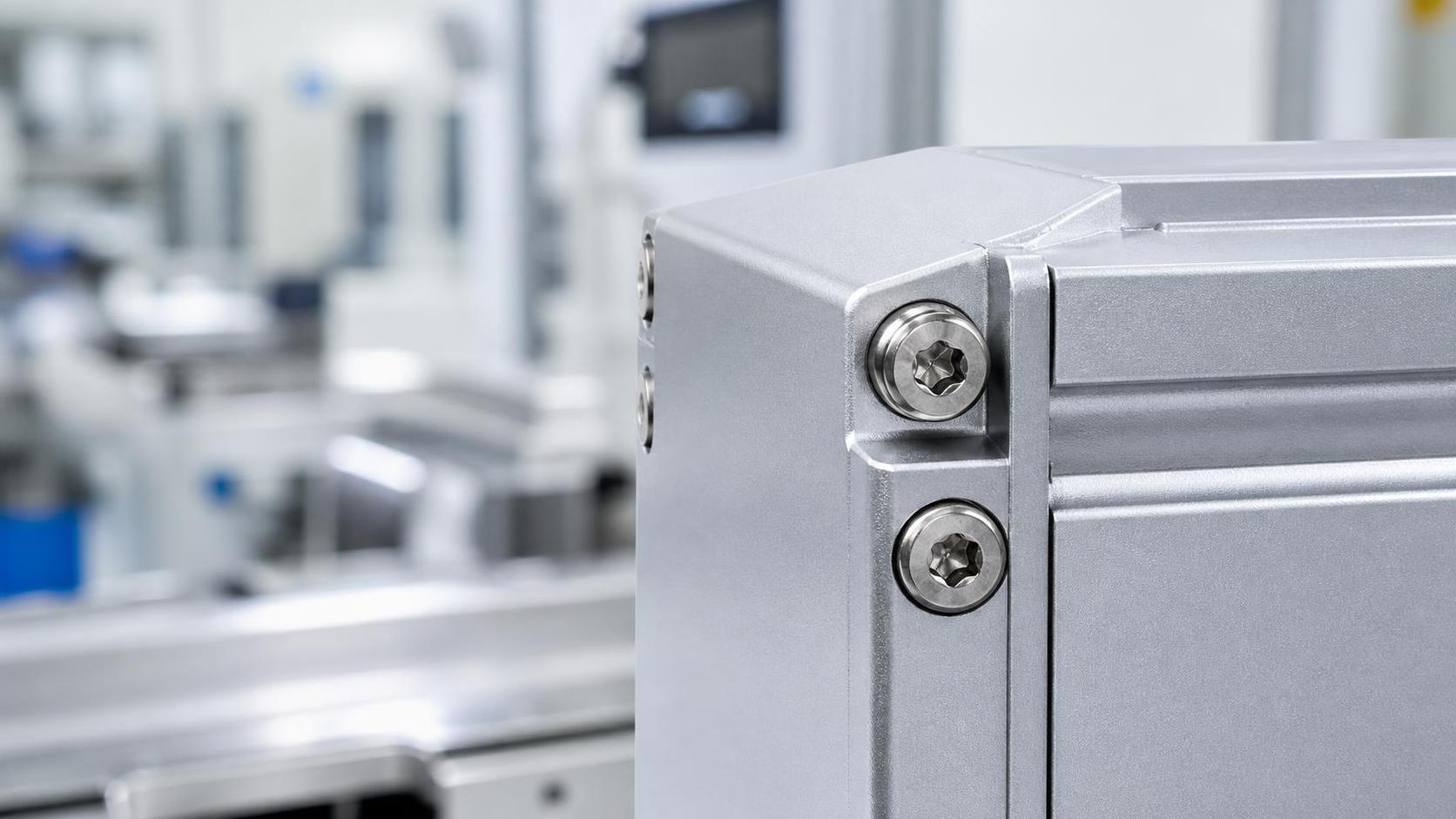
A fastening decision often becomes visible only after the equipment reaches a difficult operating condition: a joint loosens after repeated vibration, a standard bolt cannot clear a nearby housing, corrosion damages threads during maintenance, or an assembly sequence forces technicians to use awkward tools and inconsistent torque. In these situations, replacing one catalog part with another may not solve the underlying design problem.
Custom fasteners outperform standard parts when they remove a measurable constraint in the equipment design: they improve joint reliability, fit a restricted installation space, support a required material or coating system, simplify assembly, or meet a documented performance requirement that stock hardware cannot reliably satisfy. They are not automatically the better choice. When a standard part already meets load, environment, access, compliance, and serviceability requirements, customization can add cost and supply risk without creating meaningful value.
Start with the failure mode, not the drawing
The first question is not whether a custom screw, stud, pin, or nut can be made. Almost any geometry can be produced within manufacturing limits. The more useful question is: What is the standard part failing to achieve in this assembly?
A standard fastener may be technically adequate in isolation but unsuitable once the complete joint is considered. The problem may arise from clamp-load loss, poor thread engagement, head interference, galvanic corrosion, repeated disassembly, contamination, sealing requirements, or installation error. Defining the failure mode prevents a common mistake: specifying a special part merely because the existing joint performs poorly, even though the real cause is an incorrect tightening method, an unsuitable washer, weak mating material, or an overloaded connection.
Consider a compact enclosure where a conventional hex-head bolt blocks access to an adjacent component. A shorter bolt may restore clearance but leave insufficient thread engagement. A lower-profile head may fit, yet reduce the available drive strength. A custom fastener with a modified head, controlled shank length, and appropriate drive feature may resolve all three issues—but only after the joint requirements have been checked together.
Signs that a standard part is being forced into the job
- The required length is achieved by stacking washers, spacers, or improvised shims.
- Threads run through a shear plane where a plain shank would be more suitable.
- Assembly personnel need nonstandard tool angles or extensions that reduce torque consistency.
- The selected coating conflicts with the temperature, chemical exposure, or electrical requirements of the equipment.
- A part is repeatedly modified after purchase by cutting, drilling, grinding, or adding locking compounds to compensate for a design mismatch.
- The same joint requires several catalog components when a single integrated fastener could control location, preload, and retention more reliably.
These conditions do not automatically justify a custom specification. They do indicate that the total joint design deserves review rather than another like-for-like substitution.
Where custom geometry creates a real advantage
Geometry is usually the clearest reason to move beyond standard hardware. Equipment designers work around guards, castings, cable paths, seals, molded components, and service access constraints. A standard fastener range cannot cover every combination of head shape, shoulder length, grip length, thread length, drive recess, and under-head profile.
A custom shoulder screw, for example, can locate a moving component while providing a threaded retention section. Using a fully threaded standard bolt in the same location may allow the mating parts to bear on threads, increasing wear or creating inconsistent movement. Similarly, a captive screw can reduce the risk of dropped hardware in covers that require frequent service. That benefit is not simply convenience; in equipment where loose parts can enter sensitive areas, retaining the fastener may reduce maintenance-related risk.
Modified heads can also be justified where access is limited. A flange head may eliminate a separate washer and spread load over a larger area. A reduced-height head can create clearance, though its drive depth and torque capacity must still be verified. A custom drive interface may be useful where accidental removal, repeated servicing, or tool engagement is a concern, but it should not be chosen merely to make the product look proprietary. Specialized drives can complicate field maintenance and tool availability.
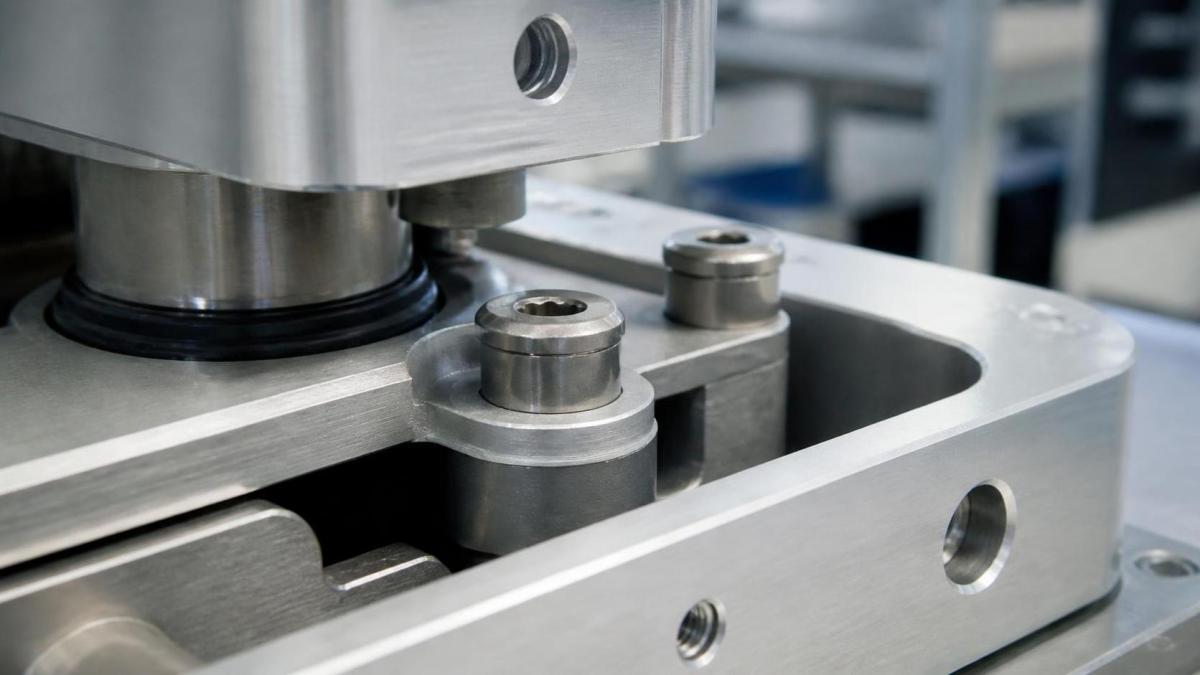
The most valuable geometric change is often modest. It may be a controlled unthreaded grip, a specific under-head radius, a relief groove that protects a seal, or a thread runout positioned away from a loaded interface. Small details can determine whether the load path behaves as intended.
Material and corrosion needs often change the decision
Material selection becomes more important when the joint is exposed to moisture, salt, chemicals, elevated temperature, electrical potential, or aggressive cleaning cycles. Standard carbon-steel fasteners with a common protective finish may be entirely appropriate for indoor equipment, but they can be a weak point in outdoor, marine-adjacent, washdown, chemical-processing, or food-handling environments.
Custom fasteners may allow the material, heat treatment, and surface treatment to be selected as one system rather than as separate compromises. Stainless steel, alloy steel, nickel-based materials, titanium alloys, brass, and engineered polymer fasteners each introduce different trade-offs in strength, corrosion resistance, conductivity, weight, galling tendency, and cost. The mating materials matter as much as the fastener itself.
For example, a corrosion-resistant fastener installed in aluminum equipment may still create trouble if the material pairing and local environment support galvanic attack. A coating can reduce that risk, but coating thickness may alter thread fit, affect torque-tension behavior, or lose effectiveness after repeated removal. In high-temperature service, a finish that works well at ambient conditions may degrade, while lubricants used during assembly may change friction and preload.
Material customization is justified when it addresses a defined exposure or compatibility issue. It is less justified when it is based only on the assumption that a more expensive alloy will make a joint better. Higher corrosion resistance does not automatically provide higher preload capacity, better fatigue behavior, or easier installation.
Load, fatigue, and vibration are joint-design problems
Fasteners do not simply “hold parts together.” Their performance depends on how preload, external loading, joint stiffness, friction, and movement interact. A standard part may have sufficient nominal tensile strength while still performing poorly in an assembly subjected to cyclic loading or vibration.
Custom fasteners can help when the geometry must be tuned to the load path. A longer grip length may improve elastic stretch and preload retention in some joints. A properly located shoulder can keep threads out of a shear interface. A flange or washer face may distribute compressive load on softer materials. A controlled radius can reduce stress concentration near the head-to-shank transition. These changes are meaningful only when coordinated with the clamped materials and tightening method.
It is risky to assume that increasing fastener strength is the main cure for a loosening or fatigue problem. A stronger bolt can transfer more load into threads, thin flanges, inserts, or brittle mating components. It may also require a torque level that assembly tools cannot control accurately. Where vibration is the concern, examine joint separation, loss of preload, bearing-surface slip, and transverse movement before specifying a special locking feature.
Questions to resolve before changing the fastener
- What external load reaches the joint: tension, shear, bending, vibration, thermal movement, or a combination?
- Is the joint intended to remain clamped, or does the fastener also act as a locating pin, hinge axis, or wear surface?
- How much thread engagement is available in the mating material, and is an insert involved?
- Does the tightening process control torque, angle, direct tension, or another parameter?
- Will the joint be removed during service, and could wear, galling, coating damage, or reused locking features affect reassembly?
Answers to these questions may point toward a custom part, but they may also reveal a better alternative such as a revised joint stack, dowel pins for location, a different washer arrangement, improved tool access, or a changed installation procedure.
Assembly efficiency can justify customization—within limits
A special fastener is often considered when assembly time is inconsistent or error-prone. This can be a sound reason, especially when equipment contains many repeated joints or when access is limited. A combined washer-head fastener, captive screw, pre-applied patch, built-in spacer, or controlled-length stud can reduce component count and remove steps that depend heavily on operator judgment.
The benefit must be evaluated across the full assembly and service cycle. A custom captive fastener may prevent lost hardware during maintenance, but its retaining feature must survive the required number of removals. A pre-applied locking patch can improve process repeatability, yet the storage condition, installation temperature, and reuse expectations need to be compatible with that feature. A custom stud can support a more reliable assembly sequence, but it must not create tool-clearance problems during replacement.
Where automated assembly is involved, feedability is a major consideration. Unusual head profiles, very short parts, asymmetrical shapes, and delicate coatings can create handling difficulties. A design that improves the joint but disrupts feeding or inspection may shift cost and risk downstream. Include packaging, orientation, tool engagement, torque verification, and traceability requirements in the specification review.
Compare lifecycle value rather than unit price alone
Standard parts usually win on availability, established specifications, lower unit cost, and replacement convenience. For low-volume equipment, prototype builds, noncritical covers, and straightforward structural joints, those advantages can be decisive. A custom fastener introduces tooling, minimum order quantities, drawing control, approval work, and supplier dependency. It should therefore solve a problem that is expensive or risky enough to justify those burdens.
A practical comparison should include more than the piece price. Review the number of components removed from the bill of materials, assembly time, rework exposure, field-service burden, inspection requirements, inventory complexity, and cost of an equipment failure. Also consider whether the custom feature can be sourced from more than one qualified manufacturer. A part with an overly unique geometry or proprietary process can become a supply vulnerability if no alternate source is feasible.
Prototype and early production quantities deserve extra caution. It is often sensible to test the joint concept with available components before freezing a dedicated design, provided the temporary hardware is representative enough to validate the relevant load path and installation conditions. A prototype built with a substituted material, different coating, or altered head geometry may not predict the performance of the intended custom part.
Specify only the features that control performance
An over-specified drawing can be almost as problematic as an under-specified one. Requiring unusually tight tolerances on every dimension, demanding a material grade without defining the operating reason, or combining incompatible finish and hardness requirements can reduce manufacturability without improving the joint.
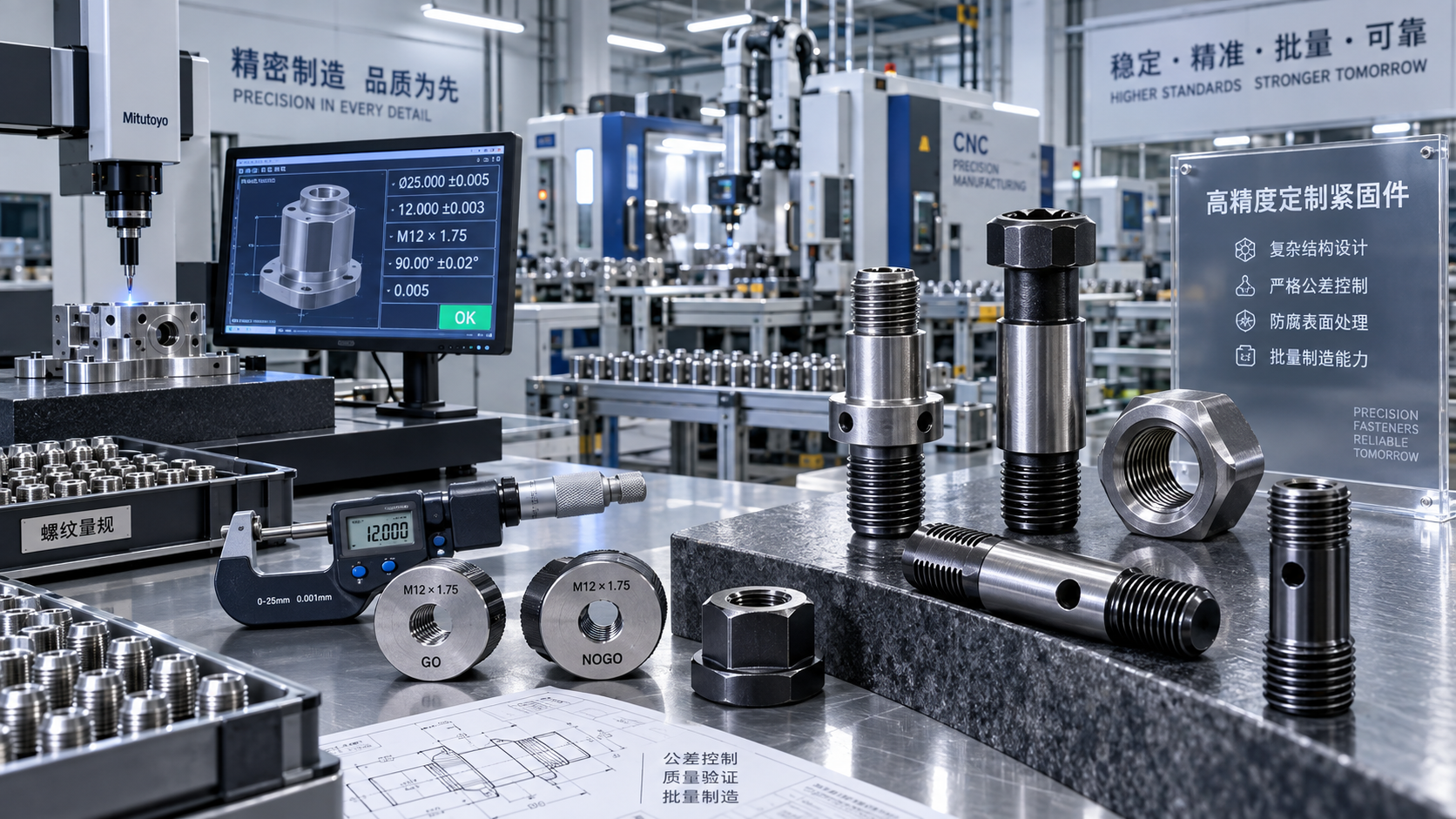
A useful custom fastener specification identifies the functional requirements clearly: thread form and class, material condition, required strength or hardness range where relevant, critical dimensions, head and drive geometry, bearing surface requirements, coating or passivation, lubrication status, marking needs, inspection criteria, and packaging constraints. Critical tolerances should be assigned to dimensions that affect fit, preload, sealing, location, or tool access—not copied broadly across the drawing.
It is also important to identify which conditions are controlled by the fastener supplier and which belong to equipment assembly. A supplier can produce a stated geometry and finish, but final clamp load may depend on mating-part surface condition, lubrication, assembly tool calibration, operator access, and the actual torque procedure. Treating the fastener drawing as the entire joint specification leaves a gap where many field problems begin.
Questions that often arise during selection
Can a custom fastener be justified for a low-volume machine?
Yes, when the standard alternative creates a meaningful reliability, safety, clearance, corrosion, or serviceability problem. Low volume does make tooling and sourcing costs more visible, so the design should first confirm that a revised standard joint cannot achieve the same result.
Is a custom coating enough to solve corrosion problems?
Not necessarily. Corrosion performance depends on the fastener material, coating, mating materials, trapped moisture, temperature, installation damage, and service environment. A coating choice should be reviewed as part of the complete joint rather than treated as an isolated upgrade.
Should a special fastener replace a locating feature?
Only when it is designed and verified to perform both functions. Fasteners are primarily intended to clamp. Where repeatable alignment or shear transfer is critical, separate locating features such as dowels, shoulders, or fitted interfaces may provide more dependable control.
Custom fasteners are most effective when they are treated as engineered joint components rather than upgraded catalog items. The right decision begins with a defined constraint, verifies the complete load and assembly condition, and keeps the specification focused on features that standard hardware cannot deliver.
Technical Specifications
- How to verify Global Industrial Insights sourcing informationAuthor :Industrial Machinery Editorial Team
- Which thermoplastic elastomers stay flexible at low temperatures?Author :Polymers & Rubber Editorial Team
- Which Shore hardness suits soft touch TPE for handheld grips?Author :Polymers & Rubber Editorial Team
Expert Insights

Chief Security Architect
Dr. Thorne specializes in the intersection of structural engineering and digital resilience. He has advised three G7 governments on industrial infrastructure security.
Core Sector // 01
Security & Safety
- What to verify before choosing a screw manufacturer in IndiaAuthor :Metals & Fabrication Editorial Team

- How to assess fastener traceability when sourcing in EuropeAuthor :Metals & Fabrication Editorial Team

- What to do when a washer shipment arrives defectiveAuthor :Metals & Fabrication Editorial Team

- Which custom fastener capabilities matter for complex assemblies?Author :Metals & Fabrication Editorial Team

- When do custom fasteners outperform standard parts in equipment design?Author :Metals & Fabrication Editorial Team

- High Tensile Fasteners: Key Grade Checks Before Project ApprovalAuthor :Metals & Fabrication Editorial Team

- Bolts and Nuts Grades Explained for Safer AssemblyAuthor :Metals & Fabrication Editorial Team

- Flat Washers vs Spring Washers: When Should Each Type Be Used?Author :Metals & Fabrication Editorial Team