Industrial Connectors Explained: Main Types, Ratings, and Typical Applications
Author
Date Published
Reading Time
Why do industrial connectors matter so much?
Industrial connectors sit between theory and real operation. They carry power, signals, and data where vibration, dust, moisture, heat, and downtime all raise the stakes.
That is why connectors are discussed far beyond electrical design. They affect maintenance cycles, compliance checks, sourcing choices, and even logistics planning when replacement parts are difficult to standardize.
In practical terms, understanding connectors helps when comparing product listings, reading certification claims, or checking whether a component fits a real industrial environment rather than a catalog description.
When people say “industrial connectors,” what types are they usually comparing?
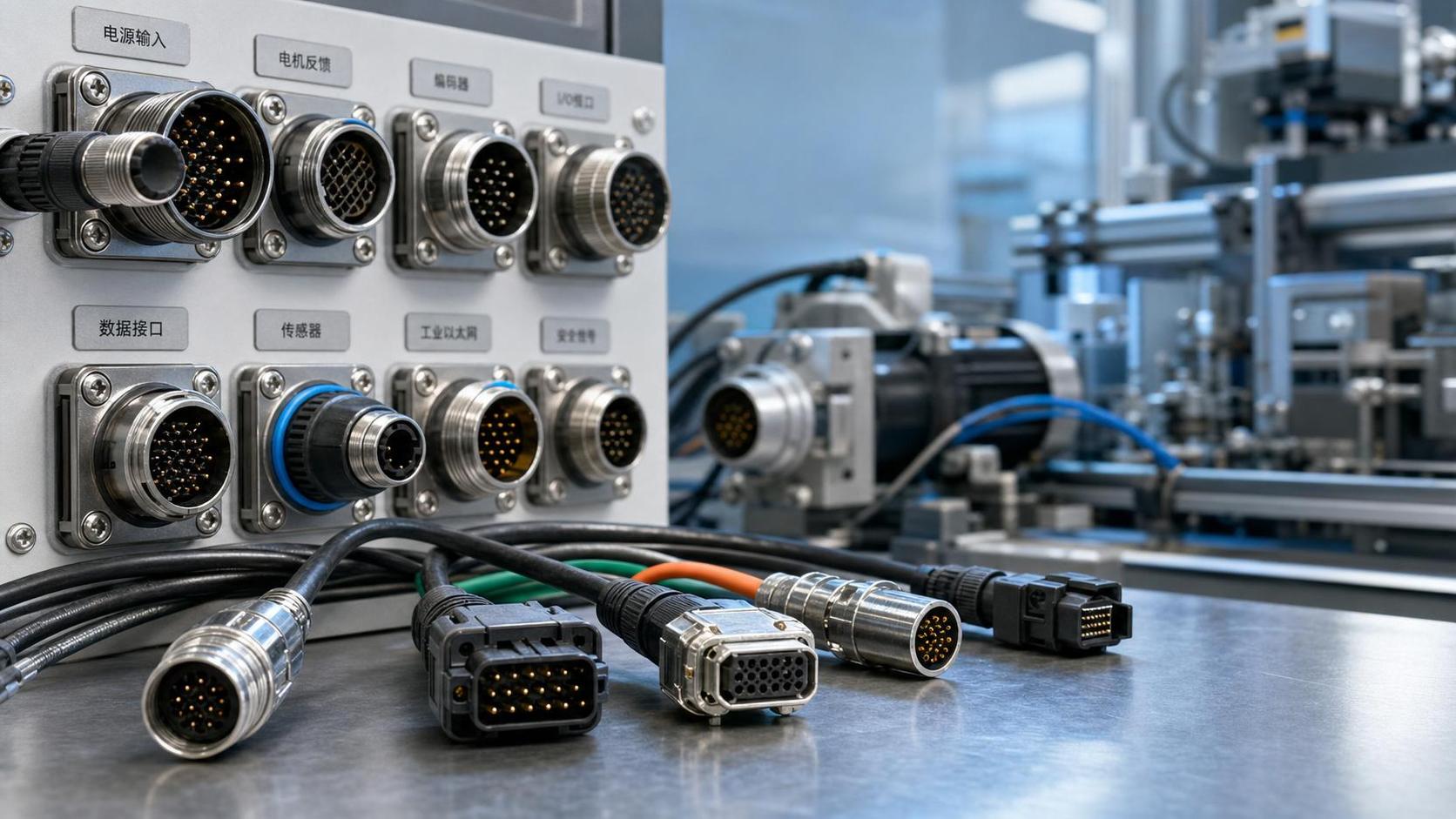
The term covers several families, and each one solves a different connection problem. A useful starting point is to group connectors by what they carry and where they are used.
- Power connectors: built for higher current and voltage, often used in machinery, control cabinets, and heavy equipment.
- Signal connectors: used for sensors, switches, actuators, and lower-current control lines.
- Data connectors: designed for industrial Ethernet, fieldbus, and communication systems where transmission quality matters.
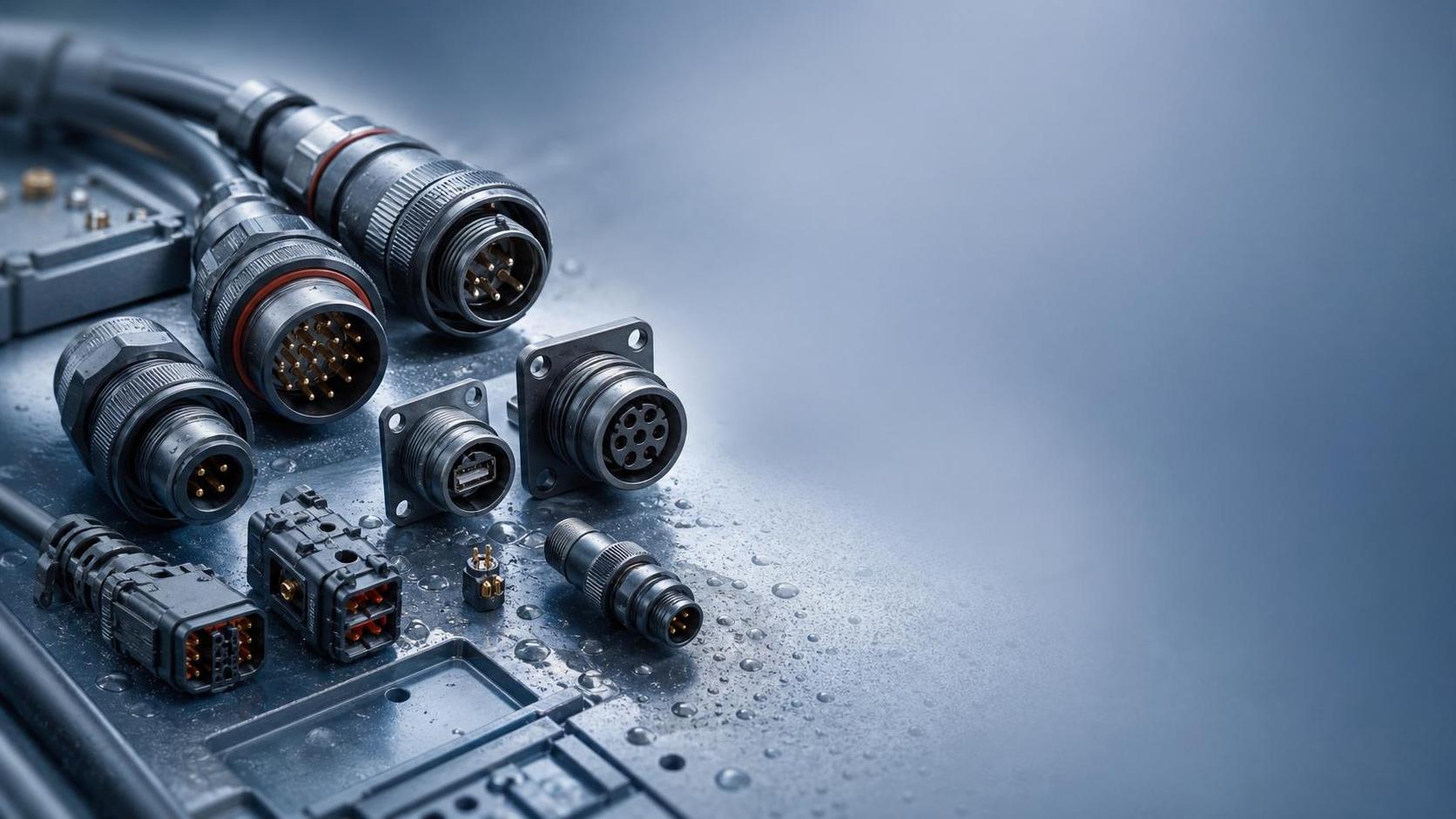
- Circular connectors: common where compact size, quick coupling, and environmental sealing are needed.
- Rectangular connectors: preferred when many contacts must be organized in a robust, modular housing.
More specialized connectors also appear in rail, renewable energy, food processing, and outdoor infrastructure. The key point is that connector shape alone does not define suitability.
A circular connector may handle signal or power. A rectangular connector may be modular enough to combine both. The application decides the category that matters most.
Which ratings deserve attention before comparing connectors?
This is where many comparisons become misleading. Two connectors can look similar online but differ sharply in current capacity, sealing, durability, and compliance status.
The table below helps separate the ratings that usually deserve a first review.
In actual sourcing work, the most common mistake is treating only one rating as decisive. A connector with high current capacity may still fail the environment, cable, or certification requirement.
Where are different connectors typically used?
Typical applications depend on whether the system prioritizes ruggedness, speed, modularity, or ease of service. That is why the same connector family may appear in several industries for different reasons.
Circular connectors often appear in robotics, sensors, conveyors, and packaging lines. They are compact, sealed, and relatively quick to connect during installation or field replacement.
Rectangular connectors are more common in machine tools, power distribution modules, and interfaces requiring many contacts. They help organize complex wiring where cabinet space and service access matter.
Data connectors are widely used in industrial networks, vision systems, and remote monitoring. As factories add more automation, connector selection increasingly affects communication stability as much as physical durability.
Outdoor systems, renewable installations, and transport equipment place extra pressure on sealing, UV resistance, and temperature performance. In those cases, application notes are often as important as catalog ratings.
How do you narrow down the right connectors without overcomplicating the choice?
A practical selection process starts with the circuit role. Ask whether the connector carries power, control signals, or data, then confirm the load, cable size, and mating frequency.
After that, review the environment. Dust, oil, washdown exposure, vibration, and outdoor weather often eliminate many options faster than price comparison does.
- Match the connector to the real duty cycle, not the best-case condition.
- Check compatibility with existing cable glands, housings, and panel cutouts.
- Verify documentation for standards, traceability, and material declarations.
- Compare lead time and second-source availability when continuity matters.
This last point is often missed. Connectors may be technically suitable but commercially risky if supply is unstable, region-specific, or tied to a single hard-to-replace specification.
What mistakes cause trouble later?
One common issue is assuming that connectors with the same form factor are interchangeable. Contact materials, sealing design, plating, locking style, and testing history may differ more than expected.
Another problem is ignoring installation quality. Even strong connectors underperform when crimping is poor, torque is inconsistent, or cable strain relief is missing.
There is also a documentation gap in many projects. A connector may physically fit, yet later fail audit, export, or maintenance review because certification records were not checked early.
For that reason, connector evaluation should include both engineering data and supply-chain context. Price alone rarely reflects the real lifecycle cost.
What is the best next step after understanding the basics?
Start with a short comparison sheet for the connectors under review. Include electrical ratings, IP level, temperature range, compliance marks, lead time, and intended application.
Then compare those details against the actual operating environment, not just the equipment drawing. In many cases, that simple check reveals the most realistic option.
For ongoing research, it also helps to track standards updates, sourcing shifts, and application references across the wider market. Connectors are small parts, but they often signal larger decisions about reliability, serviceability, and procurement risk.
Technical Specifications
- How to test melt flow consistency in batches of recycled plasticsAuthor :Polymers & Rubber Editorial Team
- When does a cast resin transformer need high-altitude derating?Author :Electrical Components Editorial Team
- How to verify Global Industrial Insights sourcing informationAuthor :Industrial Machinery Editorial Team
Expert Insights

Chief Security Architect
Dr. Thorne specializes in the intersection of structural engineering and digital resilience. He has advised three G7 governments on industrial infrastructure security.
Core Sector // 01
Security & Safety
- What to check when sourcing industrial connectors from GermanyAuthor :Electrical Components Editorial Team

- When DIN rail terminal blocks need end stops to prevent looseningAuthor :Electrical Components Editorial Team

- How to Evaluate a Terminal Blocks Supplier for Quality and Lead TimeAuthor :Electrical Components Editorial Team

- High Current Connectors: Common Failure Causes and How to Prevent OverheatingAuthor :Electrical Components Editorial Team

- Terminal Blocks Selection Guide for Reliable WiringAuthor :Electrical Components Editorial Team

- Industrial Connectors Explained: Main Types, Ratings, and Typical ApplicationsAuthor :Electrical Components Editorial Team

- How to Choose Connectors for Vibration, Moisture, and Repeated Plugging CyclesAuthor :Electrical Components Editorial Team