How do different types of resins compare in UV resistance?
Author
Date Published
Reading Time
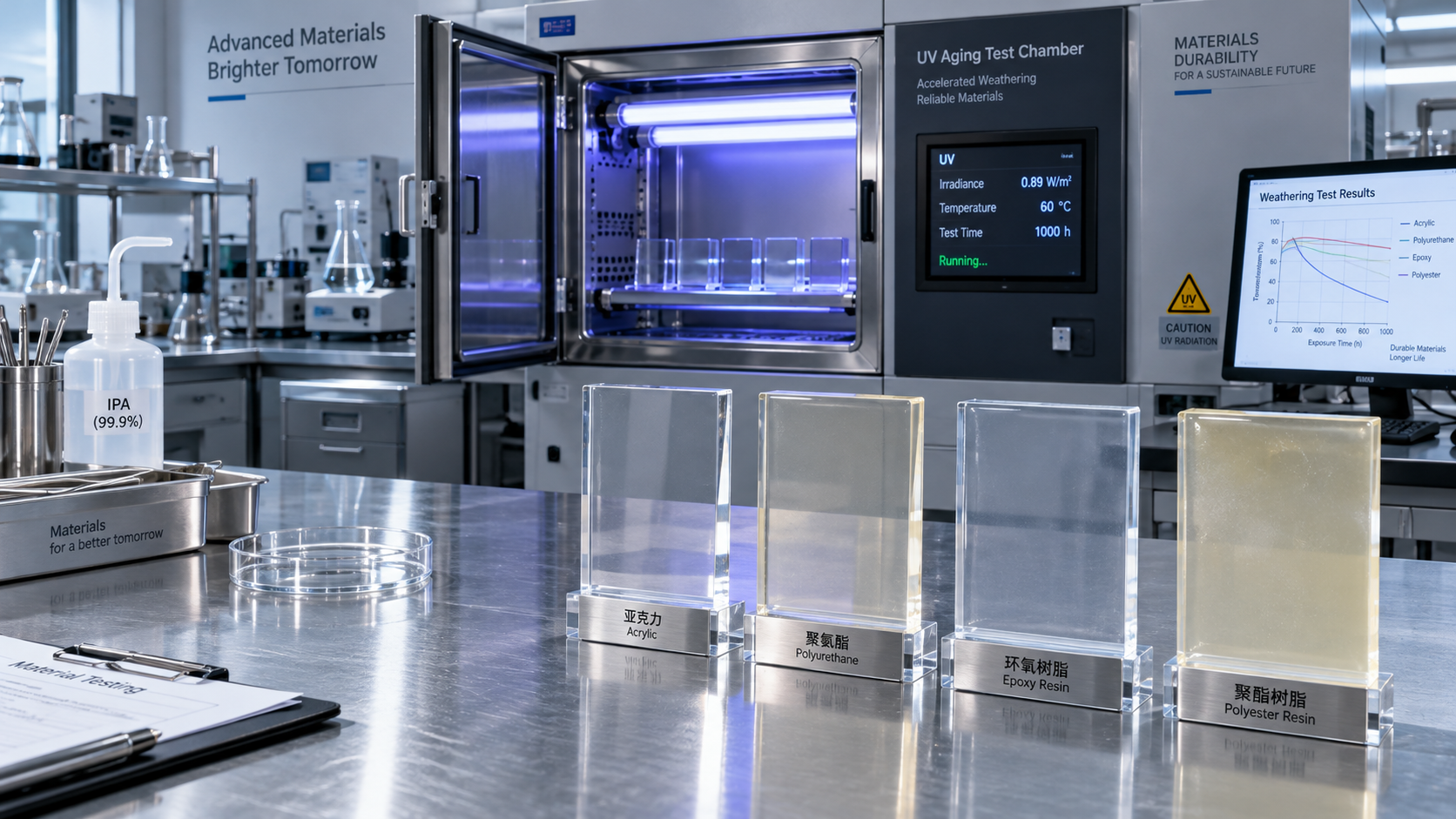
Acrylic resins and aliphatic polyurethane systems are generally the strongest starting points when outdoor color stability and gloss retention matter. Conventional aromatic epoxies and aromatic polyurethanes are more vulnerable to discoloration under sunlight. Polyester resins occupy a broader middle ground: an exterior-grade gelcoat can perform well, while an unprotected general-purpose polyester laminate may show surface deterioration much sooner.
That comparison provides a useful shortlist, but it cannot establish service life. When comparing different types of resins, technical evaluators need to distinguish appearance retention from structural durability and assess the finished formulation under relevant exposure conditions. A resin can yellow while retaining useful strength, or maintain an acceptable appearance while developing cracks, losing adhesion, or allowing moisture to reach an underlying substrate.
Define what UV resistance must protect
“UV resistant” can refer to several different outcomes: limited yellowing, retained gloss, resistance to chalking, or preservation of mechanical properties. These outcomes do not necessarily move together. For a transparent casting, a small color change may be unacceptable. For an opaque composite enclosure, surface fading may be tolerable if impact resistance, sealing performance, and dimensional stability remain adequate.
Sunlight exposure also interacts with heat, oxygen, and moisture. UV radiation can initiate chemical degradation, while temperature changes and wetting cycles contribute to cracking, blistering, or adhesion failure. A material selected for a dry outdoor cover therefore needs a different evaluation from one intended for a humid coastal installation, even when both receive substantial sunlight.
Before comparing resin families, define the component’s function and its likely failure limit. A useful specification separates three questions:
- Appearance: How much color change, gloss loss, haze, or chalking is acceptable?
- Functional performance: Which properties must remain adequate, such as impact strength, flexibility, adhesion, or electrical insulation?
- Exposure: Will the surface experience direct sunlight, sunlight through glazing, standing water, chemical splash, abrasion, or repeated cleaning?
This distinction prevents a common selection error: accepting a strong claim about color retention as evidence that the complete component will survive outdoors.
How the main resin families compare
Acrylic: a strong baseline for appearance retention
Acrylic chemistry generally offers good resistance to sunlight-induced discoloration and weathering. PMMA and suitable exterior acrylic coatings are therefore useful reference materials when optical clarity or durable appearance drives selection. Their chemistry is less prone to the rapid yellowing associated with many conventional aromatic epoxy systems.
However, “acrylic” describes a broad range of products. A thermoplastic acrylic sheet, a waterborne acrylic coating, and a crosslinked acrylic coating have different mechanical properties and formulation requirements. Pigments, modifiers, crosslinkers, and other ingredients can alter the weathering behavior of the finished material.
For an exposed transparent cover or a decorative surface, an appropriate acrylic grade deserves early consideration. Selection still needs to address impact loading, solvent contact, operating temperature, and stress cracking. Strong weatherability does not automatically make a particular acrylic suitable for every protective or structural role.
Polyurethane: the aliphatic–aromatic distinction matters
Polyurethane cannot be assigned a single UV-resistance rating. Systems based on aliphatic isocyanates generally provide better color and gloss retention than those based on aromatic isocyanates. Aliphatic polyurethane coatings are consequently strong candidates for exposed finishes where appearance and abrasion resistance both matter.
Aromatic polyurethanes can yellow or darken under UV exposure, including formulations that retain useful mechanical performance after the color changes. This may be acceptable in a concealed component or a protected layer, but it creates a substantial limitation for a clear finish or a pale decorative surface.
The rest of the polyurethane chemistry also matters. Polyol selection affects properties such as hydrolysis resistance, flexibility, and oxidation resistance. An aliphatic designation supports an initial weatherability assessment; it does not establish resistance to prolonged moisture exposure, chemicals, or every combination of heat and sunlight.
For evaluation purposes, ask whether the proposed polyurethane is aliphatic or aromatic, what application the grade was designed for, and whether weathering results cover the actual clear or pigmented formulation. A generic polyurethane data sheet leaves too much uncertainty for an exposed finish.
Epoxy: protect the exposed surface
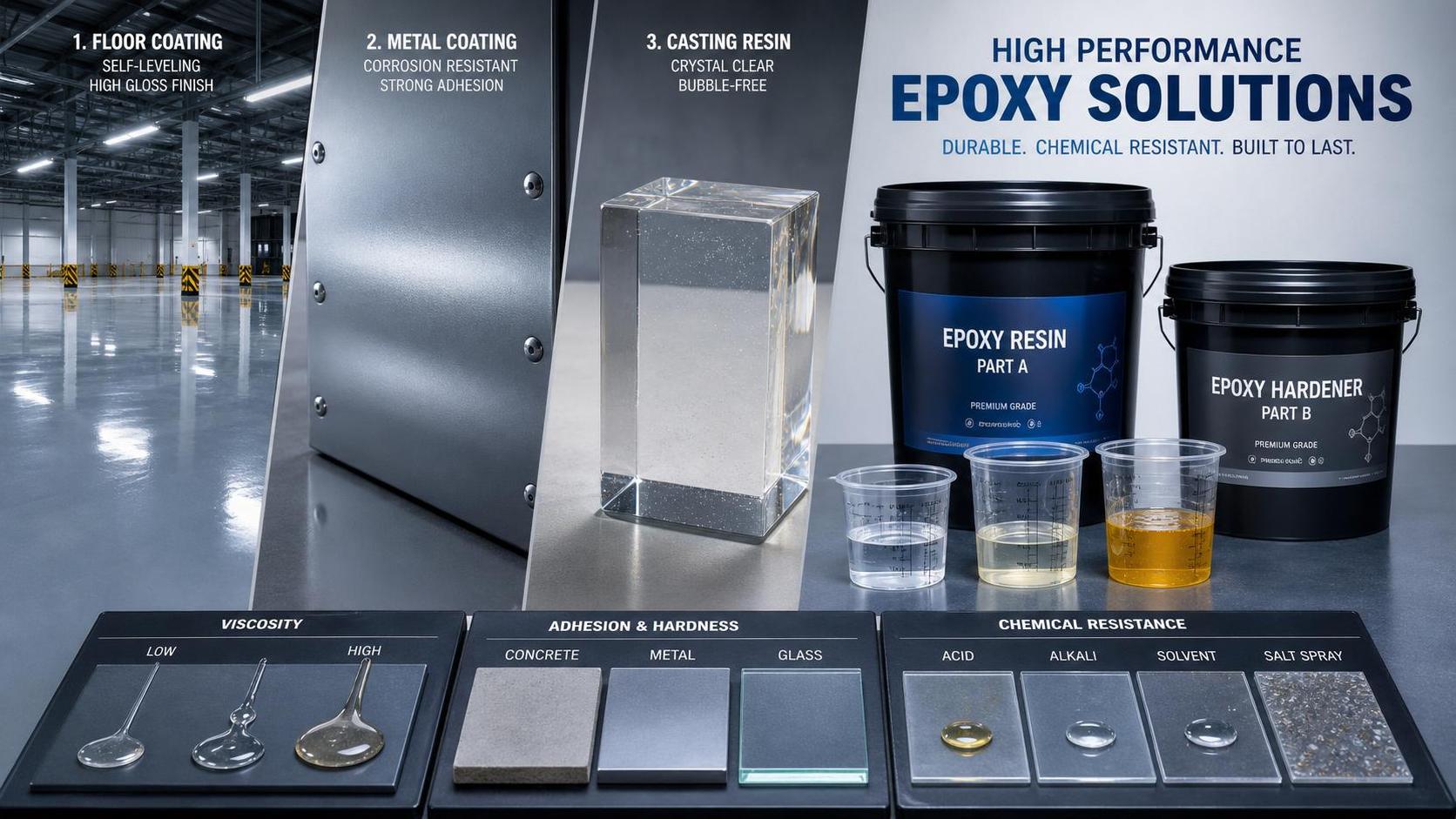
Conventional aromatic epoxy systems provide valuable adhesion, chemical resistance, and mechanical performance, but their exposed surfaces are vulnerable to UV-driven yellowing and chalking. A clear epoxy casting may develop an amber tint; a pigmented epoxy coating may lose gloss and produce a powdery surface.
These changes do not necessarily indicate immediate failure throughout the material. Degradation may initially concentrate near the surface. Nevertheless, appearance can become unacceptable, and continued exposure can compromise surface integrity or contribute to deterioration of a coating system.
UV absorbers and stabilizers can delay these effects, but they do not make every clear epoxy suitable for long-term outdoor exposure. Claims such as “non-yellowing epoxy” need a defined test duration, exposure method, specimen thickness, and acceptance criterion. Without those details, the claim offers little basis for comparing products.
An exterior system may use epoxy for its underlying performance and a compatible weatherable topcoat for sunlight protection. That approach introduces additional evaluation requirements: intercoat adhesion, surface preparation, coating thickness, edge coverage, and maintenance access. Some specialty epoxy chemistries offer improved color stability, but performance should be established for the specific formulation.
Polyester: distinguish the laminate from its protective finish
Unsaturated polyester resins used in composites vary considerably in outdoor performance. General-purpose grades should not be treated as equivalent to formulations designed for demanding exterior exposure. Resin chemistry, cure quality, pigmentation, and the presence of an effective surface layer all influence the result.
A polyester composite may depend on a weatherable gelcoat to preserve appearance and protect the underlying laminate. Evaluating only the laminating resin misses the surface that receives sunlight, rain, cleaning chemicals, and abrasion. Conversely, good gelcoat performance does not establish that the complete laminate will resist moisture-related damage or retain its required strength.
Orthophthalic and isophthalic polyester labels help identify formulation families, but they do not provide a reliable standalone UV ranking. Exposure data for the finished gelcoat-and-laminate construction are more useful. Where the gelcoat is thin, damaged, or absent at cut edges, local deterioration may govern maintenance requirements.
Polyester powder-coating resins belong to a different application category from unsaturated polyester laminating resins. Exterior-grade polyester powder coatings can provide good weatherability, but that performance should not be transferred to an unrelated product merely because both carry the polyester name.
Why formulation can change the ranking
A comparison of neat resin chemistry establishes a starting point. Buyers purchase a formulated material or a finished system, and its additives, color, thickness, and processing history can substantially change performance.
UV absorbers reduce the amount of damaging radiation reaching susceptible parts of the material. Their effectiveness depends on their absorption characteristics, concentration, compatibility, and retention during service. Thin films offer a shorter optical path than thick sections, so results from a thick casting cannot automatically substantiate a thin coating claim.
Hindered amine light stabilizers, or HALS, interrupt degradation reactions involving free radicals. They can complement UV absorbers, but their suitability depends on the resin and the wider formulation. A supplier’s statement that a product contains a “UV package” does not reveal how well that package works after cure and prolonged exposure.
Pigmentation adds another major variable. Suitable pigments can screen the binder from UV, while the pigment itself must also resist fading. Surface treatment and pigment grade matter; an ingredient name alone is insufficient to predict durability. Clear materials have fewer opportunities to hide discoloration or protect the resin through opaque pigmentation.
Dark colors can increase surface temperature in sunlight, adding thermal stress even when UV screening is effective. A light-colored test panel therefore may not represent the same formulation in black. Comparing finishes requires attention to both photochemical degradation and the temperatures that the actual color can produce.
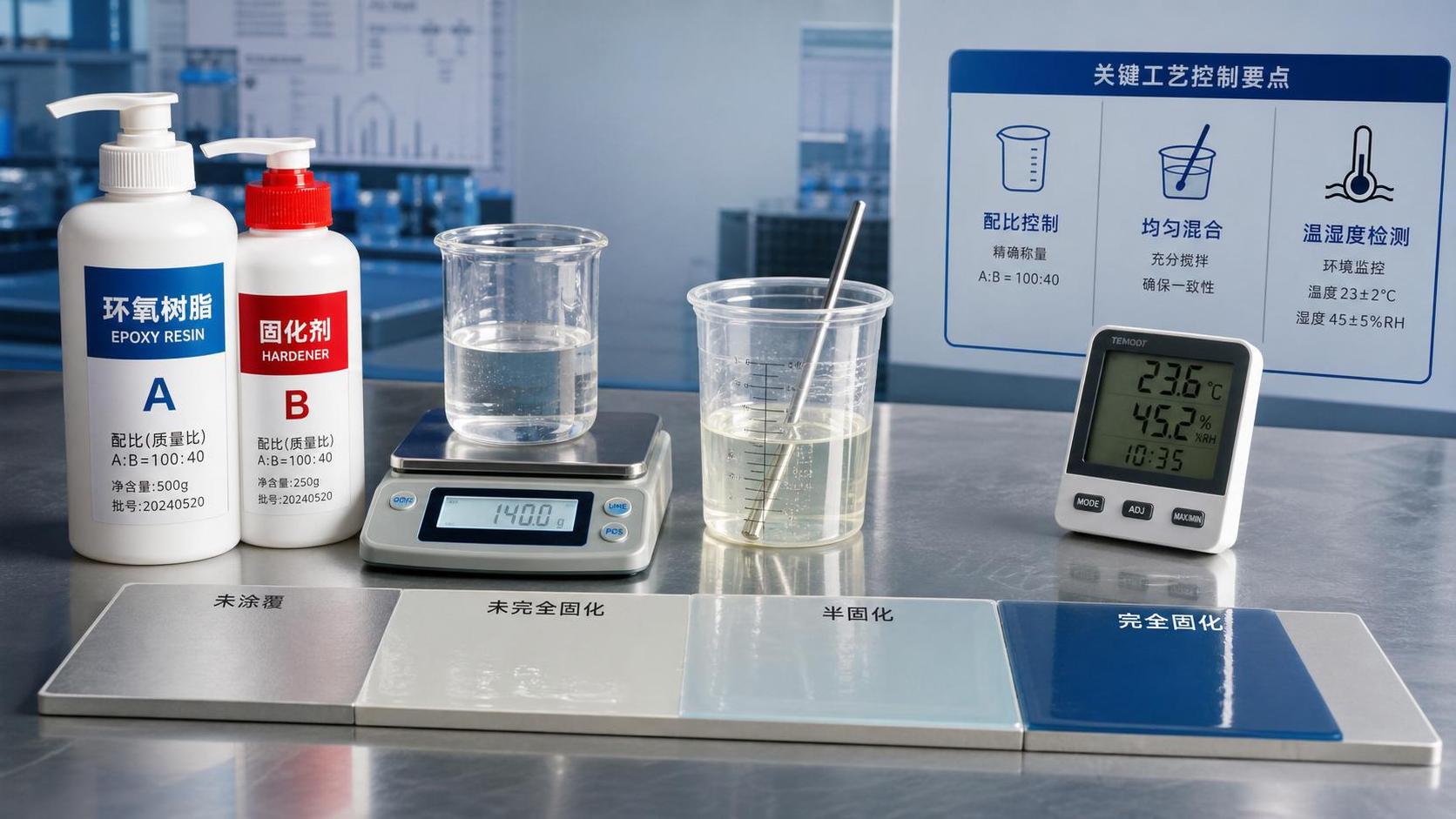
Processing quality can overwhelm a favorable chemistry choice. Incomplete cure, incorrect mixing, unsuitable application conditions, or poor substrate preparation may cause early defects that resemble inadequate weatherability. Weathering specimens should reflect the proposed production process, including cure schedule and coating thickness.
Finally, UV curing and UV resistance describe different properties. A resin that hardens under ultraviolet light may still discolor or degrade in sunlight. UV-cured acrylates, urethanes, and epoxies require their own weathering evidence; the curing method provides no automatic assurance of outdoor durability.
Read weathering data as a comparison, not a service-life guarantee
Accelerated weathering is useful for screening formulations and comparing candidate systems. Its value depends on the exposure method and the measurements taken afterward. A result described only as “passed 1,000 hours” cannot establish suitability unless the test conditions and pass criteria are available.
Fluorescent UV methods, including those covered by ASTM G154 and ISO 4892-3, expose specimens to specified lamp conditions and may combine irradiation with condensation or water spray. Xenon-arc methods, including ASTM G155 and ISO 4892-2, use filtered radiation to simulate aspects of sunlight exposure. These approaches serve different evaluation needs; their exposure hours are not interchangeable.
Within either method, lamp or filter selection, irradiance, temperature, moisture cycle, and specimen mounting influence the outcome. For products used behind glazing, the filtered light environment deserves particular attention. A test configured for direct outdoor sunlight may produce a different material ranking.
Request results that identify the formulation, color, specimen thickness, substrate, cure conditions, exposure cycle, and measured changes. Useful endpoints include color difference, gloss retention, haze, chalking, cracking, and adhesion. Structural or load-bearing components also need relevant mechanical measurements after exposure. A photograph alone cannot establish retained strength.
Accelerated-test hours should not be converted into outdoor years using a universal multiplier. Correlation depends on the degradation mechanism, climate, orientation, and service conditions. Natural outdoor exposure provides an important check, particularly for long service-life claims or applications where failure would be costly. Field exposure and accelerated testing are most useful when they support the same acceptance criteria.
For a practical selection program, compare candidates against a material with relevant service history under the same laboratory conditions. Test the proposed finish or assembly, including its topcoat, pigment, and substrate. Where edges, scratches, or joints will be exposed, representative specimens can reveal weaknesses that an intact flat panel conceals.
Turn the comparison into a material decision
For a transparent outdoor part, begin with weatherable acrylic grades and suitable aliphatic polyurethane formulations, then compare clarity retention alongside impact, chemical, and temperature requirements. Clear epoxy needs stronger supporting evidence and may require a protective coating whose maintenance becomes part of the design.
For an opaque protective coating, assess the complete system. An epoxy primer with a weatherable acrylic or aliphatic polyurethane finish may satisfy a different balance of adhesion, corrosion protection, and appearance than a single resin layer. For molded polyester composites, evaluate the exposed gelcoat together with the laminate and edge details.
The final choice should follow a documented failure limit: acceptable appearance change, minimum retained functional properties, and relevant exposure conditions. If a candidate has excellent gloss retention but no evidence for the property that keeps the component safe or useful, the evaluation remains incomplete. The most defensible selection is the formulation and construction that preserve those required properties under a representative test program.
- Last One:No more articles
- Next Article:How heat treatment affects the toughness of alloy steel platesOct 15, 2026
Technical Specifications
- How do different types of resins compare in UV resistance?Author :Chemical Industry Editorial Team
- How heat treatment affects the toughness of alloy steel platesAuthor :Metals & Fabrication Editorial Team
- How to fix sliding doors and windows that are difficult to openAuthor :Construction Materials Editorial Team
Expert Insights

Chief Security Architect
Dr. Thorne specializes in the intersection of structural engineering and digital resilience. He has advised three G7 governments on industrial infrastructure security.
Core Sector // 01
Security & Safety
- How do different types of resins compare in UV resistance?Author :Chemical Industry Editorial Team

- Which resin types suit composite parts exposed to high temperatures?Author :Chemical Industry Editorial Team

- How to verify REACH compliance for epoxy resin before purchaseAuthor :Chemical Industry Editorial Team

- Resins Explained: Common Types, Properties, and Industrial UsesAuthor :Chemical Industry Editorial Team

- How to Compare Resin Prices: What Really Affects Material Cost and Supply RiskAuthor :Chemical Industry Editorial Team

- Epoxy Resins for Flooring, Coatings, and Casting: How to Choose the Right TypeAuthor :Chemical Industry Editorial Team

- Why Epoxy Resins Fail to Cure Properly: 7 Causes and Practical FixesAuthor :Chemical Industry Editorial Team