Granite Countertop Selection: Finish, Density, and Daily Wear
Author
Date Published
Reading Time
Granite Countertop Selection: Finish, Density, and Daily Wear
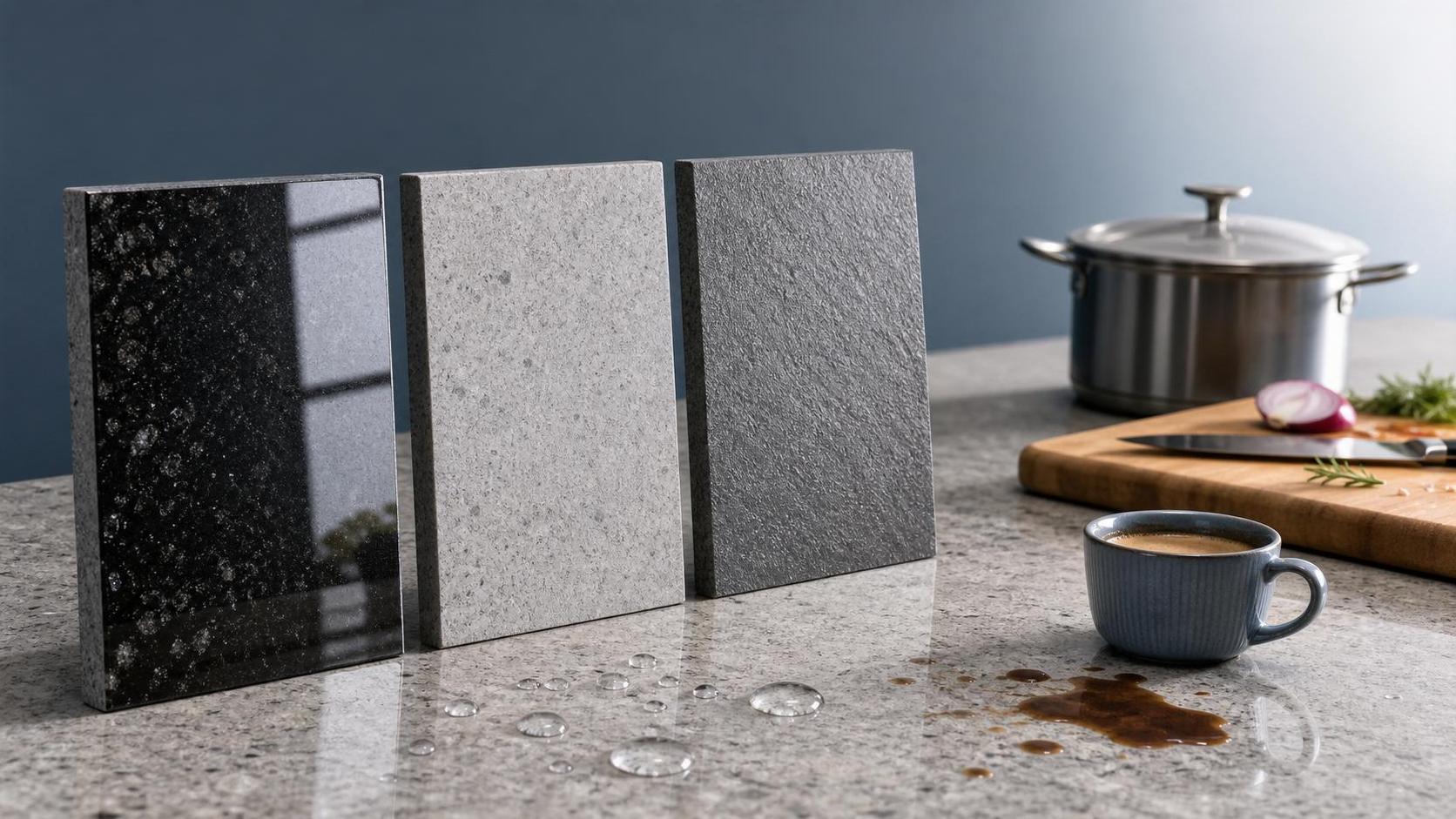
Choosing the right granite countertop involves more than color alone. Finish, density, and wear resistance shape how the surface looks, feels, and ages over time.
That matters because granite is used hard every day. It faces spills, hot pans, knife contact, cleaning products, and constant traffic in busy kitchens.
A smart granite decision balances appearance with maintenance, durability, and long-term value. Once those basics are clear, comparing options becomes much easier.
Why Finish Changes How Granite Performs
Granite finish is not just a style detail. It directly affects stain visibility, scratch appearance, grip, reflection, and everyday upkeep.
Polished granite is still the most common choice. It has a glossy surface, stronger color contrast, and better resistance to surface moisture.
This finish suits kitchens where easy wiping matters. It also helps highlight veining and mineral movement, which is often a big reason people choose granite.
Honed granite has a matte, softer look. It feels more understated, but it can show oils, fingerprints, and dark spots more quickly in heavy-use areas.
Leathered granite sits between the two. It offers texture, lower glare, and better disguise for crumbs, water marks, and minor wear.
- Choose polished granite for shine, stronger pattern depth, and simpler cleaning.
- Choose honed granite for a quiet, modern look with less reflection.
- Choose leathered granite for texture and better everyday mark concealment.
Density Matters More Than Many Buyers Expect
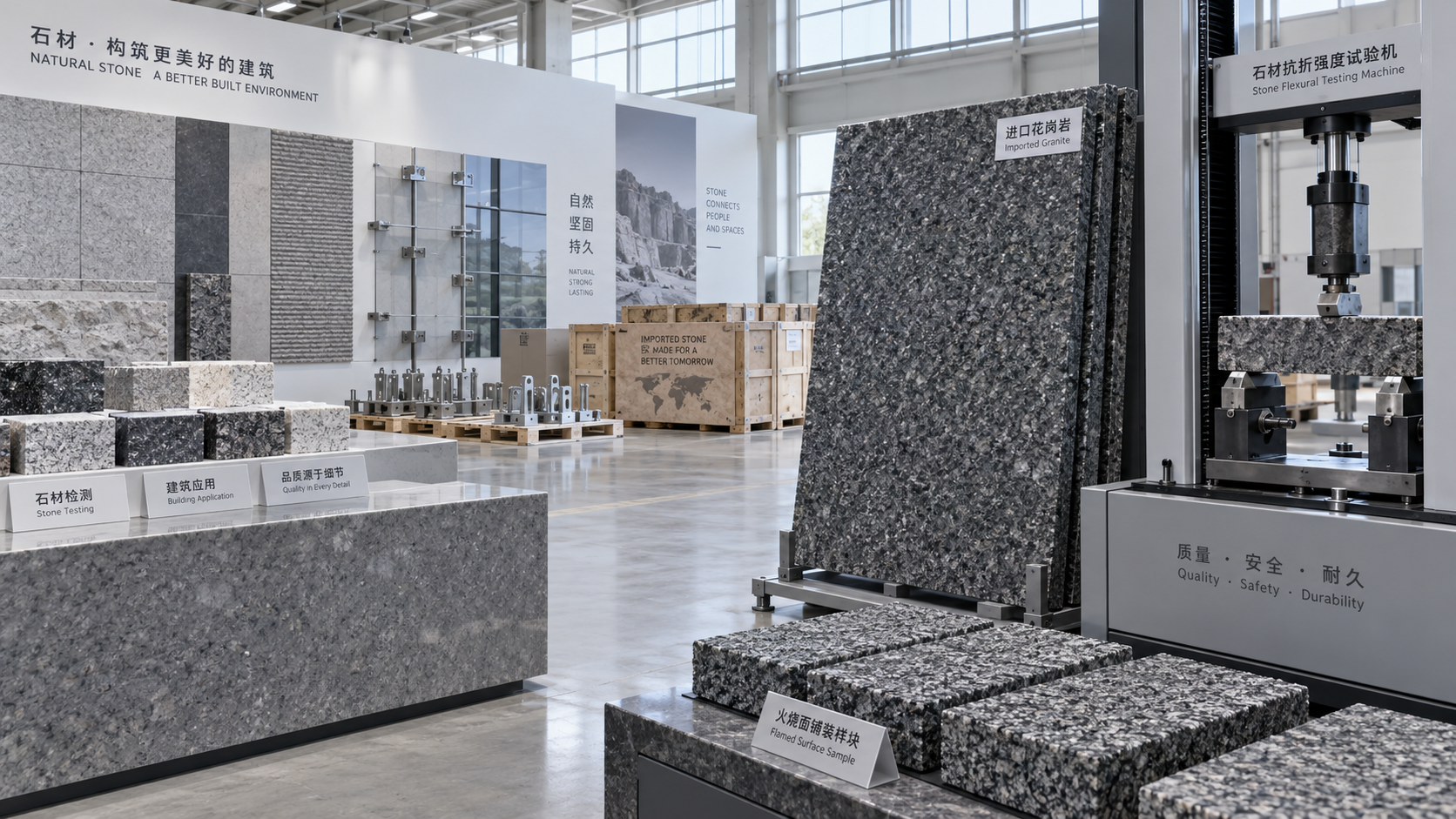
Not all granite has the same density. Some slabs are tighter and less porous, while others absorb moisture more easily and need closer sealing attention.
Denser granite usually performs better against staining. It also tends to handle repeated kitchen use with fewer visible changes over time.
Lower-density granite is not automatically a poor choice. It simply demands better sealing and more awareness around oil, wine, coffee, and acidic spills.
A quick water test can be useful during selection. If water darkens the granite quickly, the stone may be more absorbent.
This does not replace professional guidance, but it gives a practical signal. For decision-making, density should sit beside color and finish, not behind them.
How Daily Wear Shows Up on Granite
Granite is durable, but daily wear still leaves patterns. The real question is not whether wear happens, but how visible it becomes.
Dark polished granite may show dust, smudges, and water rings more clearly under direct light. Lighter granite often hides those marks better.
Busy patterns can mask crumbs, tiny scratches, and minor etching-like dullness from harsh cleaners. Cleaner, uniform patterns create a more refined look but reveal more use.
Edge profiles also matter. Sharp modern edges look crisp, yet they may chip more visibly than eased or rounded profiles in active kitchens.
For islands and family cooking zones, practical wear behavior should guide the granite selection as much as visual appeal.
Practical wear questions to ask
- Will this granite show fingerprints under daylight?
- Does the finish hide water marks after normal cleaning?
- Will the pattern help disguise crumbs and minor scratches?
- Is the edge detail suitable for heavy daily use?
How to Match Granite to Real-Life Use
Selection becomes easier when granite is matched to lifestyle. A show kitchen and a working family kitchen do not need the same surface behavior.
For frequent cooking, denser granite with a polished or leathered finish is often the safer choice. It reduces maintenance pressure and handles daily mess more calmly.
For design-first spaces, honed granite can be attractive if maintenance expectations are realistic. It delivers a refined surface, but it usually asks for more attention.
When comparing slabs, view them under natural and indoor lighting. A granite sample can look very different from a full slab on a finished countertop.
It also helps to ask about sealing schedules, finish care, and edge repair options before final selection. Those details affect ownership more than most people expect.
- Start with how the kitchen is actually used.
- Compare granite finishes based on cleaning habits and glare preference.
- Check density or absorption behavior before committing.
- Review pattern, color, and edge profile through the lens of wear visibility.
Final Selection Takeaway
The best granite countertop is rarely the one with the most dramatic color alone. It is the granite that fits the room, the routine, and the level of care expected.
Polished, honed, and leathered finishes each serve a different purpose. Density affects staining risk, while pattern and edge details shape how daily wear appears.
A more confident granite choice comes from looking past the sample board. Focus on finish, density, and real-life wear, and the final decision usually becomes much clearer.
Technical Specifications
- How to test melt flow consistency in batches of recycled plasticsAuthor :Polymers & Rubber Editorial Team
- When does a cast resin transformer need high-altitude derating?Author :Electrical Components Editorial Team
- How to verify Global Industrial Insights sourcing informationAuthor :Industrial Machinery Editorial Team
Expert Insights

Chief Security Architect
Dr. Thorne specializes in the intersection of structural engineering and digital resilience. He has advised three G7 governments on industrial infrastructure security.
Core Sector // 01
Security & Safety
- How to measure for cut-to-size marble before placing an orderAuthor :Construction Materials Editorial Team

- What to verify before placing an order with a ceramic tiles supplierAuthor :Construction Materials Editorial Team

- How to prevent outdoor porcelain tiles from cracking in freeze-thaw conditionsAuthor :Construction Materials Editorial Team

- How to assess quality consistency from a granite exporter in BrazilAuthor :Construction Materials Editorial Team

- Which compliance standards apply to imported granite for building projects?Author :Construction Materials Editorial Team

- How to choose ceramic tiles for bathroom floors with better slip resistanceAuthor :Construction Materials Editorial Team

- When are porcelain wall tiles the right choice for shower walls?Author :Construction Materials Editorial Team

- How to choose porcelain floor tiles for high-traffic areasAuthor :Construction Materials Editorial Team