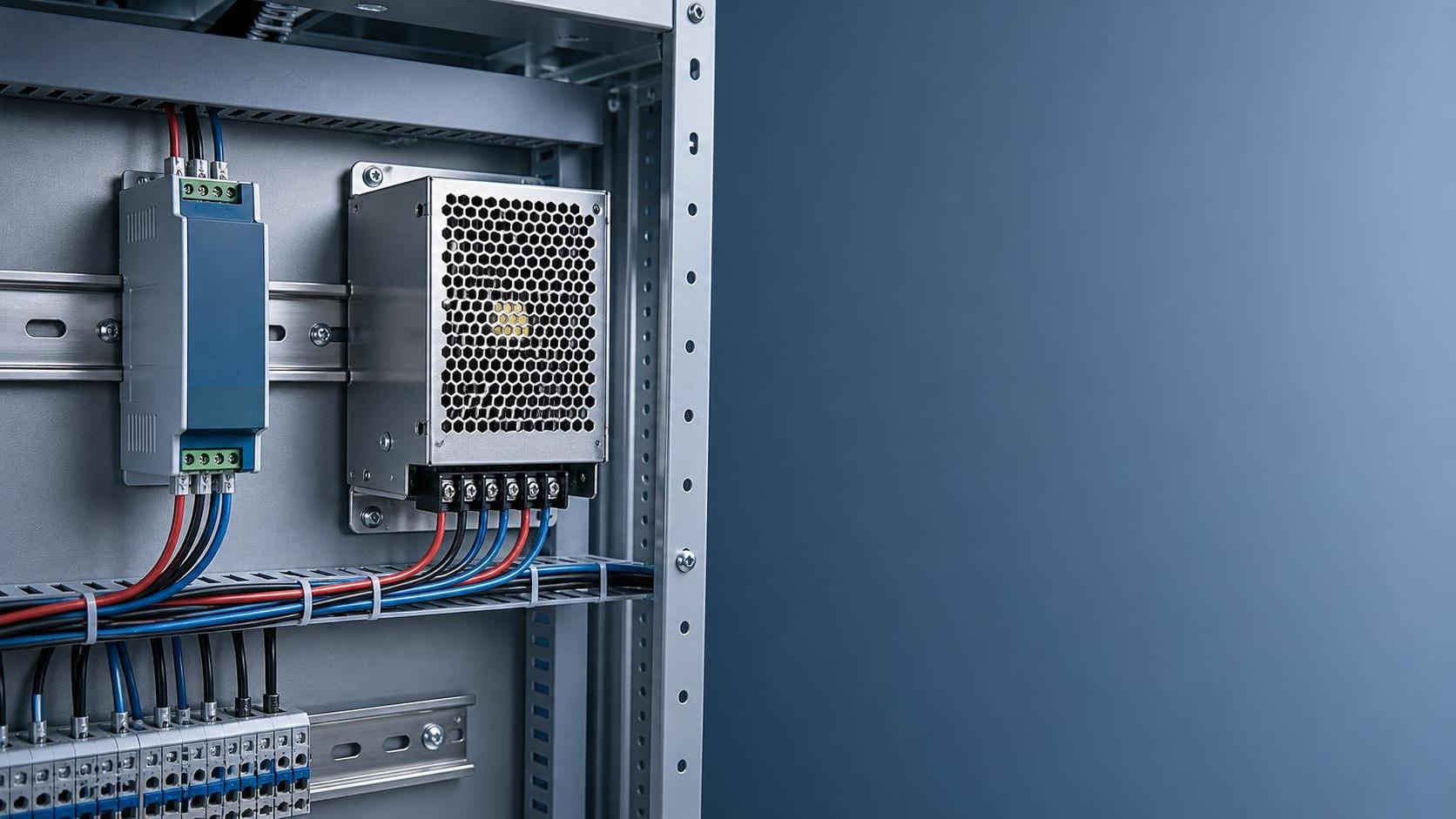
When can an imported power supply be used without local certification?
Author
Date Published
Reading Time
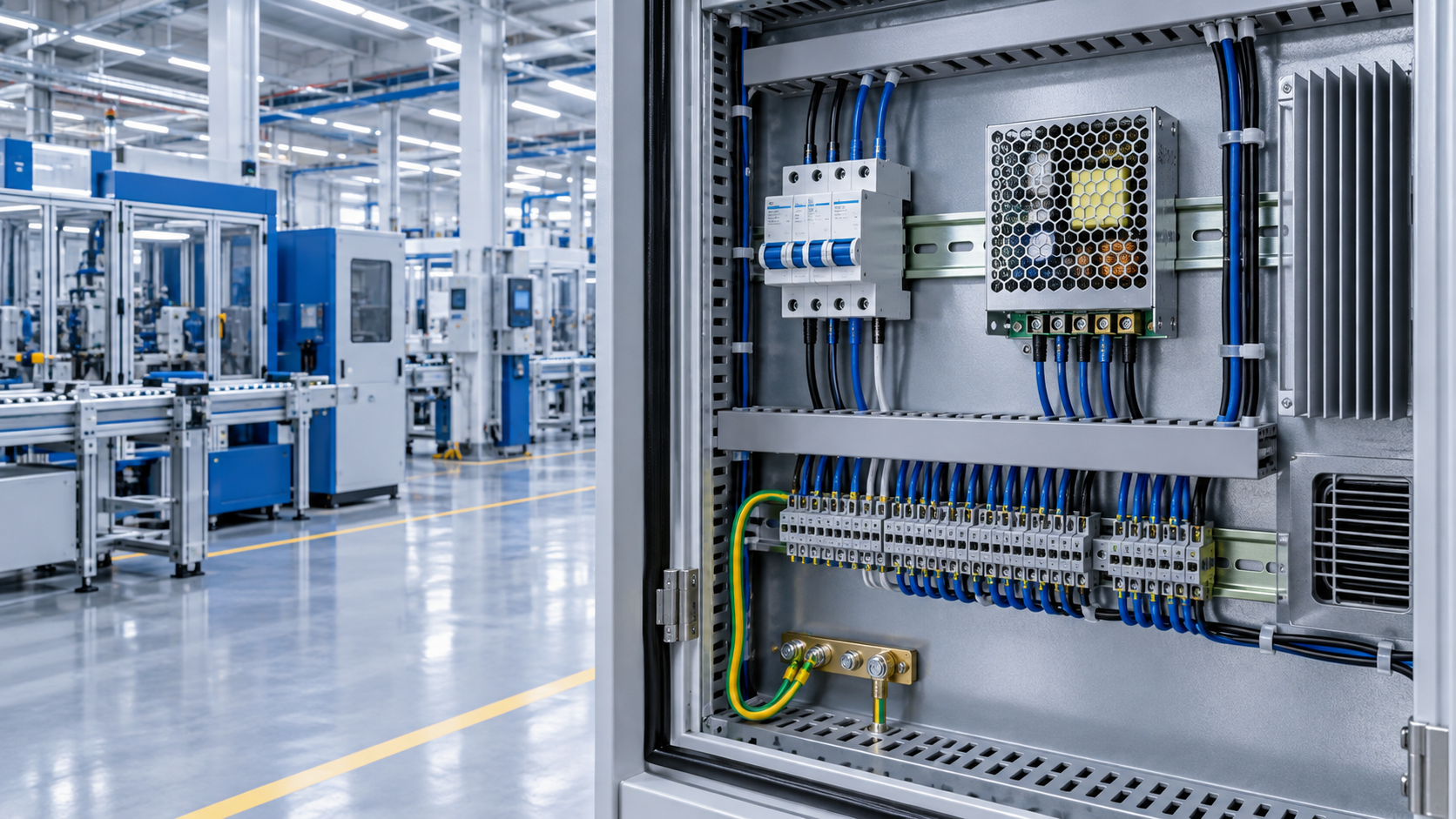
When Can an Imported Power Supply Be Used Without Local Certification?
Do imported power supplies need local safety certification? Technical evaluators often receive this question late in a sourcing cycle, when a unit has already been selected for its electrical performance, price, or availability. The uncomfortable answer is that an imported power supply may sometimes be used without a separate local approval, but only in narrowly defined circumstances. Whether that is lawful, acceptable to an end user, or insurable is a different question.
The decision is not determined by the country printed on the label. It depends on the destination market, whether the unit is sold as a finished product or a component, its rated input and output, who will install it, the environment in which it operates, and the rules that apply to the complete equipment. A bench supply used by trained engineers inside a controlled laboratory is not assessed in the same way as an AC/DC adapter sold with a consumer device, or a DIN-rail supply installed in a commercial building.
For importers and project teams, the useful question is therefore not simply “Is certification required?” It is: which conformity obligation applies to this product, at this stage of its supply chain, in this intended use? That distinction prevents a common and costly mistake: treating a supplier’s generic test report as permission to place a product on any market.
Certification, market access, and installation acceptance are not the same thing
“Local certification” is often used as a catch-all term, but several separate controls can be involved. A market may require a conformity mark, a declaration by the manufacturer, testing by a recognized laboratory, registration, or approval by an authority. A customer may add its own approved-vendor or third-party listing requirement. Separately, an electrical inspector, insurer, facility owner, or system integrator may refuse an installation that technically entered the country without being acceptable for the site.
The European Union provides a familiar example of why this language matters. For many electrical products, CE marking is a manufacturer’s conformity marking process rather than a certificate issued by a single central body. Depending on the product and its use, the Low Voltage Directive, EMC requirements, restrictions on hazardous substances, and other legislation may be relevant. A power supply can fall within one or more of these frameworks, while the completed machine may create further obligations. The presence of a CE mark alone is not evidence that the technical file, risk assessment, declaration, and supporting test evidence are adequate.
In North America, local expectations can be shaped by workplace safety rules, electrical codes, the authority having jurisdiction, procurement specifications, and insurer requirements. A safety listing from an appropriately recognized testing organization may be commercially essential even where an importer assumes no federal “certificate” is needed. In other markets, compulsory approval schemes may apply to specific categories, ratings, plugs, or end uses. The legal route and the practical route can diverge sharply.
Situations where a separate local approval may not be required
There are legitimate situations in which an imported power supply is not independently certified for the local market. None should be treated as a blanket exemption. The supporting facts need to be documented before shipment or installation.
A component used inside a certified or assessed final product
An open-frame AC/DC converter, DC/DC module, or enclosed supply may be imported as a component rather than sold to end users as a standalone appliance. The responsible manufacturer of the final machine may evaluate the component within the complete enclosure, wiring system, protective earth arrangement, thermal design, and abnormal-fault conditions. In that case, the final product assessment may be more important than a separate local mark on the power module.
That does not mean any unapproved module is acceptable. Component use shifts responsibility upward; it does not remove it. The machine builder still needs evidence on insulation systems, creepage and clearance, touch temperature, input protection, output limitations, dielectric strength, grounding, emissions, and behavior under foreseeable faults. A module with a recognized component approval can reduce the evaluation workload, but it does not automatically approve the finished equipment.
Engineering, laboratory, or internal evaluation use
Prototype work, research benches, repair departments, and controlled internal trials may be treated differently from commercial distribution. The unit may not be placed on the market, offered to the public, or used by untrained persons. Access can be restricted, temporary wiring can be supervised, and the organization using it may accept responsibility for a documented risk assessment.
This is often the most misunderstood exception. “For evaluation only” is credible only when the supply chain and actual use support it. Importing hundreds of adapters, adding retail packaging, and labelling them as samples will not turn a commercial product into a laboratory item. Nor does a prototype label solve risks associated with accessible mains terminals, poor protective earthing, or unsuitable insulation.
Specialized industrial systems with professional installation
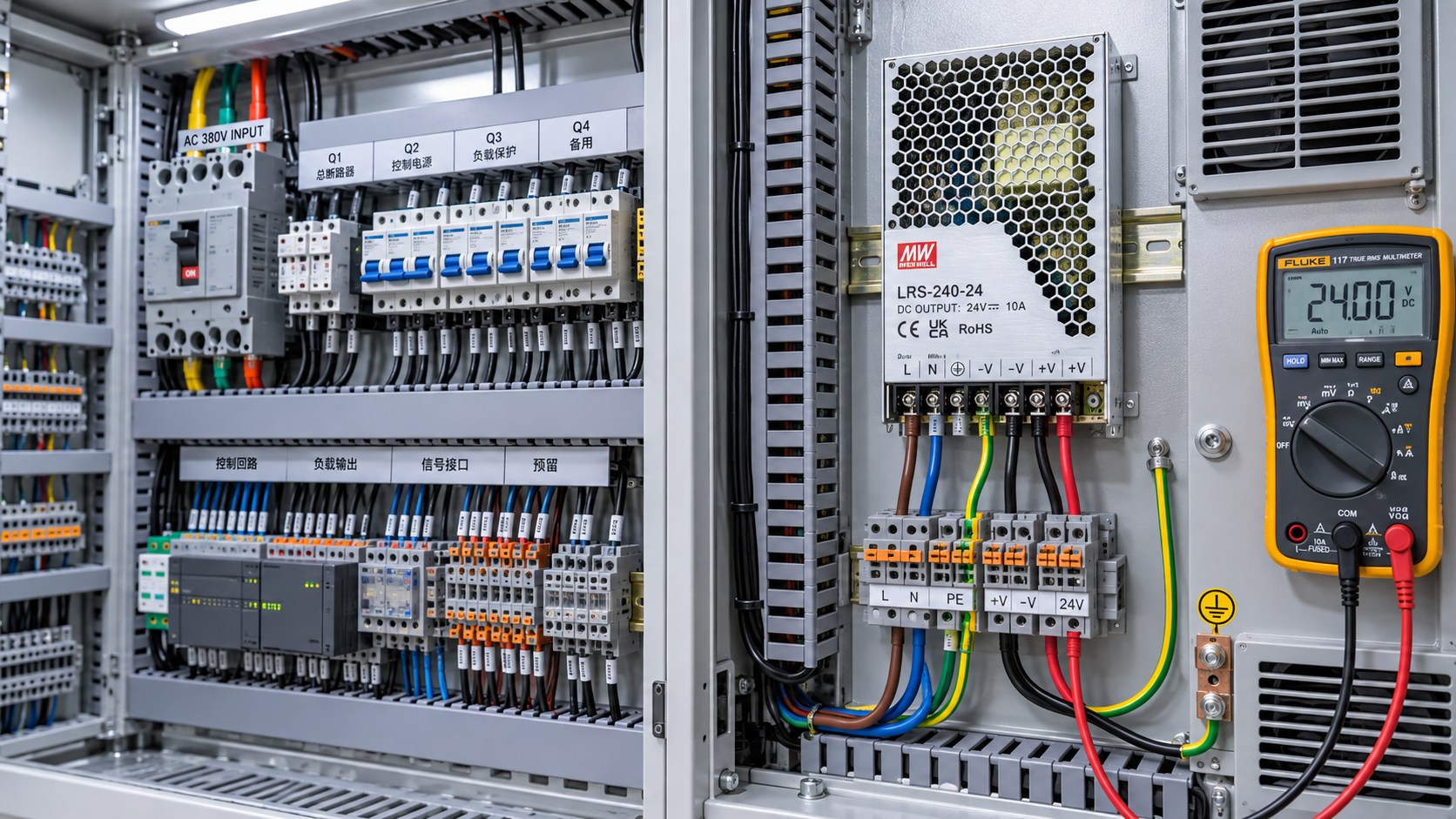
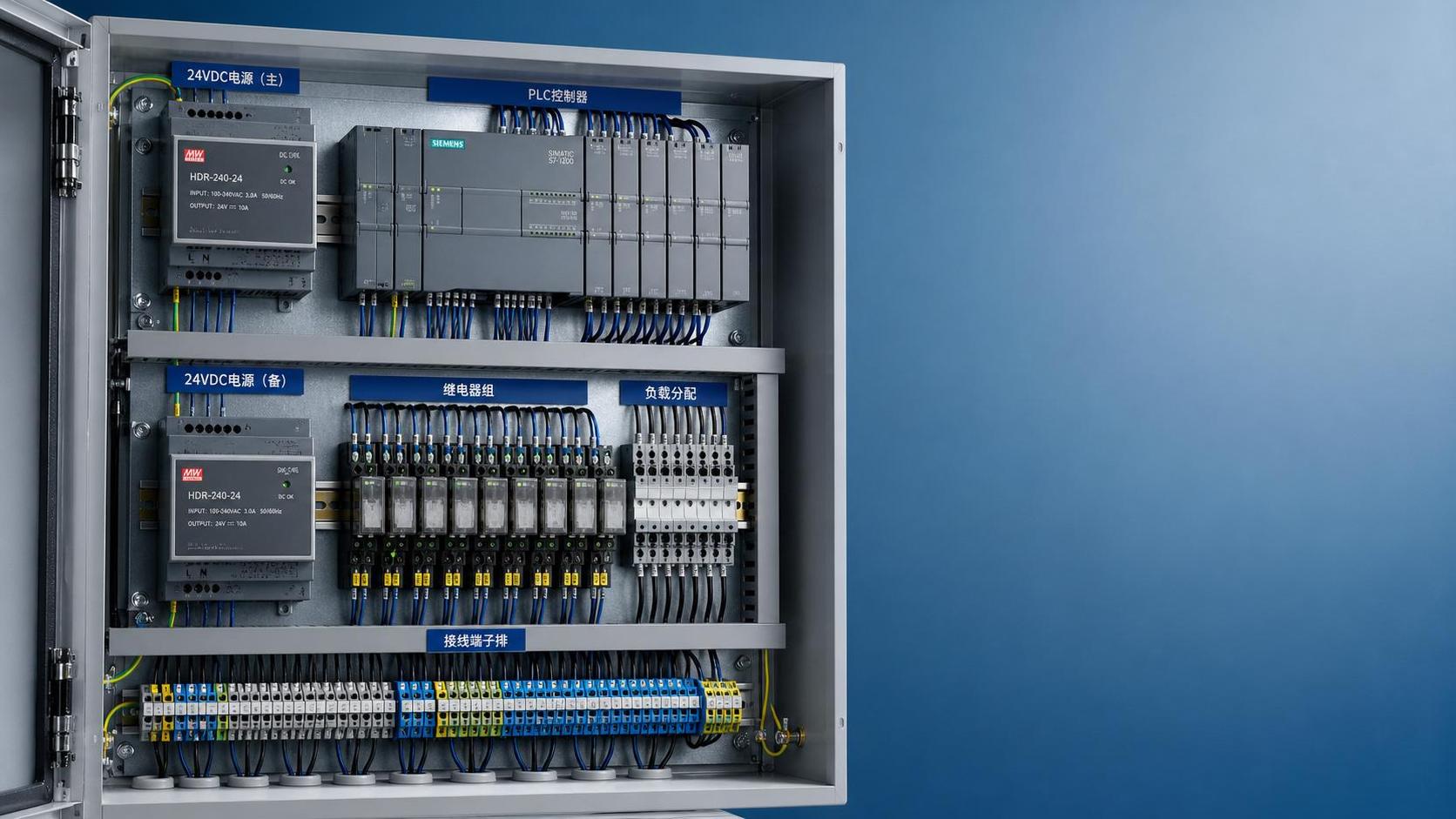
Certain power supplies are specified for incorporation into industrial cabinets, production equipment, telecommunications infrastructure, or other professionally installed systems. The buyer may be an experienced integrator rather than a general consumer. Here, a site-level or system-level engineering assessment may be possible, particularly when the supply is inaccessible during normal operation and installed behind suitable protective devices.
Yet industrial use is not a free pass. Factory environments introduce their own concerns: fault current, transient overvoltage, contamination, vibration, ambient temperature, grounding quality, maintenance access, and electromagnetic interference. A supply designed for a clean indoor cabinet may be unsuitable for a dusty workshop, an outdoor enclosure, or a corrosive process area even if its nominal voltage is correct.
The cases that usually demand more caution
Standalone products sold to end users are the clearest high-risk category. External desktop adapters, plug-in chargers, LED drivers supplied directly to installers, and replacement power units are visible products with predictable misuse scenarios. They are also likely to be scrutinized by distributors, online marketplaces, retailers, and claims investigators after an incident. An approval accepted in the supplier’s home market may not satisfy the destination market’s rules or customer expectations.
Medical, laboratory diagnostic, hazardous-location, transport, marine, and safety-related applications deserve separate treatment. These applications can trigger product-specific standards, installation rules, or purchaser controls beyond general electrical safety. A power supply that is acceptable for office equipment should not be assumed suitable for patient-connected medical equipment, emergency systems, rail equipment, or explosive atmospheres. The output voltage is only one small part of the assessment.
Battery charging also deserves attention. A unit described commercially as a “power supply” may function as a charger once connected to rechargeable batteries. Charging algorithms, battery chemistry, thermal management, protective functions, connector design, and misuse conditions can alter the applicable risk picture. Technical evaluators should not accept category labels without checking the actual function.
What evidence should be reviewed before import?
The right evidence package is more valuable than a folder full of unrelated logos. Start with an exact product identity: manufacturer name, factory location where relevant, model number, revision level, rated input range, output ratings, and mechanical configuration. A report for a similar family member is not necessarily valid for a different PCB revision, output connector, enclosure, or mains cord.
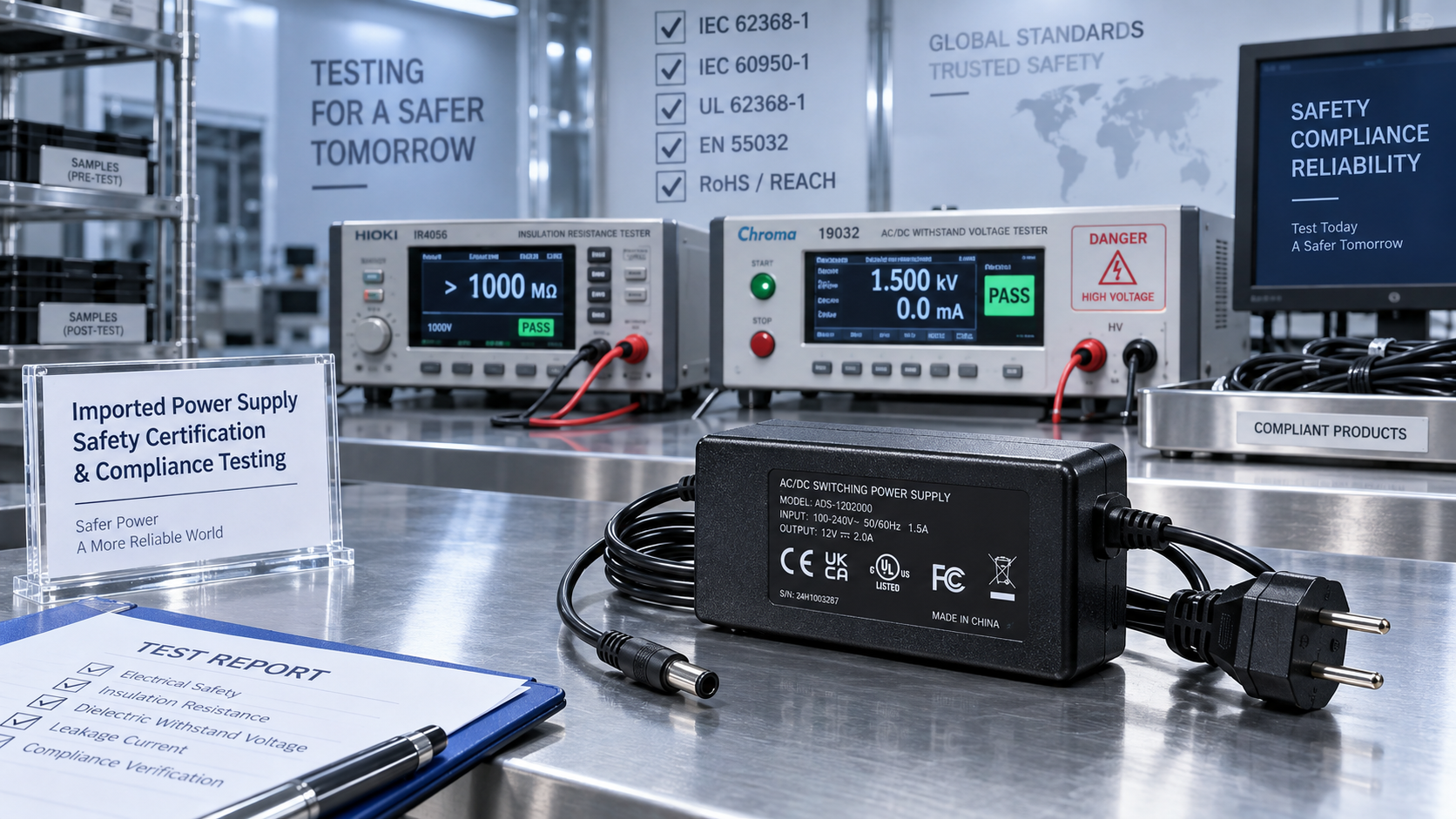
Documents worth requesting may include the declaration of conformity where applicable, test reports, approval certificates or listings where claimed, ratings labels, installation instructions, circuit protection guidance, material declarations, and change-control information. Authenticity matters. Verify certificates through the issuing body’s public tools where available, and check the model designation rather than relying on a logo in a product photograph.
A technical review should also compare the supply’s conditions of acceptability with the project design. Some units are evaluated only for use in a pollution-controlled enclosure, with a specified upstream fuse, a particular mounting orientation, limited ambient temperature, or restricted access. If those conditions are lost during integration, the paper approval may no longer represent the actual installation.
Common shortcuts that create avoidable exposure
One shortcut is assuming that a CE mark, UL-style mark, CB report, or other familiar symbol answers every question. These documents have different purposes, scopes, and geographical acceptance. A CB Scheme report, for example, can be useful supporting evidence in markets that participate in the scheme, but it is not automatically a local market authorization. Likewise, an existing safety listing may cover a component under conditions that do not match standalone use.
Another is focusing only on output specifications. A 24 V DC, 10 A rating tells little about input isolation, protective-earth construction, overvoltage category, leakage current, short-circuit performance, heat dissipation, or conducted emissions. It is possible for two supplies with identical nameplate output ratings to present very different integration risks.
The third is letting procurement classify a unit as “industrial” without an installation definition. Industrial equipment may still be installed in schools, commercial premises, public-facing kiosks, or lightly supervised locations. The actual user, access level, and site conditions should govern the compliance path.
A practical decision path for technical evaluators
Before approving an import, identify the importer of record and the legal or contractual party responsible for placing the equipment on the market. Then define whether the item is a finished product, spare part, component, prototype, or part of a larger installation. Map the destination country and any sector-specific rules. Finally, ask the end customer, installer, facility owner, and insurer whether a particular local listing or mark is a condition of acceptance.
If the project relies on an exemption or system-level assessment, record why: restricted professional access, temporary evaluation, incorporation into a controlled enclosure, or another specific basis. Keep the relevant drawings, installation constraints, supplier documents, and internal risk assessment together. That record is useful not only for compliance teams but also when replacement parts are sourced years later and the original purchasing rationale has been forgotten.
For global buyers, this is also a supply-chain issue. Certification status can change with a component substitution, factory transfer, revised transformer, firmware update, or new output cable. Industry news on standards, logistics, product availability, and policy changes is most useful when it is translated into this kind of project-level verification rather than treated as a headline alone.
An imported power supply can sometimes be used without standalone local certification, particularly as a controlled component or a limited evaluation item. But the absence of a separate certificate should be the result of a documented applicability decision, not an assumption made to protect a delivery date. When the intended use is unclear, the safer course is to confirm the destination-market requirement and the final installation conditions before the unit is purchased, shipped, or built into equipment.
Technical Specifications
- How precision metal fabrication reduces fit-up issues in assembliesAuthor :Metals & Fabrication Editorial Team
- When do CNC machines justify their higher upfront cost?Author :Industrial Machinery Editorial Team
- How to choose porcelain floor tiles for high-traffic areasAuthor :Construction Materials Editorial Team
Expert Insights

Chief Security Architect
Dr. Thorne specializes in the intersection of structural engineering and digital resilience. He has advised three G7 governments on industrial infrastructure security.
Core Sector // 01
Security & Safety
- When can an imported power supply be used without local certification?Author :Electrical Components Editorial Team

- Which local safety approvals apply to imported power suppliesAuthor :Electrical Components Editorial Team

- What Causes Power Supply Failures After Installation?Author :Electrical Components Editorial Team

- Do Imported Power Supplies Need Local Safety Certification?Author :Electrical Components Editorial Team

- How to Size Power Supplies for Industrial Control PanelsAuthor :Electrical Components Editorial Team

- DIN Rail Power Supplies vs Enclosed Power Supplies: What Is the Difference?Author :Electrical Components Editorial Team