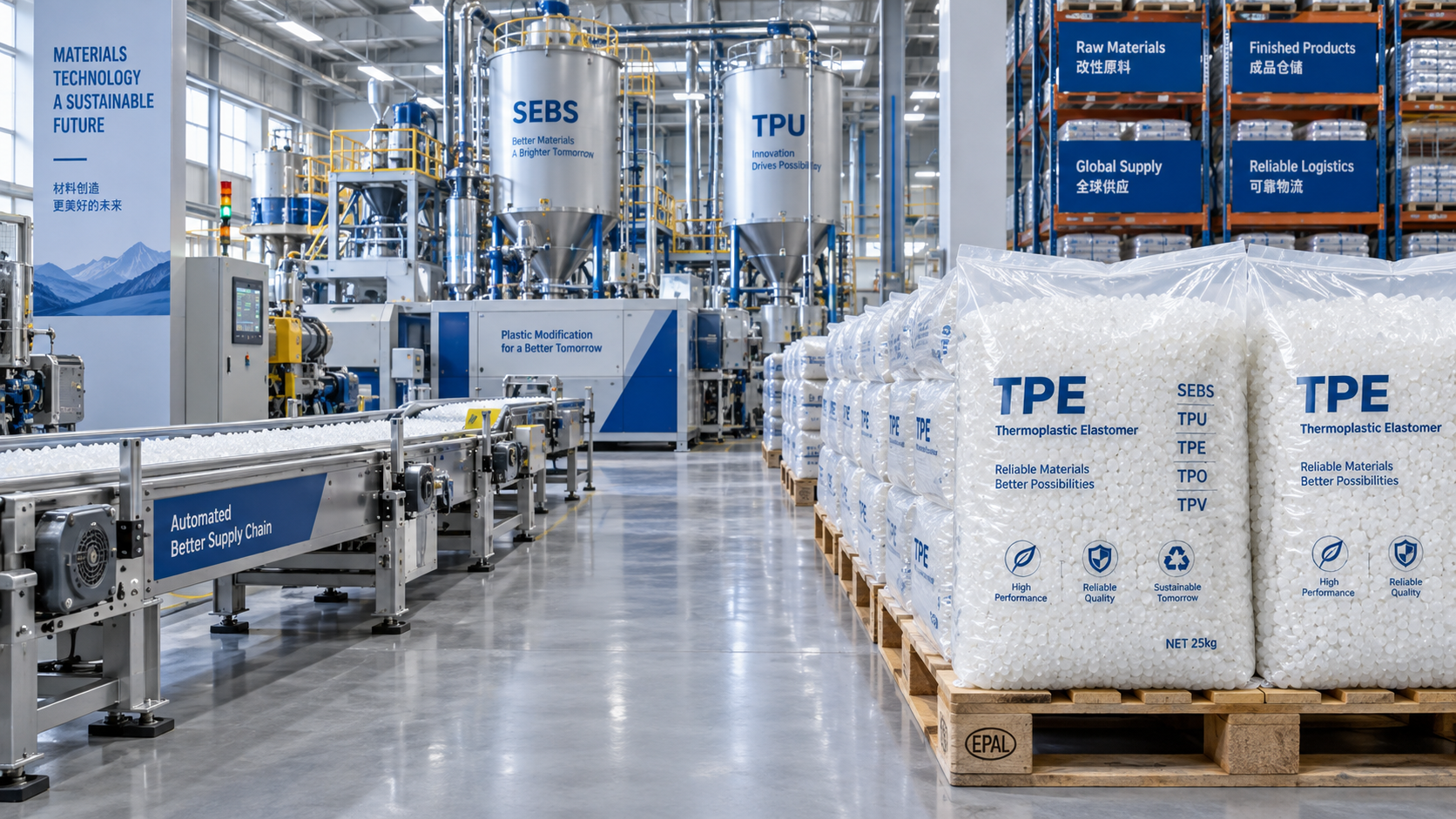
Introduction: Which TPE grade is best for stable supply? For global buyers, the practical answer is usually SEBS-based TPE or standard TPU grades with diversified regional production.
However, material chemistry alone does not guarantee reliable purchasing. Feedstock exposure, formulation complexity, approved suppliers, certification requirements, logistics routes, and demand cycles all affect continuity.
For importers and distributors, the objective is not simply finding the lowest-cost TPE. It is securing repeatable quality, workable lead times, manageable price risk, and credible alternatives.
This guide compares major thermoplastic elastomer families from a sourcing perspective. It also explains how procurement teams can match grade selection with supply-chain resilience and commercial requirements.
Start With the Supply Question, Not Only the Performance Specification
Buyers searching for the best TPE grade for stable supply usually need a material that can be purchased repeatedly without unexpected qualification delays, shortages, or large specification changes.
That requirement is different from asking which TPE has the highest abrasion resistance, softest touch, or widest temperature range. Stable supply is a business and risk-management decision.
The most suitable grade depends on annual volume, application criticality, destination market, regulatory obligations, approved molding process, and whether the buyer can qualify more than one producer.
A high-performance specialty TPE may work perfectly in a laboratory or premium product. Yet it can create procurement problems when only one qualified producer serves a particular region.
Conversely, a broadly available material family may offer slightly lower peak performance while providing faster replacement options, stronger price transparency, and more negotiating leverage for distributors.
For most general industrial, consumer goods, automotive accessory, appliance, and overmolding applications, stable supply often favors mainstream compounds over highly customized formulations.
The best sourcing decision therefore starts by separating essential properties from preferred properties. Essential requirements protect product function, while preferred features can often be adjusted during supplier qualification.
Procurement teams should document minimum hardness, tensile strength, color tolerance, adhesion requirements, temperature limits, odor limits, flame ratings, and certification needs before requesting quotations.
That specification discipline helps suppliers propose equivalent grades. It also prevents a buyer from becoming dependent on one trade name when several technically acceptable options exist.
SEBS-Based TPE Is Often the Safest Choice for Broad Supply Stability
For many non-critical applications, SEBS-based thermoplastic elastomer is the strongest overall candidate when buyers prioritize stable availability, broad supplier coverage, and reasonable formulation flexibility.
SEBS, or styrene-ethylene-butylene-styrene, is widely used in soft-touch grips, seals, household products, medical-related non-implant components, toys, footwear parts, and consumer electronics accessories.
Its supply advantage comes from an established global ecosystem. Multiple polymer producers, compounders, converters, and distributors support a wide range of hardness levels and application-specific formulations.
SEBS compounds can commonly be adjusted with mineral oil, polypropylene, fillers, pigments, and additives. This makes it easier for compounders to develop alternatives within an agreed performance window.
Buyers should not assume that every SEBS compound is interchangeable. Oil content, PP ratio, additives, hardness, adhesion behavior, and compliance documentation can significantly change processing and end-use performance.
Still, a well-defined SEBS specification usually creates more second-source opportunities than a heavily proprietary compound. This is especially valuable for distributors supplying several smaller downstream customers.
SEBS also tends to provide useful commercial flexibility. Standard natural, black, translucent, and common colored grades are generally easier to source than niche metallic, ultra-clear, or highly specialized compounds.
For stable supply, buyers should favor common hardness ranges, such as approximately Shore A 30 to 80, unless the application clearly requires a softer or harder specialty formulation.
Demand for SEBS can still be influenced by petrochemical markets, transportation disruptions, and regional capacity changes. Yet its multi-supplier structure usually reduces the impact of individual producer disruptions.
SEBS is particularly attractive when the application needs soft touch, moderate weather resistance, good processability, and a realistic backup-source strategy rather than exceptional engineering performance.
TPU Offers Strong Market Depth, but Grade Selection Must Be More Careful
Thermoplastic polyurethane, or TPU, is another major TPE family with broad international trade. It is often selected for abrasion resistance, flexibility, toughness, transparency, and premium appearance.
Standard TPU grades can offer dependable supply when buyers work with established producers and avoid unnecessarily narrow specifications. However, TPU sourcing is generally more sensitive than standard SEBS sourcing.
TPU chemistry varies substantially between polyester-based, polyether-based, polycaprolactone-based, aromatic, and aliphatic systems. These differences influence hydrolysis resistance, UV stability, cost, and supplier substitutability.
Polyester TPU is commonly available for applications needing abrasion resistance and mechanical strength. It is widely used in cables, footwear, industrial films, hoses, casters, and molded technical components.
Polyether TPU is often preferred where moisture resistance, microbial resistance, low-temperature flexibility, or hydrolysis resistance matters. It may be more appropriate for wet environments and selected medical applications.
From a supply perspective, standard ester and ether TPU grades are generally safer than highly transparent aliphatic TPU, conductive TPU, specialty flame-retardant TPU, or custom adhesive formulations.
Aliphatic TPU can provide excellent color stability and UV resistance, but it usually has a narrower supplier base and higher cost. Buyers should qualify it only when outdoor visual durability is essential.
TPU price movements can be more noticeable because feedstocks such as isocyanates and polyols are exposed to chemical-market volatility. Energy costs and plant maintenance may also influence regional availability.
For this reason, purchasers should compare alternative grades by actual performance limits, not nominal chemistry alone. A compatible ether TPU from two suppliers is more valuable than one proprietary premium grade.
TPU is often the best choice when the application genuinely needs abrasion resistance, tensile strength, elastic recovery, or flexible technical performance that standard SEBS compounds cannot reliably achieve.
TPV Is Reliable for Automotive and Sealing Programs With Established Demand
Thermoplastic vulcanizates, commonly called TPVs, combine a thermoplastic matrix with dynamically vulcanized rubber particles. They are widely used for automotive seals, gaskets, weatherstrips, and industrial sealing components.
TPV can offer good supply stability in mature automotive and industrial programs. Its value is strongest when buyers use recognized grades with established demand and long production histories.
Compared with SEBS compounds, TPV formulations are often more application-specific. Compression set, density, weathering behavior, fluid resistance, and extrusion characteristics may limit direct substitution between suppliers.
That means a buyer should not treat TPV as a commodity simply because multiple producers exist. Qualification testing remains necessary, particularly for sealing systems or parts exposed to heat and fluids.
For automotive procurement, stable supply also depends on supplier quality systems, production part approval processes, traceability, change-control policies, and geographic proximity to converter operations.
A TPV grade with strong technical credentials but only one approved source can become a material risk. Buyers should ask whether equivalent grades have already been validated for similar applications.
TPV is usually a sound choice for long-running, higher-volume programs. It is less attractive for very small orders unless a distributor carries inventory or the grade is common in the local market.
When supply continuity is the top objective, select a commercially established TPV grade with a documented automotive or industrial track record rather than a newly launched customized compound.
TPO and Standard Olefin-Based Compounds Suit Cost-Sensitive, High-Volume Demand
Thermoplastic olefins, known as TPOs, are commonly based on polypropylene and elastomeric components. They are important in automotive interiors, exterior parts, appliances, packaging, and industrial molded products.
TPO can be highly competitive for stable supply because polypropylene is widely traded and large-scale compounding infrastructure exists in many manufacturing regions, particularly Asia, Europe, and North America.
For buyers focused on high-volume applications, standard TPO grades can provide favorable cost control, scalable capacity, and shorter sourcing distances compared with more specialized elastomer systems.
Its limitations should be understood early. TPO may not match TPU in abrasion resistance or premium tactile quality, and it may not match certain TPV grades in sealing performance.
Still, TPO is often adequate when impact resistance, moderate flexibility, recyclability, and cost efficiency matter more than soft touch, optical clarity, or high elastic recovery.
Supply stability improves when the formulation uses common polypropylene bases, standard fillers, and mainstream color systems. Unusual UV packages, low-density targets, or strict appearance requirements may narrow options.
Buyers should also review local regulations and recycling expectations. TPO can support circular-material strategies, but post-consumer recycled content may introduce additional consistency and approval challenges.
For commodity-like automotive trims, appliance housings, and general molded parts, TPO can be one of the most practical TPE options when dependable volume supply is more important than premium performance.
Specialty TPE Grades Carry the Highest Qualification and Availability Risk
Specialty TPE categories include silicone-based materials, fluorinated elastomers, conductive grades, highly flame-retardant compounds, medical-certified materials, and custom compounds developed for narrow end uses.
These materials may be essential for demanding products. However, they should not be selected casually by buyers whose primary objective is predictable supply across multiple countries and suppliers.
Specialty grades frequently depend on proprietary formulations, restricted additives, specific feedstocks, or tightly controlled manufacturing processes. These factors can limit substitution during shortages or price disruptions.
Certification can create another barrier. A material carrying food-contact, medical, automotive, electrical, or low-VOC approvals may require costly and time-consuming requalification when the supplier changes.
For these applications, stable supply comes less from choosing a generic chemistry and more from building a robust continuity plan. This includes approved alternates, safety stock, and contractual change notification.
Buyers should request formal confirmation of manufacturing location, production capacity, allocation policy, lead-time history, and change-control procedures before committing a specialty grade to production.
Where possible, specify performance requirements instead of a single brand name. For regulated products, involve engineering, quality, and compliance teams early to determine realistic alternate-material pathways.
How Global Buyers Should Compare TPE Suppliers Before Placing Volume Orders
The most stable TPE grade can still create supply problems when the supplier relationship is weak. Supplier evaluation should combine technical qualification with commercial and operational evidence.
First, examine whether the supplier manufactures the base polymer, compounds purchased feedstock, or merely resells material. Each model has different implications for price control and continuity.
Integrated producers may offer stronger feedstock visibility and consistent technical support. Independent compounders may provide greater flexibility, faster customization, and access to multiple polymer sources.
Second, confirm where production occurs and where inventory is held. A grade produced in one country but stocked regionally may offer better continuity than a cheaper material requiring long overseas replenishment.
Third, ask for realistic lead-time data rather than only stated lead times. Historical delivery performance during tight markets often reveals more than standard commercial terms.
Fourth, review the supplier’s minimum order quantity, batch size, packaging format, shelf-life guidance, and color-matching capabilities. These practical details can create hidden supply constraints for distributors.
Fifth, assess documentation quality. Reliable suppliers can provide technical data sheets, safety data sheets, certificates of analysis, regulatory declarations, and controlled revision histories without delay.
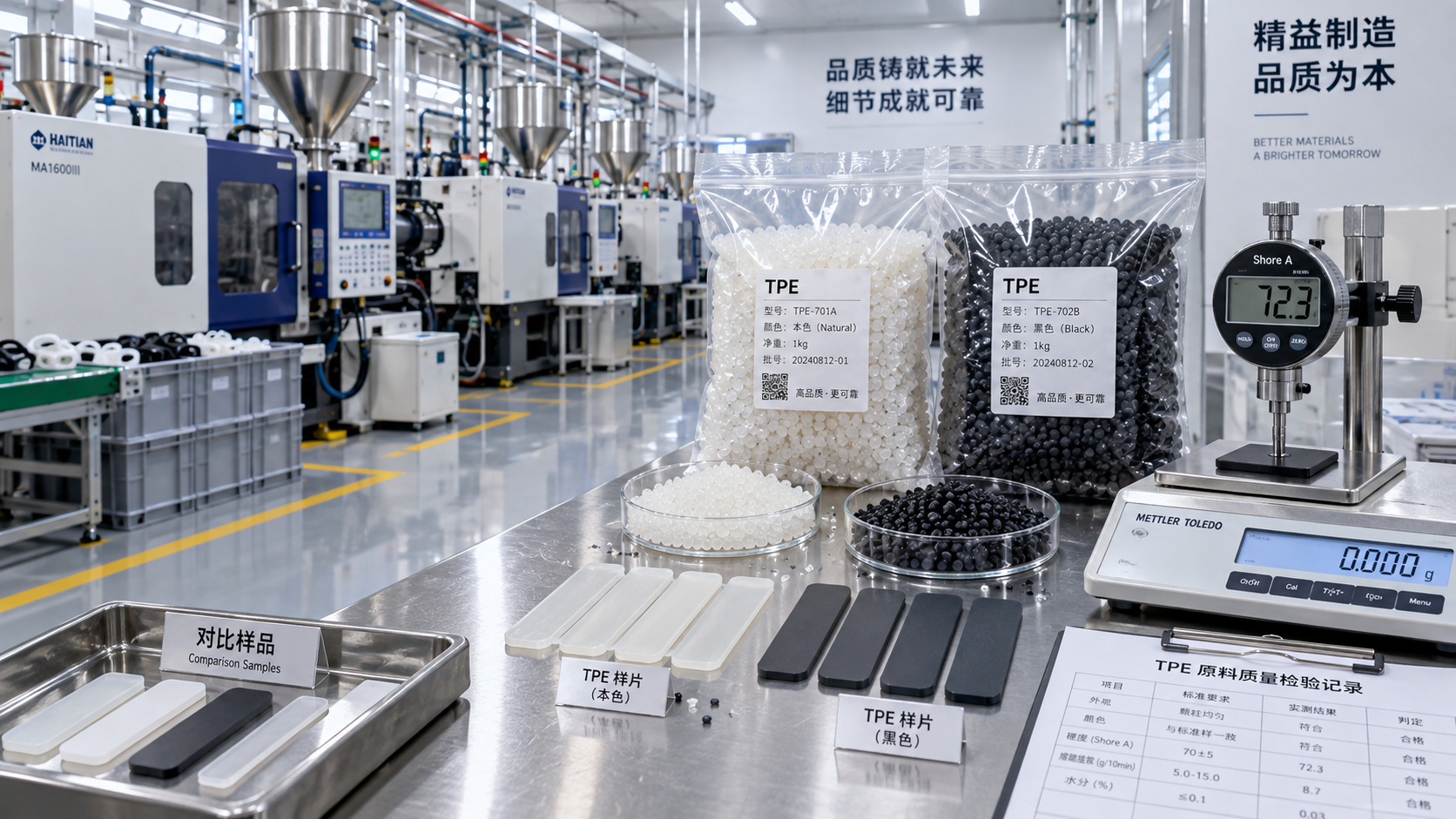
For critical applications, request samples from multiple production lots. A grade that performs well in one sample but varies between lots may not support stable downstream manufacturing.
Finally, avoid relying only on annual price negotiations. A transparent allocation policy, advance notice of changes, and shared demand forecasts are often more valuable during constrained supply periods.
Build a Practical Two-Source Strategy Around Equivalent Performance Windows
The most effective protection against TPE disruption is usually a qualified two-source strategy. This does not require buying equal volumes from every supplier at all times.
Instead, buyers can maintain a primary source for normal production and an approved secondary source capable of taking volume during shortages, maintenance shutdowns, logistics interruptions, or quality incidents.
To make this strategy work, define an acceptable performance window rather than requiring identical test values. Processing temperature, hardness, color, shrinkage, adhesion, and mechanical properties need realistic tolerances.
Engineering teams should test alternates in actual equipment. Injection molding, extrusion, overmolding, blow molding, and film processing can expose differences that do not appear in laboratory material data.
Distributors can strengthen their position by stocking common grades from more than one producer. This provides customers with faster options when a nominated material becomes difficult to obtain.
For global sourcing, consider regional diversification as well. Two suppliers in the same country may share port exposure, energy risks, or upstream feedstock constraints during a regional disruption.
However, excessive supplier diversification can increase quality-management cost and reduce purchasing leverage. The goal is not maximum supplier count, but credible alternatives for the most critical grades.
A useful procurement rule is to prioritize dual qualification for materials with high annual spend, long replenishment cycles, limited inventory, customer-specific approvals, or major production consequences.
Choose the Grade That Matches Your Actual Risk Profile
There is no universal answer to which TPE grade is best for stable supply. The right choice depends on whether your application values broad availability, technical performance, regulatory approval, or local inventory.
For many general-purpose products, SEBS-based TPE provides the best balance of supplier diversity, flexible compounding, cost control, and replacement potential. It is often the strongest starting point.
For demanding abrasion, toughness, transparency, or flexible technical applications, standard TPU grades can be dependable when buyers avoid highly specialized chemistry and qualify alternatives early.
For established sealing and automotive programs, TPV can offer dependable continuity when supported by approved supplier networks, formal quality systems, and realistic long-term demand forecasts.
For cost-sensitive, high-volume molded products, TPO can provide strong supply resilience through widely available polyolefin feedstocks and extensive compounding capacity across major industrial markets.
Specialty grades should be selected only when their unique performance or certification value justifies the narrower sourcing base. In those cases, supply planning must be part of product development.
The best commercial decision is to select a material family with enough technical margin, then qualify suppliers based on capacity, documentation, regional presence, feedstock access, and change-control discipline.
Ultimately, stable TPE supply is created through material choice and procurement design together. Buyers who specify intelligently and qualify alternatives are better positioned to protect cost, delivery, and product consistency.