Introduction: Should I lock in polypropylene prices for six months? For buyers facing volatile feedstock costs, shifting trade policies, and uncertain supply conditions, the answer depends on more than today’s quote.
A six-month agreement can protect budgets and stabilize procurement, but it can also reduce flexibility if polypropylene prices fall after the contract is signed.
For most importers, distributors, converters, and contractors, the strongest approach is rarely an all-or-nothing commitment. A partial lock-in usually offers better protection against uncertainty.
Before committing, buyers should assess exposure to propylene costs, regional supply balances, freight risk, demand visibility, contract mechanics, and the financial impact of being wrong.
The Short Answer: Lock Only the Volume You Must Protect
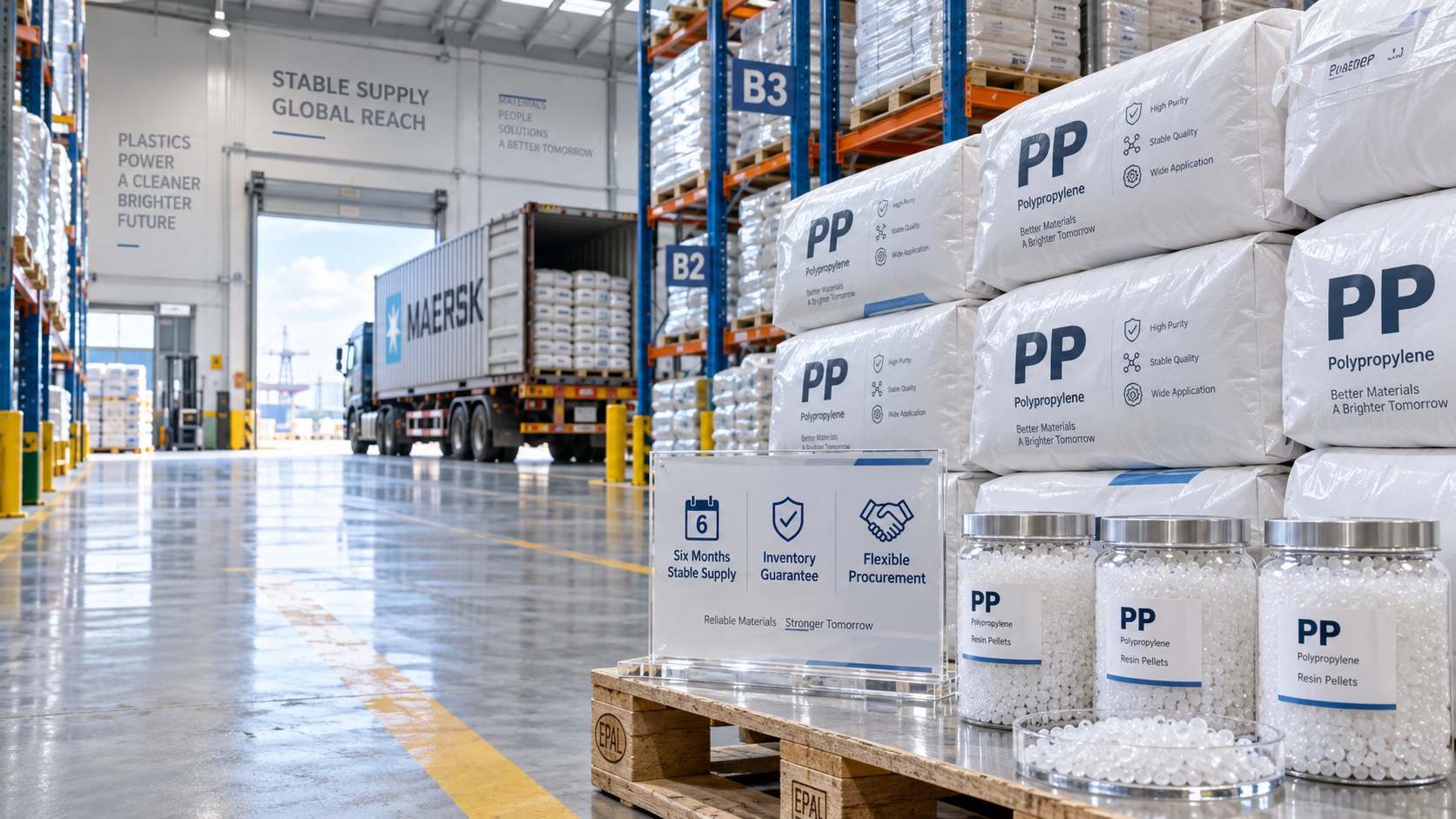
Buyers with committed customer orders, stable production schedules, or tight operating margins should consider locking a portion of polypropylene requirements for six months.
However, locking the full forecasted volume is risky when downstream demand remains uncertain, inventory levels are high, or local spot markets may weaken.
A practical starting point is to secure the volume tied to confirmed sales, contractual obligations, or essential production needs, while leaving discretionary demand open.
This layered purchasing method protects the business from sudden upward moves without forcing procurement teams to buy too much material at an unfavorable fixed price.
The question is therefore not simply whether polypropylene prices will rise or fall. It is whether price certainty creates greater value than market flexibility.
That value differs by buyer. A packaging converter with fixed-price customer contracts faces a different risk profile than a distributor able to adjust resale prices weekly.
Six-month pricing can be especially useful when material represents a meaningful share of product cost and price volatility cannot be passed through quickly.
It is less attractive when demand forecasts are unreliable, customer specifications may change, or a buyer can source equivalent grades from several competitive suppliers.
Start With Your Real Exposure, Not a Market Forecast
Market forecasts are useful, but they should not be the first input. Buyers should begin by calculating how polypropylene price movements affect operating profit.
Identify the monthly tonnage required, the share already covered by inventory, the volume supported by customer commitments, and the quantity that remains uncertain.
Next, estimate the effect of a price increase or decrease per tonne. Even a modest movement can materially affect margins for high-volume molded products.
For example, a buyer consuming 500 tonnes monthly may face a substantial budget change if polypropylene moves by $100 per tonne during the contract period.
That calculation converts an abstract market view into a business decision. It reveals whether price protection is necessary or merely feels reassuring.
Buyers should also review their ability to recover raw-material increases through customer pricing. Annual customer contracts often create greater need for supply-price certainty.
Where sales prices can be revised monthly or quarterly, maintaining some spot-market exposure may be commercially sensible and improve competitiveness during falling markets.
A sound decision requires matching procurement terms with revenue terms. When purchasing is fixed but sales are flexible, the buyer may carry unnecessary downside risk.
What Usually Moves Polypropylene Prices Over Six Months?
Polypropylene pricing is shaped by several linked variables, with propylene feedstock costs usually serving as the most important starting point for market direction.
Propylene availability can be affected by refinery operating rates, steam cracker economics, planned maintenance, unplanned outages, and demand from competing chemical applications.
Crude oil and energy prices matter because they influence upstream economics, transportation costs, and the relative competitiveness of different petrochemical production routes.
Yet polypropylene does not always follow oil directly. Regional supply-demand balances, inventory positions, imports, and producer discipline can override feedstock signals temporarily.
Buyers should monitor new polypropylene capacity, especially in export-oriented producing regions. New plants can increase trade flows and pressure prices in destination markets.
Demand conditions are equally important. Packaging, automotive, appliances, construction products, fibers, and consumer goods can each influence regional polymer consumption.
Seasonality also matters. Pre-holiday packaging demand, agricultural applications, construction cycles, and year-end inventory reductions can create short-term purchasing distortions.
Rather than relying on one bullish or bearish prediction, procurement teams should build scenarios showing how these variables could affect their delivered polypropylene cost.
Check Regional Supply Conditions Before Signing a Fixed Price
A polypropylene contract that looks competitive on an ex-works basis may be less attractive after freight, duties, inland handling, financing, and delivery reliability are considered.
Import-dependent buyers should compare local producer offers with landed imported alternatives, using realistic logistics assumptions rather than temporary freight quotations or promotional rates.
Supply concentration is another critical consideration. Where a market depends heavily on one country, producer group, port, or shipping route, disruption risk increases.
Trade policy can alter the equation quickly. Anti-dumping investigations, safeguard measures, sanctions, licensing rules, and tariff changes may affect future landed costs.
Buyers should ask suppliers whether quoted prices include potential duties, surcharges, certification costs, port storage exposure, and other charges triggered during the contract term.
Lead times deserve close attention. A low fixed price has limited value if shipment delays force the buyer to purchase emergency cargoes from the spot market.
For international procurement, contract security should cover more than price. It should address shipment windows, allocation priority, acceptable ports, payment terms, and delay remedies.
When supply risk is elevated, a six-month agreement may be justified even at a modest premium because it protects continuity of production and customer deliveries.
Compare Fixed Price, Formula Price, and Hybrid Contract Structures
A fully fixed polypropylene price provides maximum budget certainty, but it transfers nearly all market downside risk to the buyer once the agreement begins.
A formula-based agreement adjusts periodically against an agreed market reference, such as a regional polymer assessment, propylene benchmark, or published producer announcement.
Formula pricing can reduce disputes because both parties understand the adjustment mechanism. However, buyers must verify that the reference accurately reflects their actual delivered market.
Some published benchmarks lag physical market changes, exclude freight, or represent a grade and region different from the buyer’s required material.
A hybrid agreement often works well for uncertain markets. It may fix a base volume while pricing additional call-off quantities through a monthly formula.
Another option is a price collar. The contract allows limited movement within an agreed range, sharing extreme upside and downside risk between buyer and supplier.
Buyers can also negotiate a reopen clause triggered by exceptional events, including major tariff changes, force majeure, prolonged port closures, or unusually large benchmark movements.
The best structure is the one that reflects forecast confidence, supplier leverage, product criticality, and the buyer’s ability to absorb price or supply shocks.
When a Six-Month Lock-In Is Usually a Good Decision
Locking polypropylene prices is generally more defensible when the buyer has firm demand visibility and cannot easily pass raw-material increases to customers.
It is particularly relevant for converters supplying fixed-price packaging, automotive components, household goods, medical products, or industrial parts under committed delivery schedules.
Buyers may also benefit when supplier allocations are tightening, inventories are lean, freight routes are unstable, or propylene markets show credible upward pressure.
Another favorable situation arises when the offered price is below the company’s approved budget level and supports acceptable margins across planned customer orders.
For manufacturers, production interruption costs should be included in the analysis. Lost output, overtime, substitute materials, and customer penalties may exceed a price premium.
A lock-in can also simplify cash-flow planning, especially when finance teams need predictable working-capital assumptions for inventory purchases and customer contract pricing.
Businesses entering a seasonal demand period may value guaranteed availability more than potential savings from waiting for a lower spot-market price.
In these circumstances, the objective is not to outperform the market perfectly. It is to protect margin, supply continuity, and commercial commitments.
When Buyers Should Preserve More Spot-Market Flexibility
Buyers should be cautious about fixing six months of polypropylene when end-market demand is weak, volatile, or dependent on projects that remain unconfirmed.
A full commitment can create excess inventory if customers delay orders, reduce forecasts, switch specifications, or face their own financing and demand pressures.
Flexibility is also valuable when polypropylene supply is long, producer inventories are rising, and import competition is likely to increase during the next quarter.
Distributors with broad supplier networks may be better positioned to retain spot exposure because they can compare offers and respond quickly to local pricing changes.
Commodity-grade raffia, injection, fiber, and film grades may offer more sourcing alternatives than specialized compounds, certified grades, or tightly approved automotive materials.
Buyers should avoid fixed commitments that exceed storage capacity, working-capital limits, or normal inventory turnover. Cheap material becomes expensive when it cannot move.
Another warning sign is unclear contract language. A supplier should not be allowed to fix price while retaining broad rights to delay volumes or add vague surcharges.
Where uncertainty is high, a shorter contract, staged monthly purchases, or a mixed fixed-and-indexed arrangement may create a more balanced risk position.
Questions to Ask Before You Sign a Polypropylene Contract
Before approving a six-month agreement, buyers should request a written breakdown of the price basis, grade specification, origin, packaging, delivery point, and payment assumptions.
Confirm whether the price includes freight, insurance, terminal handling, duties, documentation, pallets, containers, demurrage exposure, and any energy or logistics surcharges.
Ask whether contracted volumes are firm allocations or estimates. A useful agreement states minimum and maximum monthly quantities, call-off deadlines, and supplier response obligations.
Quality terms should be equally precise. Include melt flow index requirements, additive package details, color standards, contamination limits, testing methods, and claims procedures.
For imported resin, verify certificates of origin, regulatory compliance, food-contact declarations, REACH status where relevant, and any customer-specific approval documentation.
Buyers should also understand the consequence of under-lifting volumes. Take-or-pay clauses, penalties, storage fees, and automatic rollover provisions can materially change contract value.
Compare at least two realistic alternatives before signing: the proposed contract, a spot-buying scenario, and a mixed strategy using both fixed and floating volumes.
This comparison should include price, supply reliability, financing, inventory carrying cost, logistics exposure, and the operational cost of a potential material shortage.
Conclusion: Use Six-Month Pricing as a Risk Tool, Not a Market Bet
Should buyers lock in polypropylene prices for six months? In many cases, yes, but only for the volume where price certainty and supply assurance protect real commercial value.
The strongest decision is based on confirmed demand, margin sensitivity, regional supply risk, contract quality, and the buyer’s ability to manage downside price movements.
For uncertain markets, partial coverage is often the most practical answer. Secure essential volumes, retain some spot flexibility, and review market assumptions regularly.
A well-structured polypropylene agreement should protect both budget and operations, while preventing avoidable exposure to excess inventory, opaque charges, or uncompetitive pricing.
Buyers who treat contract pricing as part of a broader sourcing strategy will make better decisions than those who simply try to predict the next market move.