What makes a high-reliability sensor suitable for critical equipment?
Author
Date Published
Reading Time
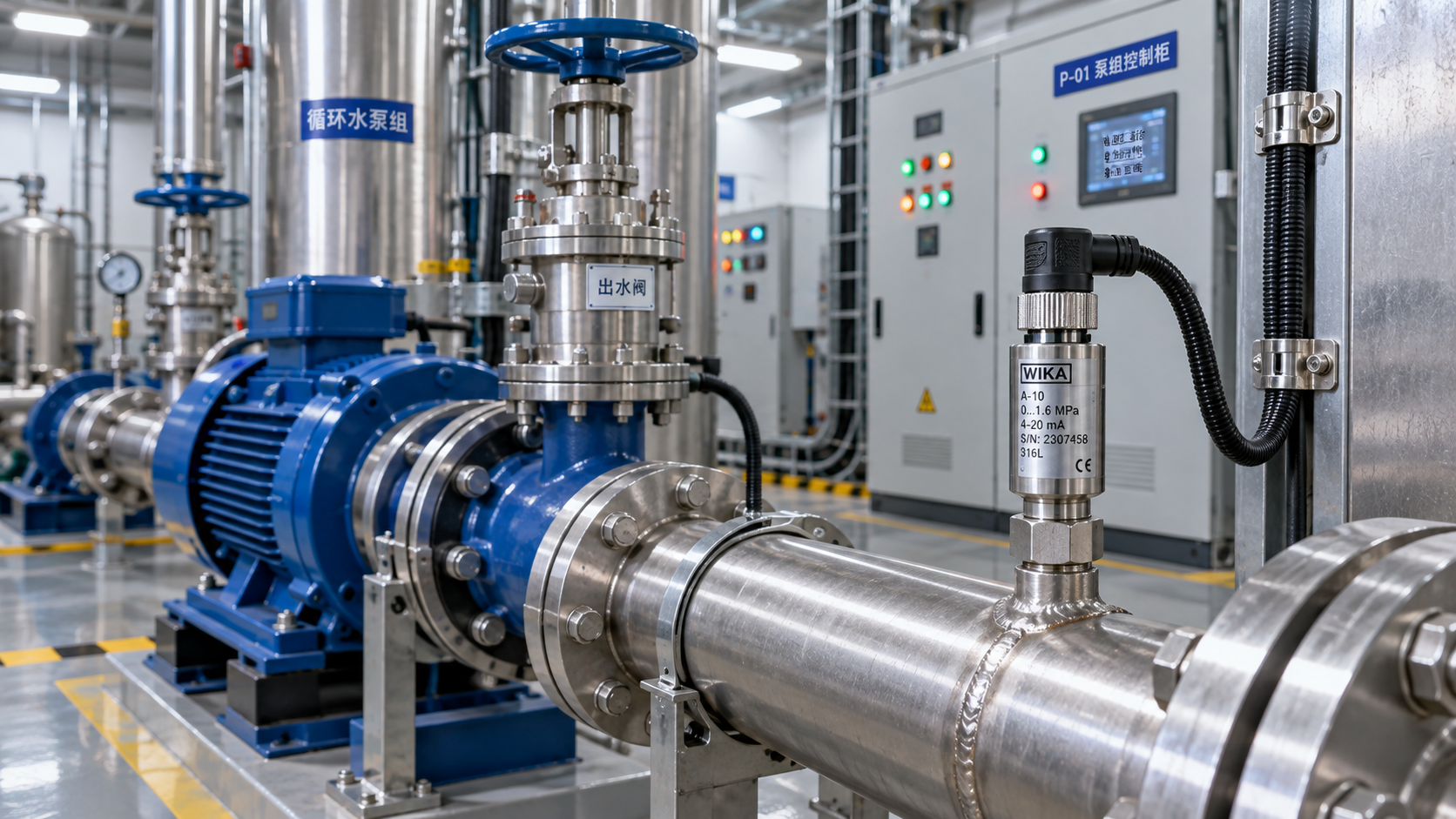
A high reliability sensor is suitable for critical equipment when its performance remains predictable across the conditions that can cause ordinary sensors to drift, fail, misread, or become unavailable. Accuracy on a clean laboratory bench is only one part of the decision. For a pump protection system, rail signal assembly, power distribution asset, industrial safety loop, or remote infrastructure installation, the more important question is whether the sensor will still deliver a trustworthy signal after exposure to vibration, heat cycling, moisture, contamination, electrical noise, and long operating hours.
The right choice is therefore not simply the sensor with the highest published accuracy or the longest feature list. It is the sensor whose sensing principle, mechanical construction, electrical interface, environmental protection, diagnostic behavior, and support lifecycle fit the actual failure consequences of the equipment.
Start with the consequence of a wrong or missing signal
Critical equipment does not always need the same type of reliability. A sensor used to optimize energy consumption may tolerate occasional drift or a short interruption. A sensor that triggers shutdown, controls a hazardous process, protects rotating machinery, or confirms the position of a safety-relevant mechanism has a much narrower margin for error.
Before comparing products, define what happens when the output is wrong, delayed, noisy, frozen, or absent. This changes the specification entirely. A measurement that is slightly inaccurate may be acceptable in a monitoring application but unacceptable when it feeds a protection threshold. Likewise, an intermittent signal may be manageable in a supervised system but dangerous where a controller assumes that all incoming data is valid.
A useful evaluation question is: Does the equipment fail safely when this sensor fails? If the answer is no, the sensor selection should include fault detection, diagnostic coverage, wiring integrity, controller logic, and redundancy rather than treating the device as an isolated component.
Reliability is a system property, not a catalog claim
Terms such as “industrial grade,” “rugged,” or “high reliability” can be useful descriptions, but they do not establish suitability on their own. Reliability emerges from the interaction between the sensor and its installation. A well-designed pressure transmitter can still fail early if its diaphragm is exposed to incompatible chemicals. A robust proximity sensor can produce unstable readings if a nearby variable-frequency drive creates interference. A temperature sensor with an appropriate sensing element can become unreliable if its mounting method causes slow thermal response or mechanical strain.
Evaluation should therefore move from the equipment outward: identify the process variable, the operating environment, the mounting arrangement, the electrical environment, the control architecture, and the maintenance model. The sensor should be judged against those conditions, not against an idealized operating range.
The most common selection error is to compare only the headline performance specifications. Resolution, nominal range, and initial accuracy matter, but they may say little about long-term drift, resistance to shock, connector durability, susceptibility to moisture ingress, or behavior during a partial fault.
Match the sensing principle to the failure modes in the application
Different sensing technologies fail differently. A high reliability sensor is usually one whose underlying measurement principle is well matched to the medium and operating conditions, not merely one with a more expensive housing.
For example, a non-contact sensing method can reduce wear in moving equipment, but it may be more vulnerable to target material changes, contamination, reflective surfaces, or alignment shifts. A contact-based measurement may offer a more direct indication of a condition, yet introduce sealing, abrasion, or fatigue concerns. Neither approach is automatically more reliable. The decision depends on the dominant risks in the specific installation.
For fluid and process applications, examine whether the sensor will encounter deposits, bubbles, solids, pressure spikes, cleaning agents, or dry-running conditions. For position and motion sensing, assess target geometry, movement speed, backlash, vibration, and whether the target can move outside the expected sensing zone. For environmental monitoring, consider solar loading, condensation, cable exposure, and the difference between ambient air temperature and the temperature seen by the sensing element.
Environmental ratings need to be interpreted in context
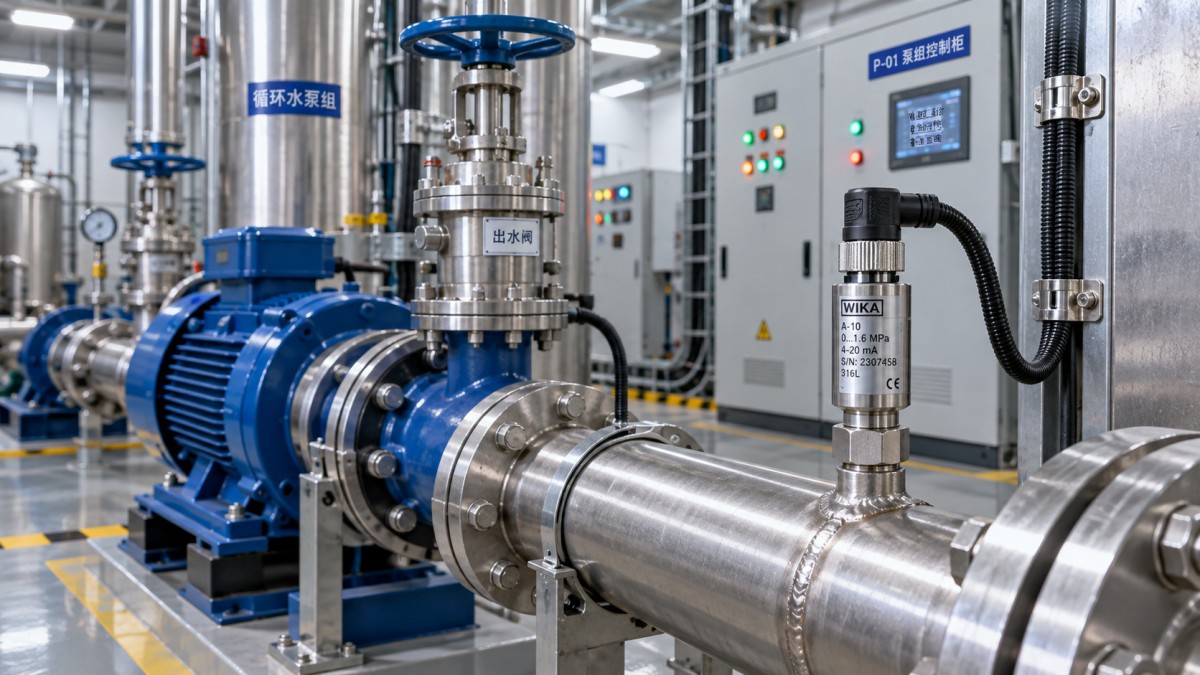
Ingress protection, operating temperature range, shock resistance, and vibration resistance are useful starting points. They are not a substitute for understanding the actual exposure. A protected enclosure may still admit moisture through an incorrectly assembled connector, a damaged cable jacket, or a pressure-breathing cycle. A sensor that tolerates a stated ambient temperature may not tolerate the combined effect of local radiant heat, process heat transfer, and self-heating inside a sealed enclosure.
Temperature cycling deserves particular attention because it affects more than the sensing element. Repeated expansion and contraction can stress solder joints, seals, cable terminations, adhesives, and mechanical interfaces. In outdoor, marine, mobile, and washdown installations, cyclic moisture exposure can be as significant as a single high-humidity condition.
Vibration should also be evaluated by its source and transmission path. Continuous low-level vibration, intermittent shock, resonance at a mounting bracket, and impact from nearby equipment do not place the same demands on a sensor. A rigid mounting point may improve positional stability, while an unsuitable bracket can amplify vibration and cause cable fatigue. It is often more valuable to review the installed assembly than to seek a higher generic vibration figure in a datasheet.
Stable output matters as much as measurement accuracy
Critical equipment needs a signal that the receiving system can interpret correctly. This makes the output type, signal conditioning, and fault behavior part of the reliability decision.
Consider how the sensor behaves during power-up, transient supply events, cable damage, overload, out-of-range measurement, and internal faults. A sensor that simply holds its last value during a fault can be problematic if the control system interprets that value as a normal process condition. A device that provides a defined fault indication, status output, or diagnostic communication can support better system-level decisions, provided the controller is configured to act on that information.
Analog outputs may be appropriate where simplicity and broad compatibility are priorities, but they require attention to grounding, voltage drop, electrical noise, and fault discrimination. Digital communication can provide richer status information and configuration visibility, although it adds considerations around network design, addressing, interoperability, and cybersecurity controls where applicable. The practical question is not which interface is more advanced; it is whether the interface makes abnormal conditions easier to detect and manage in the installed system.
Filtering is another tradeoff. Filtering can prevent nuisance alarms caused by vibration or process turbulence, but excessive filtering delays response. The correct setting depends on the rate at which the physical condition can become unsafe. A protection function should not be tuned with the same smoothing assumptions used for a slow trend display.
Demand evidence of durability, not only a broad specification
Selection documents should make clear what the supplier has actually qualified for the product family and for the intended configuration. That includes the sensing range, housing material, process connection, connector or cable option, output variant, and any configuration-dependent features. A qualification claim for one version should not automatically be assumed to cover every available option.
Useful evidence generally addresses the stresses that matter in the application: thermal cycling, vibration, mechanical shock, moisture exposure, electromagnetic immunity, electrical transient tolerance, chemical compatibility, and endurance where moving or wetted components are involved. The goal is not to collect the largest number of certificates. It is to establish that the evidence is relevant to the sensor’s expected service conditions and the required equipment approval path.
Where safety-related functions are involved, the sensor must also fit the broader safety architecture. This may include defined failure behavior, diagnostic capability, documented operating limits, proof-test considerations, and compatibility with the controller or safety logic. A component can be technically robust and still be unsuitable for a safety function if its failure modes cannot be detected or if the system cannot place the equipment in a safe state after signal loss.
Long service life requires a maintenance strategy
A sensor should not be treated as maintenance-free simply because it has no moving parts. Drift, contamination, seal aging, connector corrosion, cable damage, and configuration changes can all affect measurement quality over time. The right maintenance approach depends on whether the process is stable, whether the equipment can be stopped, how rapidly a sensor condition can degrade, and whether an independent reference is available.
For critical assets, assess the following before purchase:
- How can the sensor’s health be checked without dismantling the entire assembly?
- Can it be function-tested in place, or does verification require removal and recalibration?
- Are replacement units interchangeable without changing scaling, wiring, firmware settings, or control logic?
- Can maintenance staff access the sensor safely and without disturbing adjacent process connections?
- What indication will reveal contamination, drift, loss of signal, or a wiring problem before the equipment is exposed to risk?
Maintainability has a direct effect on real reliability. A sensor that is highly capable but difficult to inspect, configure, or replace can create longer exposure to faults than a simpler design with clear diagnostics and predictable service procedures.
Consider supply continuity and configuration control early
For equipment with a long operational life, the component decision includes more than technical fit at the time of procurement. Part-number control, approved alternates, documentation quality, connector availability, calibration equipment, and supplier change notifications can all affect future supportability. A small revision in connector pinout, output behavior, firmware, or materials may have little effect in a general application and major implications in a validated or safety-sensitive installation.
This does not mean every critical system requires a single-source component or an oversized spare inventory. It means the sourcing plan should reflect the replacement consequences. For an asset where downtime is costly or access is difficult, it may be sensible to qualify a replacement path, retain installation records, and define what must be checked when a sensor is changed.
Global procurement also introduces practical questions around regional approvals, logistics conditions, repair capability, and documentation consistency. These issues belong in the technical review because a sensor that cannot be replaced or verified within the operating window may undermine an otherwise sound reliability plan.
A practical review sequence before release
The most efficient selection process is usually a short, evidence-based review rather than a long comparison of generic features.
- Define the protected function. Identify the process variable, acceptable error, required response, and consequence of a false reading or missing signal.
- Map the actual exposure. Include normal operation, startup, shutdown, cleaning, fault conditions, maintenance activity, and transport or storage where relevant.
- Choose a sensing principle. Eliminate technologies that are poorly matched to the medium, target, installation geometry, or degradation mechanisms.
- Review electrical and mechanical integration. Confirm supply, output, grounding, cable length, connector retention, mounting, and controller behavior.
- Verify abnormal-state behavior. Confirm what the sensor reports during faults and how the receiving system responds.
- Check lifecycle practicality. Establish inspection, replacement, configuration, spare-part, and documentation requirements before equipment release.
Where uncertainty remains, an application-representative evaluation is more informative than a generic bench test. The test should expose the sensor to the conditions most likely to cause an incorrect decision: realistic vibration, electrical interference, thermal conditions, process contamination, mounting tolerances, and operating sequences. Testing only for normal-state accuracy can miss the risks that matter most.
When a premium sensor is not the right answer
A more heavily specified device is not automatically the best engineering choice. Complexity can introduce configuration errors, communication dependencies, longer lead times, or maintenance requirements that do not suit a simple application. If the consequence of failure is limited, the environment is controlled, and the sensor is easily accessible, a conventional industrial sensor with a straightforward replacement procedure may provide the better overall result.
Conversely, reducing unit cost can be a poor trade when sensor failure can stop production, damage equipment, create a hidden unsafe condition, or require difficult site access. The appropriate decision is based on total operational exposure, not on the sensor purchase price alone.
The strongest selection records link each requirement to a real operating condition or failure consequence. That approach prevents a high reliability sensor from becoming a vague purchasing label and turns it into a defensible engineering choice: a component that can measure the required condition, communicate its state clearly, withstand its installed environment, and remain supportable throughout the equipment’s service life.
Technical Specifications
- What to verify before selecting a transformer manufacturer in the USAAuthor :Electrical Components Editorial Team
- How to choose a cutting machine for stone based on slab thicknessAuthor :Construction Materials Editorial Team
- When are porcelain tiles for outdoor spaces at risk of cracking?Author :Construction Materials Editorial Team
Expert Insights

Chief Security Architect
Dr. Thorne specializes in the intersection of structural engineering and digital resilience. He has advised three G7 governments on industrial infrastructure security.
Core Sector // 01
Security & Safety
- What makes a high-reliability sensor suitable for critical equipment?Author :Electrical Components Editorial Team

- When does sensor accuracy become inadequate for process control?Author :Electrical Components Editorial Team

- When does a high accuracy sensor improve process measurement?Author :Electrical Components Editorial Team

- Sensor Selection Guide for Temperature, Pressure, and MotionAuthor :Electrical Components Editorial Team

- 2026 Sensor Trends Shaping Smarter Industrial AutomationAuthor :Electrical Components Editorial Team