What to do when a washer shipment arrives defective
Author
Date Published
Reading Time
What to Do When a Washer Shipment Arrives Defective
A pallet of washers can look like a minor incoming delivery—until the parts fail a dimensional check, show corrosion, arrive mixed with the wrong material grade, or lack the documentation needed for a safety-critical assembly. For quality control and safety managers, the first few hours after discovery often determine whether the issue becomes a contained supplier claim or spreads into production disruption, traceability gaps, and potentially unsafe finished goods.
How do I handle a defective washer shipment? Treat it as a nonconformance event, not simply a purchasing inconvenience. Secure the lot, verify what was ordered and received, preserve evidence, assess the operational and safety exposure, and communicate a clear claim to the supplier. The practical goal is to prevent suspect washers from entering use while giving procurement, engineering, and the supplier a reliable factual record.
This guidance focuses primarily on industrial washers used with bolts, screws, anchors, and fastening assemblies. The same response logic can also apply to appliance washers or other products described as “washers,” although the inspection criteria and safety controls will differ.
Stop the Lot Before It Becomes a Production Problem
The instinct to keep production moving can create the greatest risk. If a receiving inspector finds defects in a portion of a shipment, do not assume the remaining cartons are acceptable because they appear normal. A defect may be isolated, but it may also reflect an uncontrolled process change, poor sorting, mixed inventory, plating failure, or an incorrect material substitution affecting the full batch.
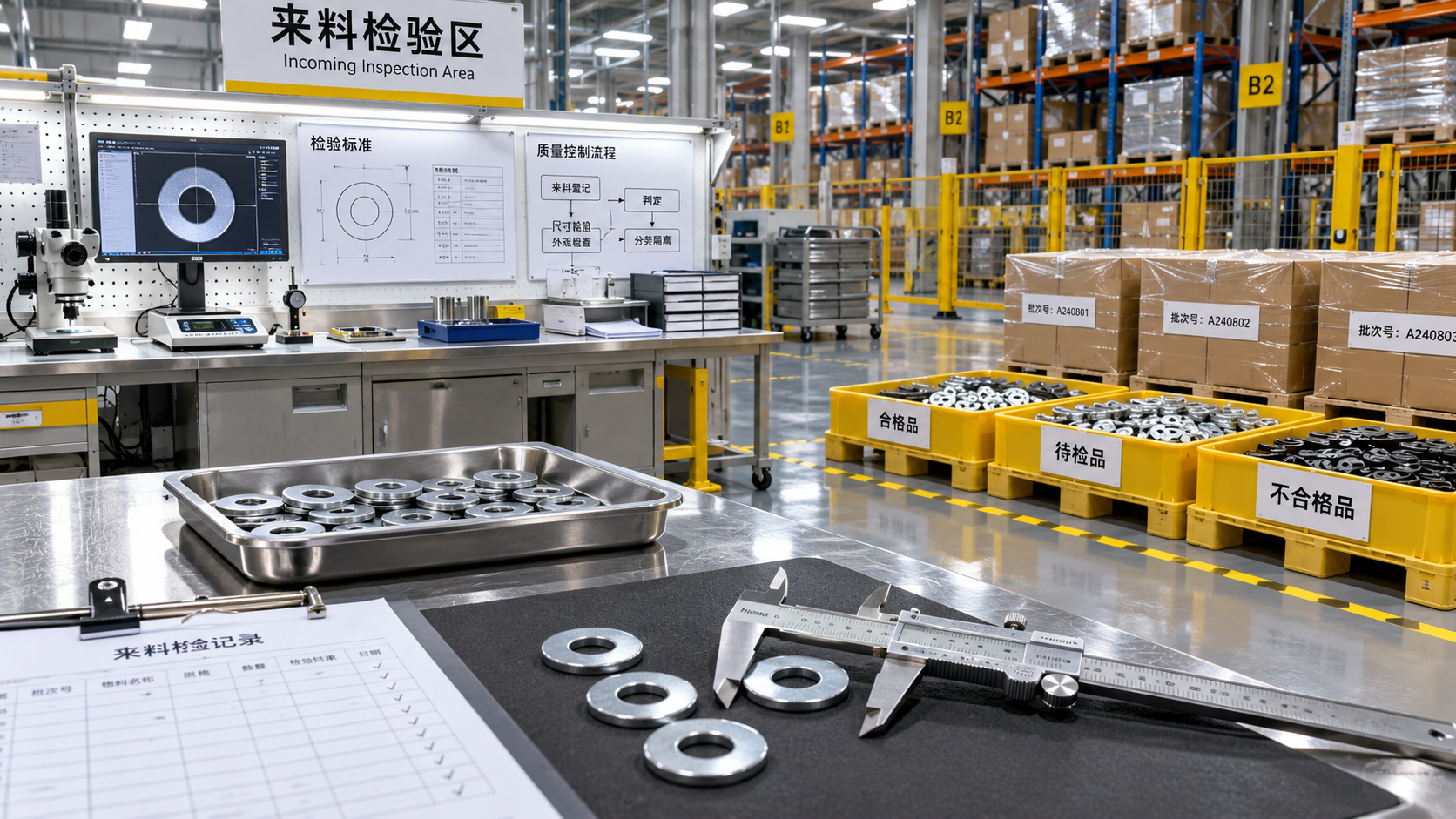
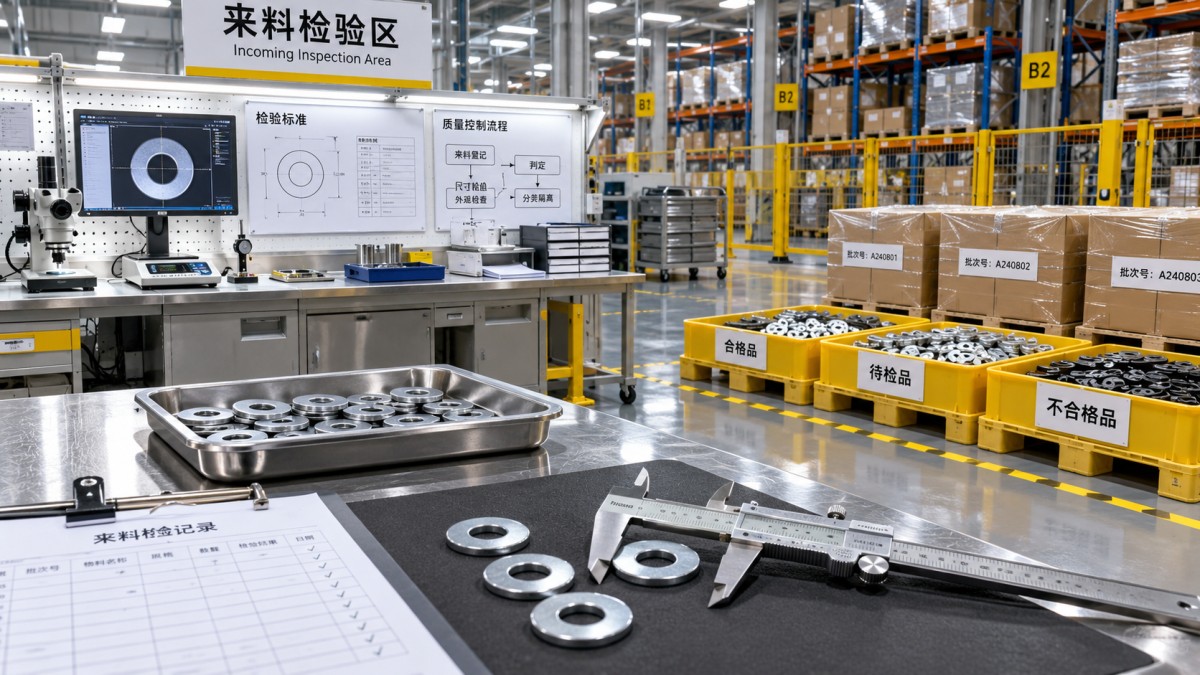
Place the affected delivery in a clearly identified quarantine area. Use physical segregation where possible: marked pallets, restricted bins, a hold cage, or an ERP quality-hold status that prevents issue to the production floor. The label should identify the part number, supplier, purchase order, packing slip number, lot or heat number, receipt date, quantity on hold, and the person who initiated the hold.
Do not relabel, rework, blend, or return the material before the evidence is complete. Even well-intended actions—such as removing visibly damaged pieces from cartons—can weaken traceability and make it harder to establish whether the defect existed at shipment, during transport, or after receipt.
Where the washers are used in structural connections, pressure systems, electrical equipment, lifting assemblies, machinery guards, or other safety-related applications, notify the responsible engineering or safety function immediately. A small discrepancy in hardness, thickness, coating, or inside diameter may matter far more than its appearance suggests.
Confirm That the Shipment Is Actually Nonconforming
Not every unexpected condition is automatically a supplier defect. The incoming-quality team should compare the received goods against the approved purchasing and technical requirements, rather than relying on memory or a visual impression alone.
Start with the documents and identifiers:
- Purchase order and approved part number
- Latest drawing, specification, or control plan
- Required washer type, dimensions, material, finish, hardness, and tolerance
- Applicable standard, such as a customer specification or recognized fastener standard
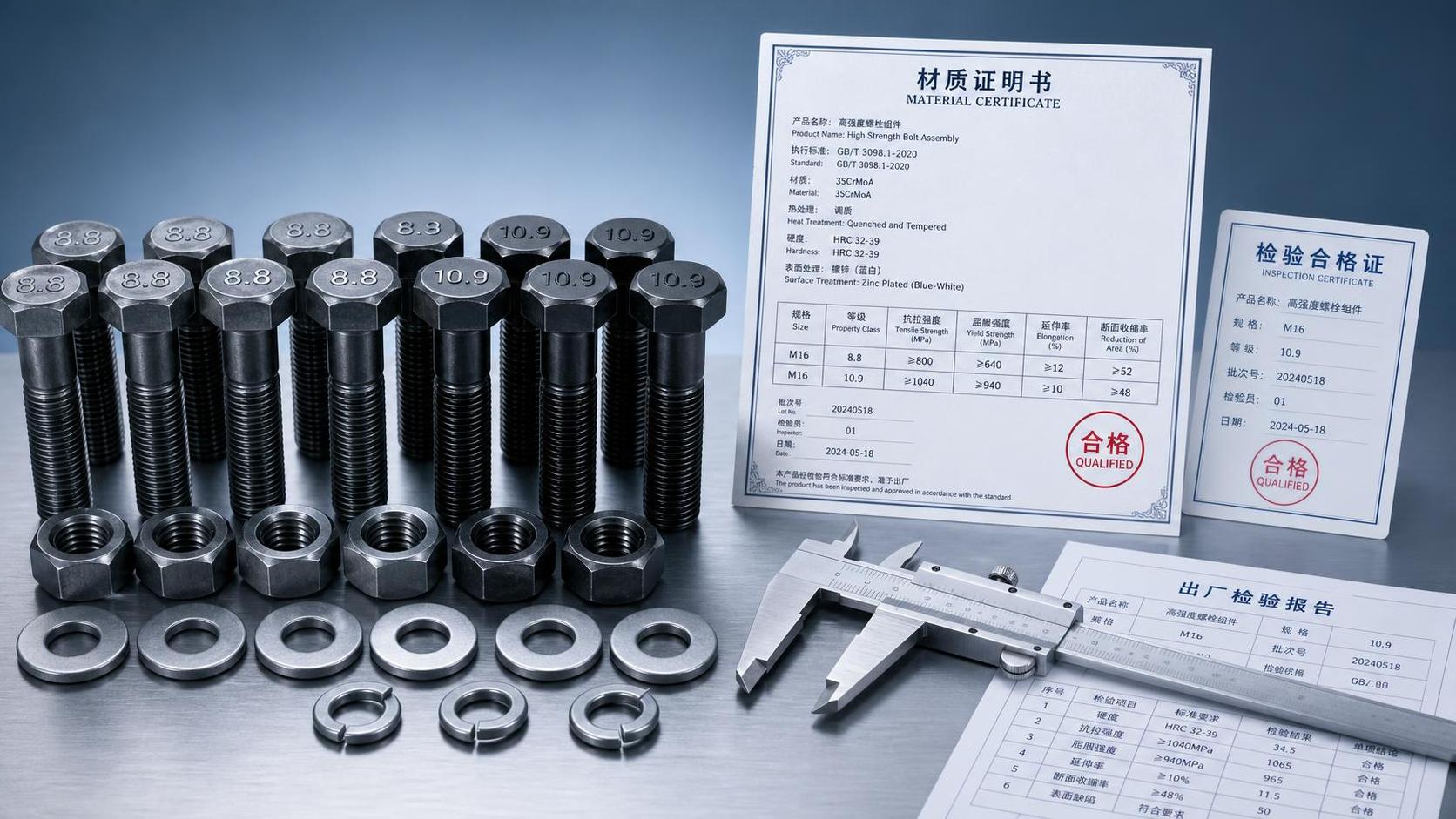
- Certificate of conformity, material test report, plating certificate, or inspection report where required
- Supplier lot number, heat number, manufacturing date, and carton labeling
- Packaging requirements, including moisture protection and quantity per pack
Then define the defect precisely. “Bad washers” is not enough for a claim or corrective action. A useful nonconformance statement identifies what requirement was missed and how the shipment deviated. For example: “Washer outside diameter measured above the drawing maximum,” “zinc coating shows red rust on unopened cartons,” “received plain steel washers instead of specified stainless steel,” or “mixed thicknesses found within a single labeled lot.”
When sampling, follow your organization’s approved inspection plan or the customer’s specified acceptance criteria. If no plan exists, avoid casually checking a few pieces and declaring the shipment acceptable. Document the sample size, cartons selected, measuring tools used, results, and the lot relationship of every sample. If defects cluster in one carton or one pallet, expand the inspection intelligently rather than assuming other packaging units are unaffected.
Build an Evidence File That Can Survive a Dispute
A supplier may be willing to resolve an obvious issue quickly, but quality teams should still document the event as though an insurer, customer auditor, or internal review will ask questions later. Good records shorten debates because they separate observable facts from assumptions.
Photograph the shipment before extensive handling. Capture pallet condition, carton labels, outer packaging damage, moisture marks, seals, packing configuration, and the product itself. Take both wide images that establish context and close images that show defects. Where dimensions are involved, photograph the washer next to a calibrated measuring device, while keeping the readable result visible.
Retain representative samples. Seal and label them with the supplier lot, carton number, date, inspector, and defect category. If destructive testing or laboratory analysis may be needed, preserve enough material for a supplier counter-test. For coating, material, or hardness disputes, an independent test result can be more useful than repeated visual arguments.
Your nonconformance report should normally include:
- Part description, internal part number, and supplier information
- PO number, shipment reference, receipt date, and quantity received
- Lot, heat, batch, carton, or pallet traceability details
- Description of the requirement and documented defect
- Inspection method, instruments, sample size, and measured results
- Photos, certificates, packing list, and copies of relevant specifications
- Quantity confirmed defective, quantity suspected, and quantity already used if any
- Immediate containment actions and the responsible decision-maker
Keep the language factual. Avoid stating that the supplier was negligent before the cause is known. The record should say what was received, what was required, and what the inspection found.
Check Whether the Risk Has Already Moved Downstream
Quarantining the incoming pallet is essential, but it may not be sufficient. Ask a simple question: Could any material from this supplier lot already be in stores, on the line, at a subcontractor, or inside finished products?
Traceability records should allow the team to identify prior receipts, stock locations, work orders, and finished-product batches associated with the same lot. If mixed lots are routinely combined in bulk bins, this step becomes more difficult—and the current incident may expose a process weakness worth correcting.
Risk assessment should reflect the actual washer function. A cosmetic stain on a non-critical packing washer may justify controlled use after engineering review. A crack, incorrect hardness, missing coating, burr, or material mismatch in a high-load bolted joint is different. It can change clamp load, fatigue behavior, corrosion resistance, electrical bonding, or assembly torque performance.
Safety managers should be especially cautious with washers supporting guards, lifting points, flange joints, railings, rotating machinery, electrical grounding, and equipment subject to vibration. Do not authorize use based only on the assumption that “a washer is just a washer.” Engineering disposition is appropriate whenever a deviation could alter fit, function, service life, regulatory compliance, or customer commitments.
Notify the Supplier Promptly, but Ask for More Than a Credit Note
Send the initial notification as soon as the basic facts are confirmed. Most supply agreements contain reporting windows, and delayed notification can complicate recovery of sorting, line stoppage, freight, or replacement costs. Include the quarantine status and state clearly that no use or return will occur without disposition instructions, unless an urgent internal containment action is necessary.
A constructive supplier notification generally requests four things: acknowledgement of the nonconformance, an immediate containment plan, replacement or sorting arrangements, and a formal root-cause response. If production is exposed, specify the date by which you need a decision or replacement shipment. Vague messages such as “please advise” often create avoidable delays.
For significant or recurring defects, request a structured corrective action, commonly in an 8D, SCAR, or equivalent format. The supplier’s response should address more than the defective shipment. It should explain how it identified potentially affected stock, what caused the failure, what corrective actions were taken, how effectiveness will be verified, and whether similar parts or customers may be affected.
Be careful with supplier requests to “use as is” without evidence. A concession may be acceptable only when it is formally reviewed by the appropriate engineering, quality, customer, and regulatory stakeholders. It should state the exact affected lot, permitted use, limitations, and approval authority. An informal email from a sales contact is not a substitute for controlled deviation approval.
Choose the Right Disposition: Return, Sort, Rework, or Reject
The best disposition depends on defect severity, production urgency, contractual terms, and the ability to preserve traceability. Returning the entire lot may be the cleanest option when the defect is widespread, the material identity is uncertain, or safety-related requirements are involved. In other cases, a documented 100% sort can recover conforming stock faster than waiting for replacement material.
If sorting is considered, establish the inspection criteria before work begins. Define the acceptable condition, method of measurement, sampling or 100% inspection expectation, sorting location, qualified personnel, verification checks, and segregation of accepted versus rejected material. The supplier should normally bear reasonable costs when the nonconformance is confirmed, subject to the purchase agreement.
Rework needs even more caution. Deburring, cleaning, or repacking may be feasible for limited defects, but processes such as replating, heat treatment, machining, or coating repair can alter washer properties. Reworked parts should not return to stock without documented technical approval and, where required, renewed inspection or certification.
Reject and dispose of material only after traceability, financial recovery, and any investigation needs are settled. Disposal too early may eliminate the supplier’s opportunity to inspect samples and can make a later chargeback harder to support.
Common Mistakes That Turn a Small Defect Into a Larger Issue
Accepting material because production is short. This may appear practical, yet it transfers supplier uncertainty into your own process. If a temporary concession is necessary, control it formally and define its limits.
Inspecting only the visibly damaged carton. Packaging damage can be localized, but material or process defects are often lot-wide. Inspection scope should be based on traceability and risk, not convenience.
Using photographs without measurements or requirements. Images are persuasive, but they rarely prove a dimensional or material nonconformance on their own. Tie the evidence to the drawing, standard, or purchase requirement.
Letting purchasing close the issue after receiving a replacement. Replacement restores supply; it does not necessarily prevent recurrence. Quality should verify whether the supplier’s corrective action is proportionate to the defect and risk.
Failing to review incoming controls afterward. If the defect escaped until the line or customer found it, the organization should revisit receiving inspection, document review, lot segregation, and supplier performance monitoring.
Turn the Incident Into a Stronger Incoming-Quality Process
A defective washer shipment is frustrating, especially when a production schedule is already tight. Still, it can reveal exactly where the supply chain needs more discipline. Review whether the supplier had an approved specification revision, whether certificates were checked before release, whether packaging protected the required finish, and whether material from different lots can be separated reliably in your facility.
For repeat suppliers and critical washers, consider a risk-based incoming inspection plan that reflects part function and supplier history. Critical dimensions, material grade, hardness, coating condition, and traceability may require different verification levels than ordinary commercial hardware. A supplier with a stable history may justify reduced inspection only when performance, documentation, and change-control practices support that decision.
The practical answer to “How do I handle a defective washer shipment?” is therefore disciplined containment combined with evidence-based follow-through. Hold the lot, verify the failure, trace possible exposure, document everything, obtain a controlled supplier response, and release material only when its fitness for use is clear. That approach protects more than inventory value. It protects the people, equipment, contracts, and customer trust that depend on small components performing exactly as intended.
Technical Specifications
- When are porcelain wall tiles the right choice for shower walls?Author :Construction Materials Editorial Team
- How to verify REACH compliance for epoxy resin before purchaseAuthor :Chemical Industry Editorial Team
- Is solid wood flooring suitable for kitchens with changing humidity?Author :Construction Materials Editorial Team
Expert Insights

Chief Security Architect
Dr. Thorne specializes in the intersection of structural engineering and digital resilience. He has advised three G7 governments on industrial infrastructure security.
Core Sector // 01
Security & Safety
- What to do when a washer shipment arrives defectiveAuthor :Metals & Fabrication Editorial Team

- Which custom fastener capabilities matter for complex assemblies?Author :Metals & Fabrication Editorial Team

- When do custom fasteners outperform standard parts in equipment design?Author :Metals & Fabrication Editorial Team

- High Tensile Fasteners: Key Grade Checks Before Project ApprovalAuthor :Metals & Fabrication Editorial Team

- Bolts and Nuts Grades Explained for Safer AssemblyAuthor :Metals & Fabrication Editorial Team

- Flat Washers vs Spring Washers: When Should Each Type Be Used?Author :Metals & Fabrication Editorial Team

- Why Bolted Joints Loosen: Common Washer Selection Mistakes to AvoidAuthor :Metals & Fabrication Editorial Team

- Screw Types Explained for Wood, Metal, and Concrete JobsAuthor :Metals & Fabrication Editorial Team