Why Bolted Joints Loosen: Common Washer Selection Mistakes to Avoid
Author
Date Published
Reading Time
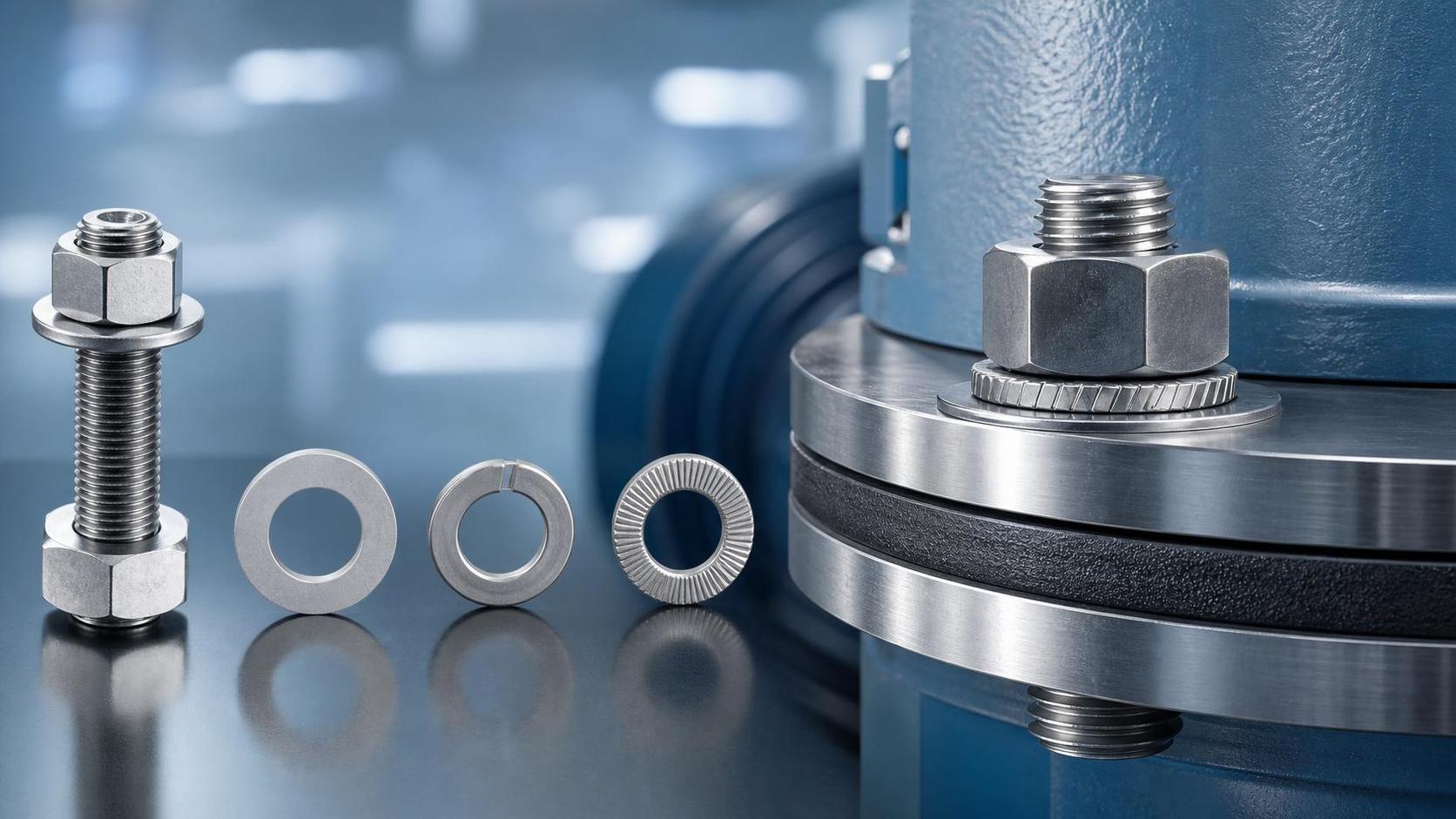
Why washer choices fail in real bolted joints
Bolted joints rarely loosen for one simple reason. In many service cases, the fastener grade is acceptable, but the washers are wrong for the joint condition.
That distinction matters in maintenance-heavy environments. A poor washer choice can turn minor vibration into leakage, lost clamp load, repeat shutdowns, and avoidable safety exposure.
In practice, washers must match load behavior, surface hardness, joint movement, and assembly control. The same bolted joint can perform very differently across plants, fleets, and field repairs.
This is why washer selection deserves the same attention as bolts, nuts, and torque values. Small parts often decide whether a joint stays stable after installation.
Different operating conditions change what washers must do
A static steel structure and a vibrating pump skid do not ask the same thing from washers. One mainly needs load distribution, while the other also needs resistance to self-loosening.
Surface condition matters just as much. Painted flanges, soft aluminum covers, and rough cast housings each change how washers seat, embed, and hold preload over time.
Assembly method adds another layer. Controlled tightening with calibrated tools supports more predictable washer performance than field assembly with uncertain torque and reused hardware.
More common failures come from treating similar-looking joints as identical. That is where washer mistakes start to multiply across maintenance programs.
Vibration-heavy equipment needs more than basic flat washers
On compressors, conveyors, mobile equipment, and rotating assemblies, standard flat washers are often chosen only to protect the bearing surface. That solves only part of the problem.
If the joint sees cyclic transverse movement, clamp load can decay even when torque was correct at installation. In this setting, washers must support locking performance, not just spacing.
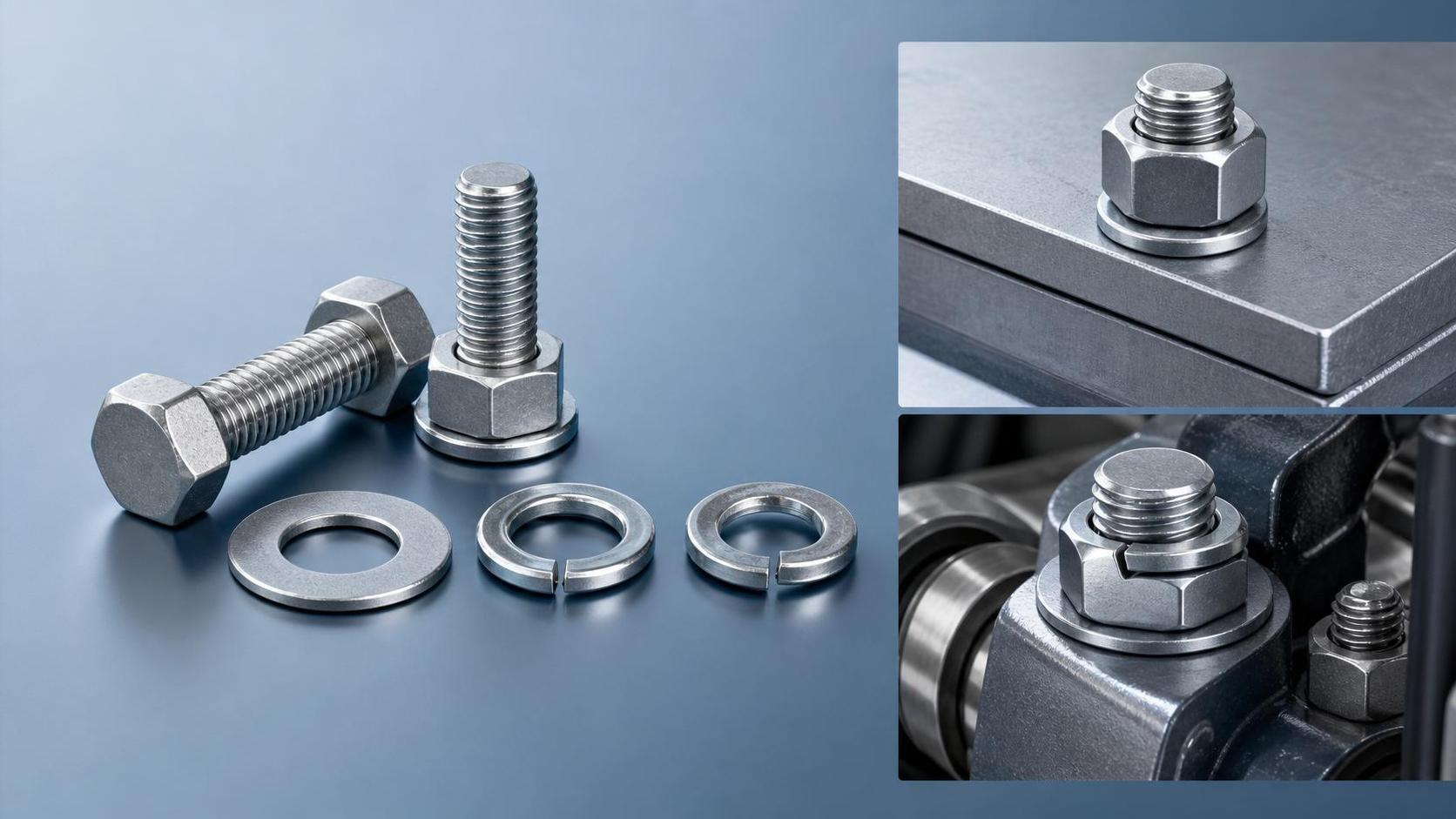
A common mistake is relying on split lock washers where vibration is persistent and severe. In many real applications, they do not provide enough resistance once the joint begins to move.
Better judgment starts with the motion profile. If the assembly sees repeated shock or side-load cycling, wedge-locking washers or another verified anti-loosening method usually deserve review.
Soft surfaces and coated parts create a different washer problem
In enclosure panels, light structures, pipe supports, and equipment covers, the issue is often not vibration first. It is embedding, creep, or surface damage under the washer.
Using narrow or overly hard washers on soft materials can reduce preload after installation. The joint feels tight initially, then relaxes as the surface deforms.
Coated surfaces add another risk. Paint, galvanizing, or plated layers can compress or crack, changing friction and clamp retention. That can distort torque-to-tension results.
Here, larger bearing-area washers, hardened washers, or material-compatible combinations may be more effective. The correct choice depends on whether protection, preload stability, or both matter most.
Where field conditions usually change the decision
Corrosion, temperature, and reuse are often underestimated
Washers selected for dry indoor service may fail quickly in marine, chemical, or outdoor conditions. Corrosion changes washer thickness, friction, and contact quality long before the bolt breaks.
Temperature swings also matter. Thermal expansion differences across bolted joints can reduce clamp force, especially where washers were chosen without checking material compatibility.
Another frequent error is reusing washers after disassembly. In turnaround work or roadside repair, reused washers may already be flattened, damaged, or contaminated.
That is not a minor housekeeping issue. Reuse can change seating and friction enough to make a previously stable tightening method unreliable.
Common misjudgments that lead to repeat service failures
- Choosing washers by catalog size only, without checking hardness, thickness, and bearing diameter.
- Assuming all lock washers perform similarly under vibration.
- Focusing on unit price while ignoring maintenance frequency and downtime exposure.
- Ignoring standards, coating compatibility, and galvanic corrosion risk.
- Using the same washers across new assembly and aftermarket repair conditions.
These mistakes usually appear where documentation is thin and replacement decisions are made quickly. The result is not dramatic at first, but service intervals shorten and reliability drops.
A practical way to match washers to the job
Start with four checks: load type, vibration level, contact surface, and environment. That simple review often reveals whether basic flat washers are enough or whether a more specific design is needed.
Then verify how the joint is assembled in reality. Controlled factory tightening and field maintenance do not produce the same consistency, so washer selection should reflect that difference.
Where bolted joints fail repeatedly, compare removed washers with service history. Patterns in wear, fretting, corrosion, and embedding often explain more than torque records alone.
A useful next step is to build a short washer selection standard by application type. That helps compare conditions, reduce substitutions, and make future maintenance decisions more reliable.
Technical Specifications
- How to test melt flow consistency in batches of recycled plasticsAuthor :Polymers & Rubber Editorial Team
- When does a cast resin transformer need high-altitude derating?Author :Electrical Components Editorial Team
- How to verify Global Industrial Insights sourcing informationAuthor :Industrial Machinery Editorial Team
Expert Insights

Chief Security Architect
Dr. Thorne specializes in the intersection of structural engineering and digital resilience. He has advised three G7 governments on industrial infrastructure security.
Core Sector // 01
Security & Safety
- What to verify before choosing a screw manufacturer in IndiaAuthor :Metals & Fabrication Editorial Team

- How to assess fastener traceability when sourcing in EuropeAuthor :Metals & Fabrication Editorial Team

- What to do when a washer shipment arrives defectiveAuthor :Metals & Fabrication Editorial Team

- Which custom fastener capabilities matter for complex assemblies?Author :Metals & Fabrication Editorial Team

- When do custom fasteners outperform standard parts in equipment design?Author :Metals & Fabrication Editorial Team

- High Tensile Fasteners: Key Grade Checks Before Project ApprovalAuthor :Metals & Fabrication Editorial Team

- Bolts and Nuts Grades Explained for Safer AssemblyAuthor :Metals & Fabrication Editorial Team

- Flat Washers vs Spring Washers: When Should Each Type Be Used?Author :Metals & Fabrication Editorial Team