Engineered Wood Flooring vs Solid Wood Flooring: Pros, Limits, and Best Uses
Author
Date Published
Reading Time
Engineered Wood Flooring vs Solid Wood Flooring: Pros, Limits, and Best Uses
Choosing between engineered wood flooring and solid wood flooring affects cost, upkeep, comfort, and long-term value.
For many homes, both options deliver the warm look people expect from quality wood flooring.
The difference is how each product handles moisture, wear, installation, and future refinishing.
A clear comparison helps you avoid buying the wrong floor for the room, climate, or budget.
What Makes These Two Wood Flooring Types Different?
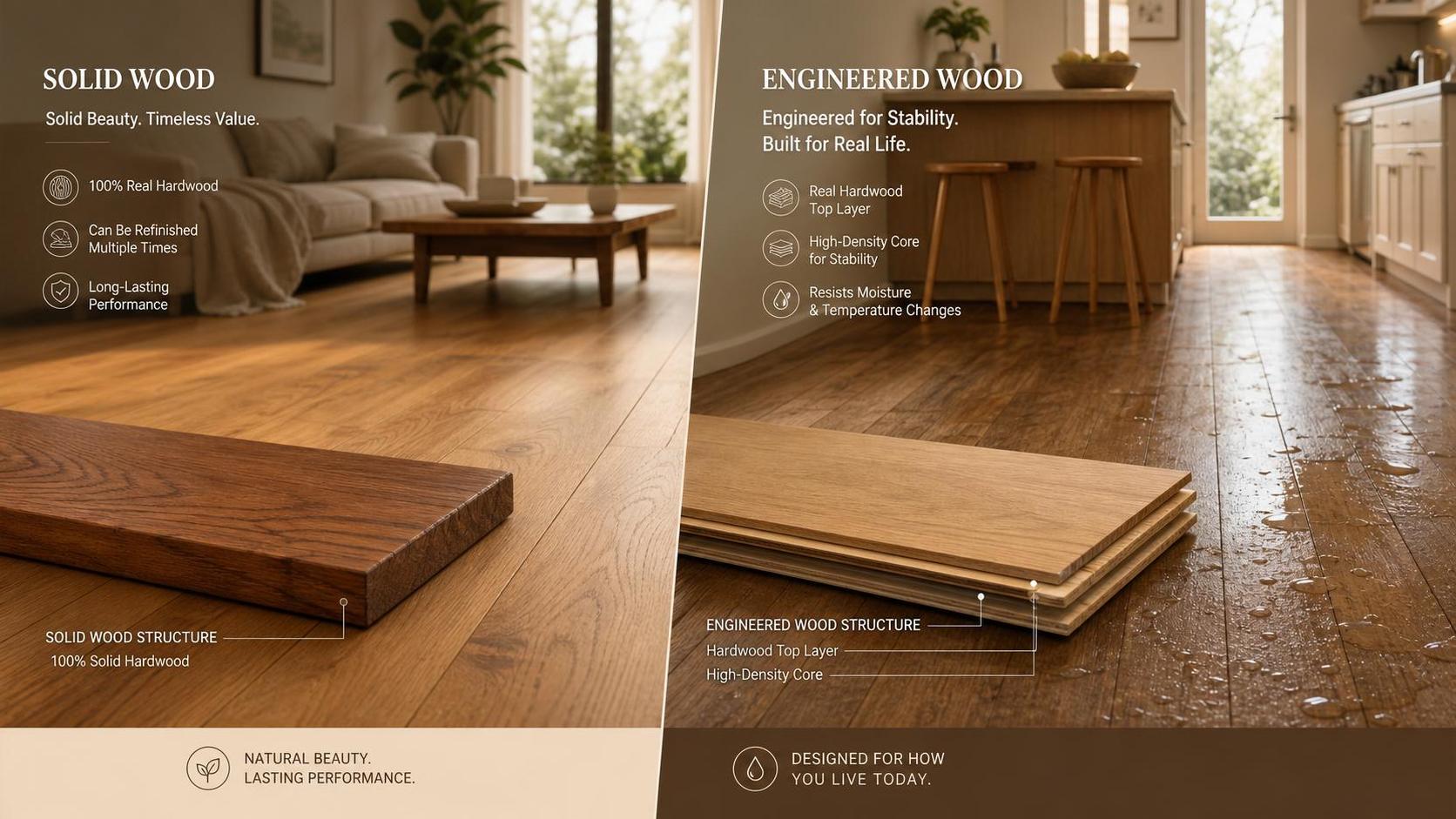
Solid wood flooring is made from one piece of hardwood from top to bottom.
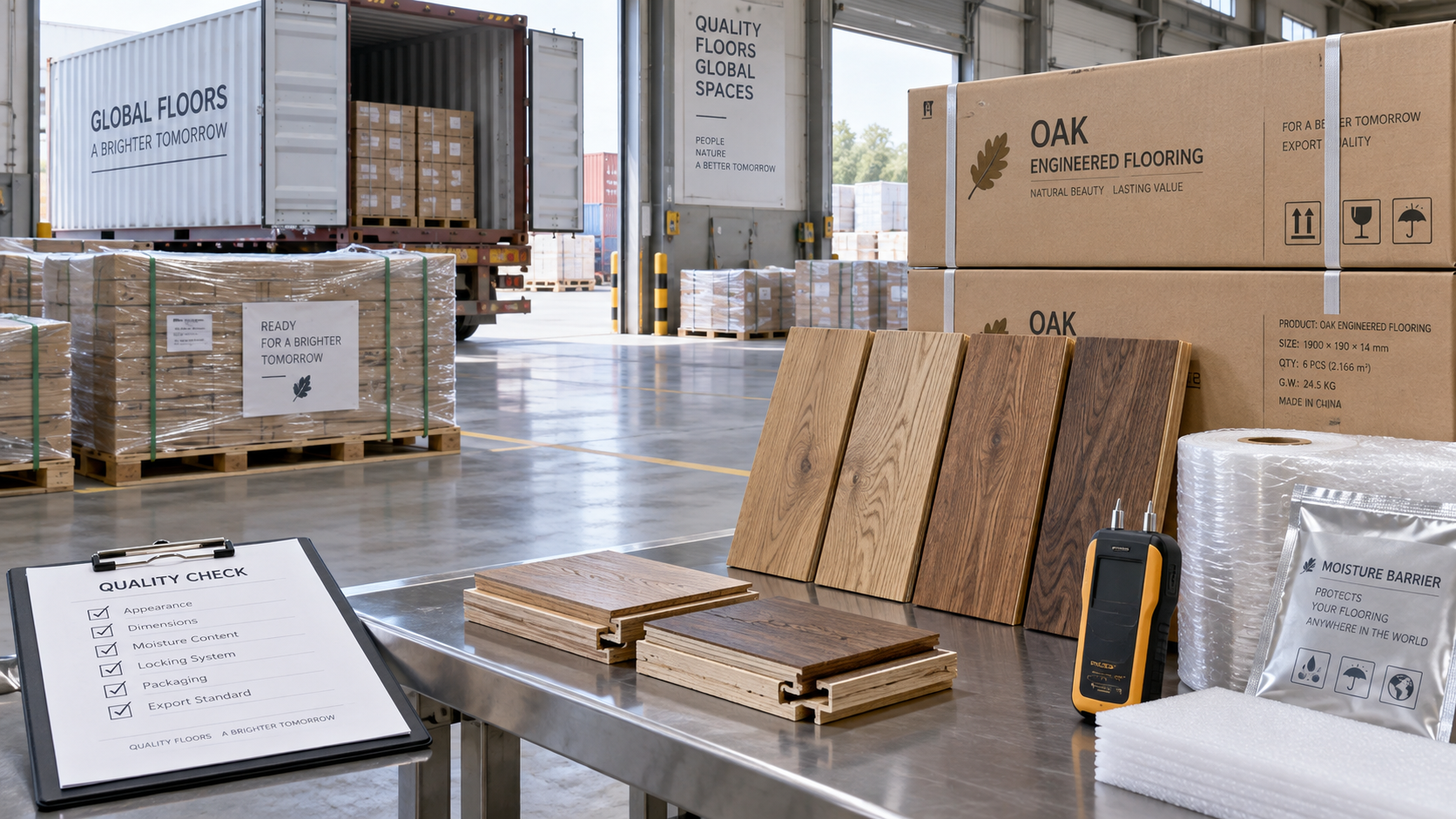
Engineered wood flooring has a real hardwood top layer over a stable core.
That core is usually built from plywood or high-density fiber layers arranged for stability.
Visually, both can look very similar once installed.
In daily use, the structure matters more than the appearance.
This is especially true in kitchens, basements, coastal homes, and spaces with seasonal humidity changes.
Pros of Engineered Wood Flooring
Engineered wood flooring is often the more flexible choice for modern homes.
- Better moisture resistance than solid wood flooring.
- More dimensionally stable in changing temperatures.
- Works well over concrete subfloors.
- Often compatible with underfloor heating systems.
- Usually faster and easier to install.
These benefits make engineered wood flooring a strong option for apartments, lower levels, and renovation projects.
From a practical standpoint, it reduces some common wood flooring risks without losing the natural wood surface.
Limits of Engineered Wood Flooring
Not all engineered wood flooring products perform the same way.
The wear layer thickness largely determines lifespan and refinishing potential.
Lower-cost boards may only allow light sanding once, or not at all.
That means short-term savings can lead to earlier replacement.
It also means product specifications matter more than marketing claims.
When comparing wood flooring, check veneer thickness, core material, finish type, and warranty details carefully.
Pros of Solid Wood Flooring
Solid wood flooring remains the traditional benchmark for durability and long-term refinishing.
- Can be sanded and refinished multiple times.
- Often lasts for decades with proper care.
- Adds a classic, authentic feel underfoot.
- May support resale appeal in some markets.
For main living areas and bedrooms on upper floors, solid wood flooring can be an excellent fit.
It is especially attractive when a home is expected to stay in the family for many years.
Limits of Solid Wood Flooring
Solid wood flooring is more sensitive to moisture and humidity swings.
Boards may expand, contract, cup, or gap when indoor conditions are not controlled.
Because of that, it is usually not the best wood flooring for basements or damp climates.
Installation can also be more demanding and more expensive.
In many cases, solid planks need nail-down installation over a suitable wood subfloor.
Best Uses by Room and Lifestyle
A smarter wood flooring decision usually starts with room conditions, not just style preferences.
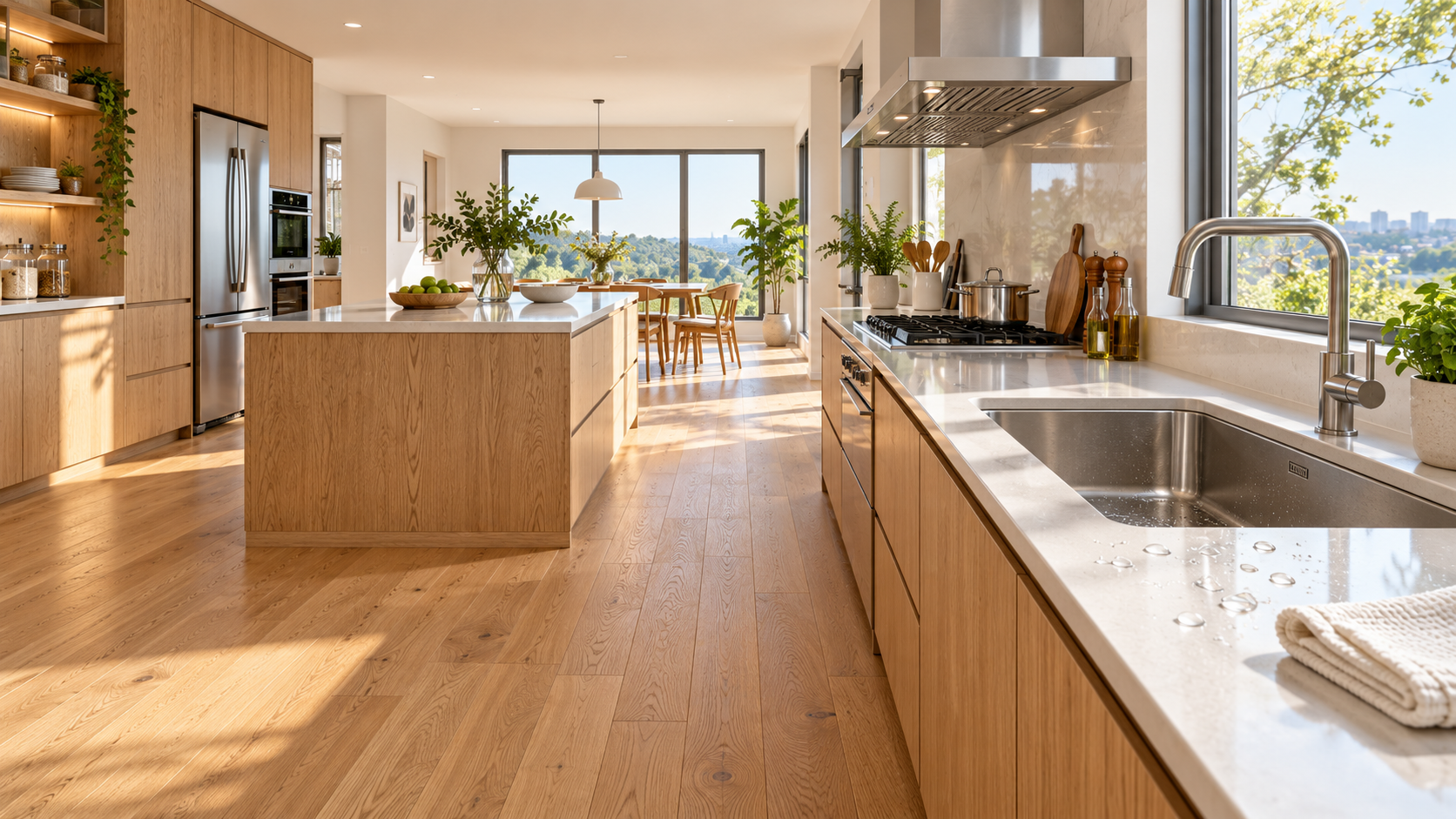
- Choose engineered wood flooring for basements, condos, kitchens, and homes with radiant heat.
- Choose solid wood flooring for dry, climate-controlled living rooms and bedrooms.
- For busy households, prioritize hard species and durable factory finishes.
- For long ownership plans, refinishing potential becomes more valuable.
This is where the best wood flooring choice becomes personal.
A family with pets, children, or high traffic may value stability more than tradition.
Quick Comparison Table
How to Make the Right Wood Flooring Choice
Before buying wood flooring, ask four simple questions.
- How much moisture or humidity will the room face?
- Will you likely refinish the floor in the future?
- What subfloor and installation method are available?
- Are you optimizing for lower upfront cost or longer service life?
If moisture is the main concern, engineered wood flooring usually makes more sense.
If long-term restoration matters most, solid wood flooring often wins.
The best wood flooring is the one that matches the room, the climate, and how you actually live.
Technical Specifications
- How to test melt flow consistency in batches of recycled plasticsAuthor :Polymers & Rubber Editorial Team
- When does a cast resin transformer need high-altitude derating?Author :Electrical Components Editorial Team
- How to verify Global Industrial Insights sourcing informationAuthor :Industrial Machinery Editorial Team
Expert Insights

Chief Security Architect
Dr. Thorne specializes in the intersection of structural engineering and digital resilience. He has advised three G7 governments on industrial infrastructure security.
Core Sector // 01
Security & Safety
- Is solid wood flooring suitable for kitchens with changing humidity?Author :Construction Materials Editorial Team

- Does E1 laminate flooring meet low-emission needs for bedrooms?Author :Construction Materials Editorial Team

- Which flooring materials hold up best in high-traffic commercial spaces?Author :Construction Materials Editorial Team

- What Should Buyers Check Before Importing Wood Flooring?Author :Construction Materials Editorial Team

- Is Demand for Imported Wood Flooring Growing in Europe?Author :Construction Materials Editorial Team

- Laminate Flooring vs Wood Flooring: Which Option Fits Rental Renovations?Author :Construction Materials Editorial Team

- How to Choose Laminate Flooring Wear Ratings for High-Traffic Commercial AreasAuthor :Construction Materials Editorial Team

- Engineered Wood Flooring vs Solid Wood Flooring: Pros, Limits, and Best UsesAuthor :Construction Materials Editorial Team