How Granite Performs in High-Traffic Commercial Spaces
Author
Date Published
Reading Time
How Granite Performs in High-Traffic Commercial Spaces
In high-traffic commercial spaces, material performance shapes maintenance costs, safety, and long-term appearance.
Granite remains a practical choice for lobbies, retail floors, hotels, transit areas, and public buildings.
Its appeal comes from strength, abrasion resistance, and a wide design range.
That said, granite does not perform well by default in every project.
Real performance depends on stone grade, finish, installation quality, maintenance planning, and traffic pattern.
When those factors are aligned, granite can deliver strong lifecycle value in demanding commercial environments.
Why Granite Is Used in Busy Commercial Areas
Granite is an igneous stone with dense structure and high compressive strength.
In practice, that density helps it resist impact, scratching, and surface wear better than many softer materials.
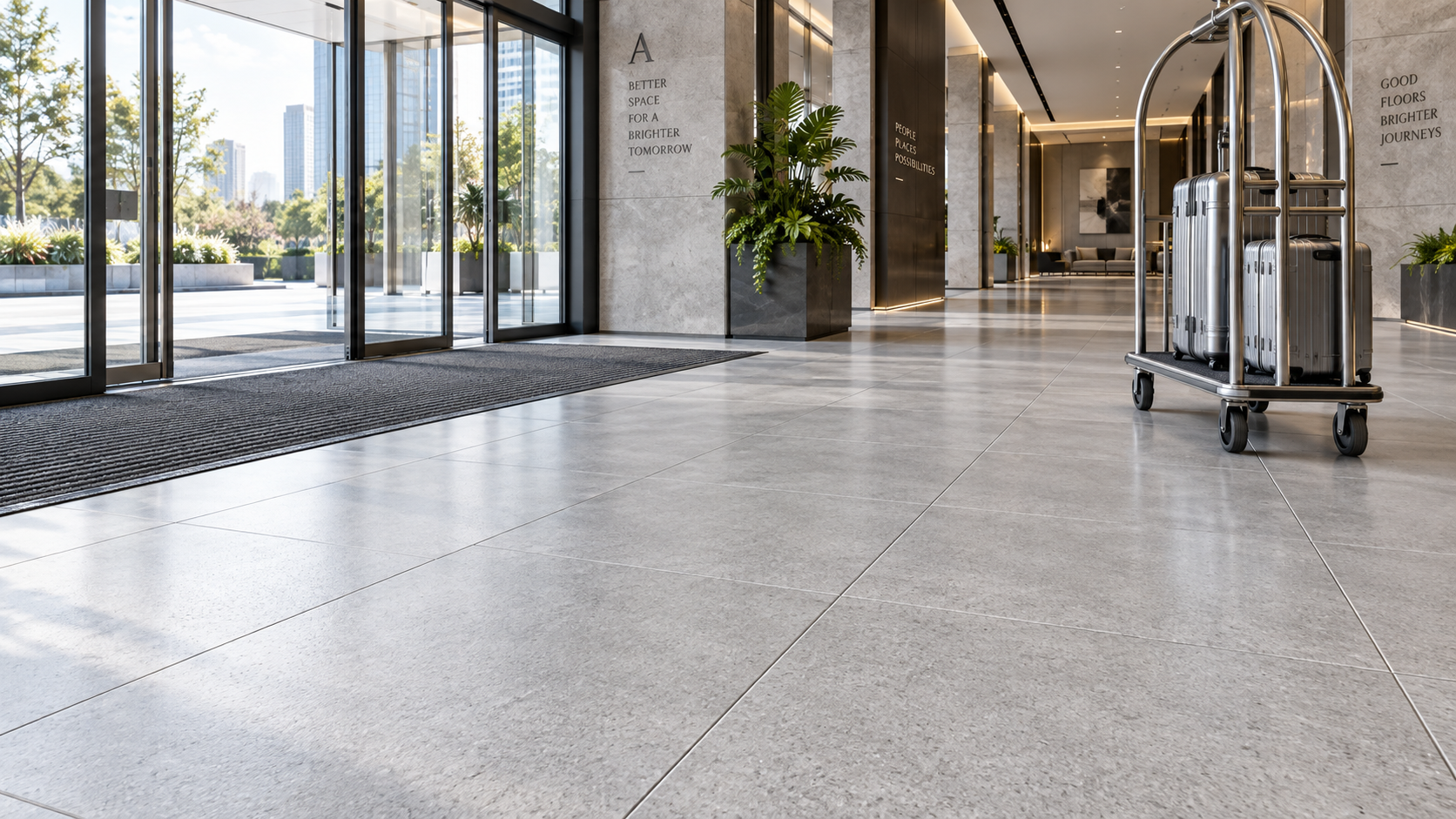
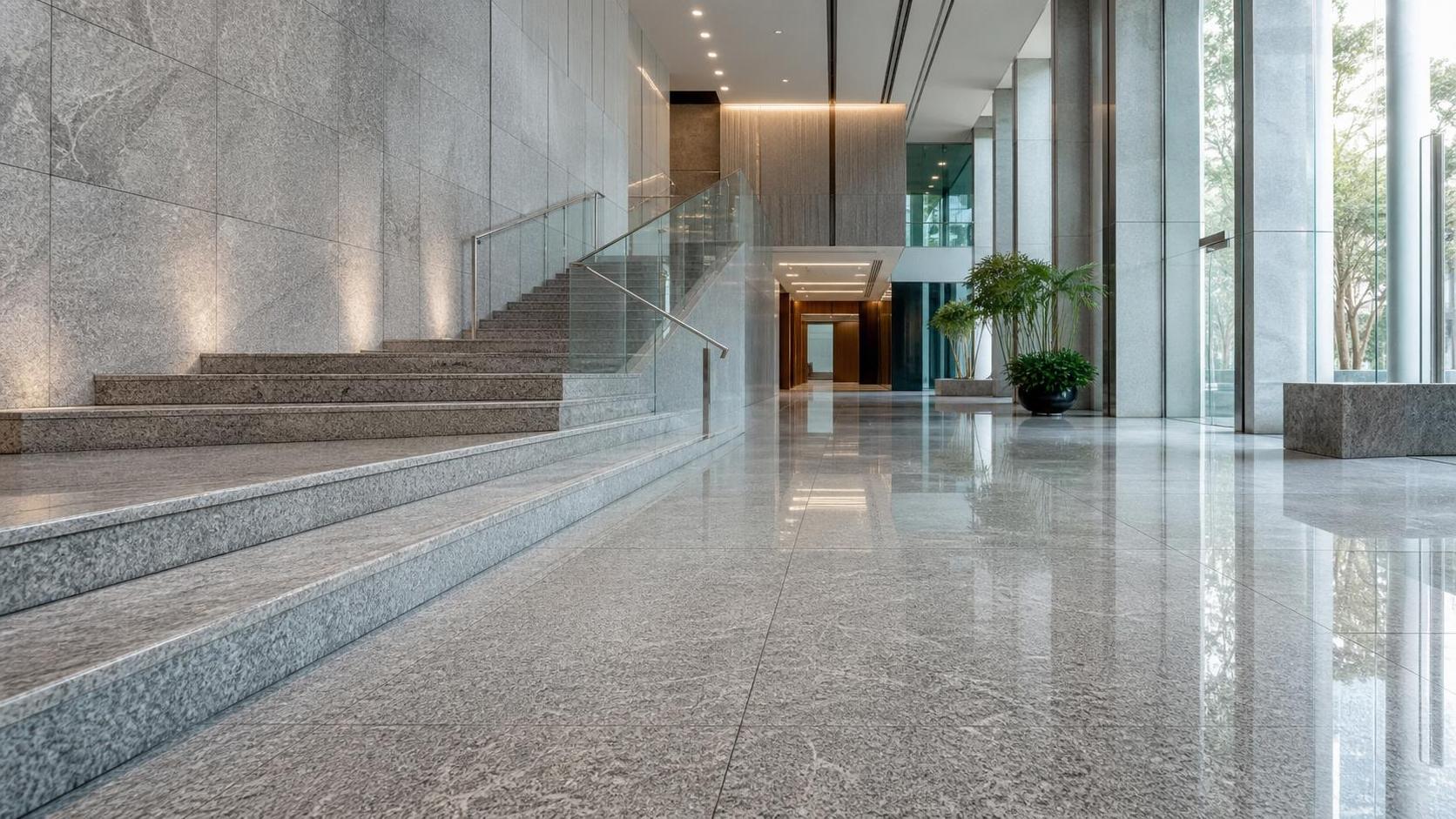
This matters most in entrances, corridors, shopping zones, and elevator lobbies.
These areas face constant foot traffic, dirt carry-in, wheeled loads, and repeated cleaning cycles.
Granite also supports a broad visual range, from uniform grey tones to more expressive patterns.
That flexibility helps teams match durability goals with branding, lighting, and architectural style.
How Granite Handles Daily Wear
For high-traffic flooring, the first question is usually wear resistance.
Granite generally performs well because its mineral composition can tolerate repeated abrasion.
A well-selected granite surface keeps its structure longer under steady pedestrian flow.
However, finish choice changes the result.
- Polished granite offers a premium look but may show traffic lanes faster.
- Honed granite softens glare and hides wear more effectively.
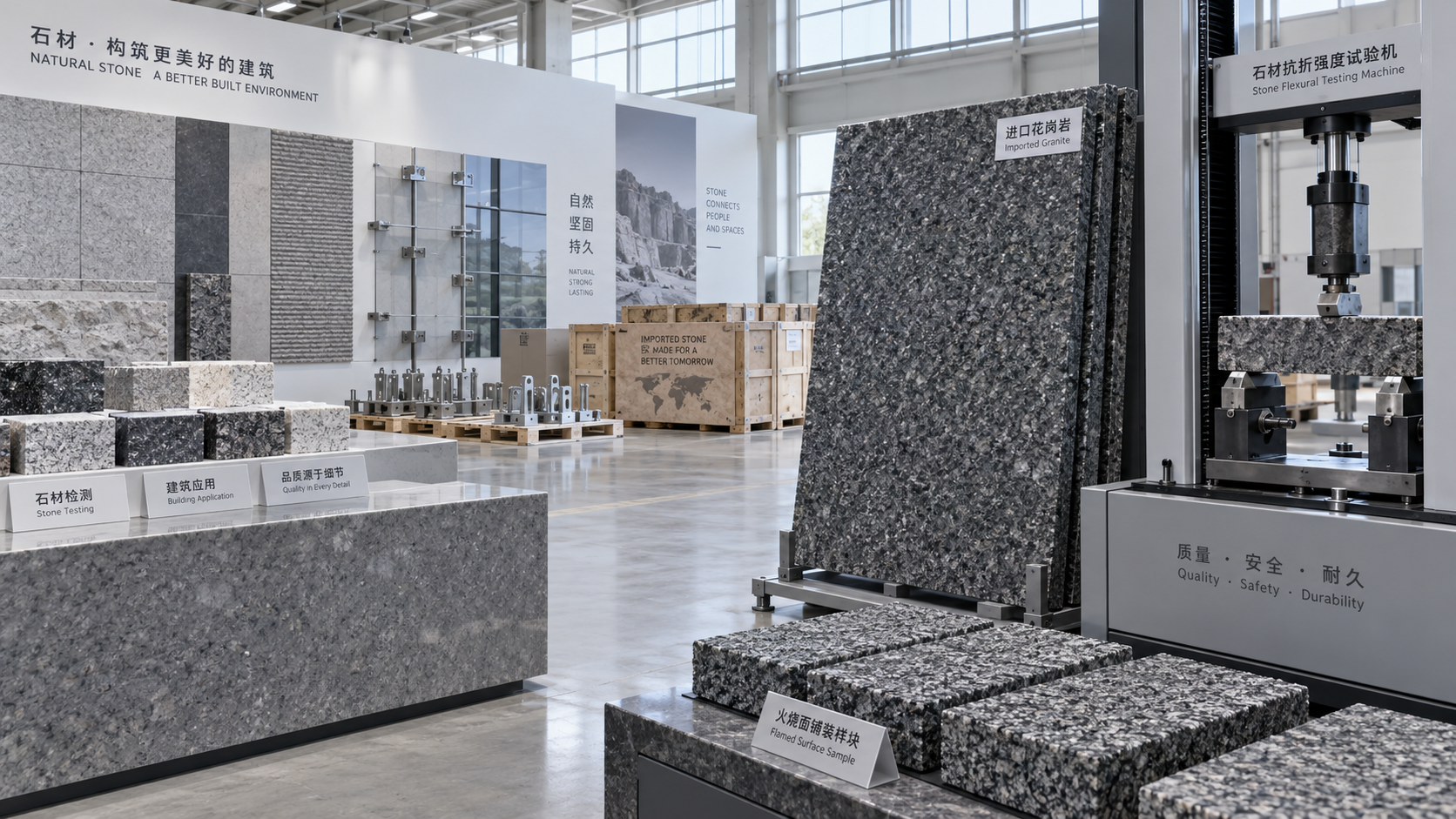
- Flamed or textured granite improves grip in exterior or wet zones.
From a lifecycle view, the best granite solution is rarely just the hardest stone.
It is the combination of suitable finish, thickness, and subfloor preparation.
Safety, Maintenance, and Long-Term Appearance
In commercial projects, slip resistance is as important as appearance.
Granite can be safe in busy spaces, but surface treatment must match the risk profile.
A polished lobby near a rainy entrance may look impressive but create avoidable hazards.
That is why many projects use transition mats, drainage planning, and less reflective finishes.
Maintenance is another decisive factor.
Granite is relatively easy to maintain, but it is not maintenance-free.
Routine dust removal limits abrasive grit.
Periodic sealing helps reduce moisture absorption and staining, especially in food or hospitality settings.
Using the wrong cleaner can dull the surface over time.
So maintenance guidance should be defined before handover, not after complaints appear.
Where Granite Works Best and Where Caution Is Needed
Granite performs especially well in interior floors, wall cladding, counters, and stair zones with heavy use.
It is often a strong fit for hotel entrances, office reception areas, malls, banks, and civic buildings.
Even so, not every granite application delivers the same return.
Projects should review several risks early:
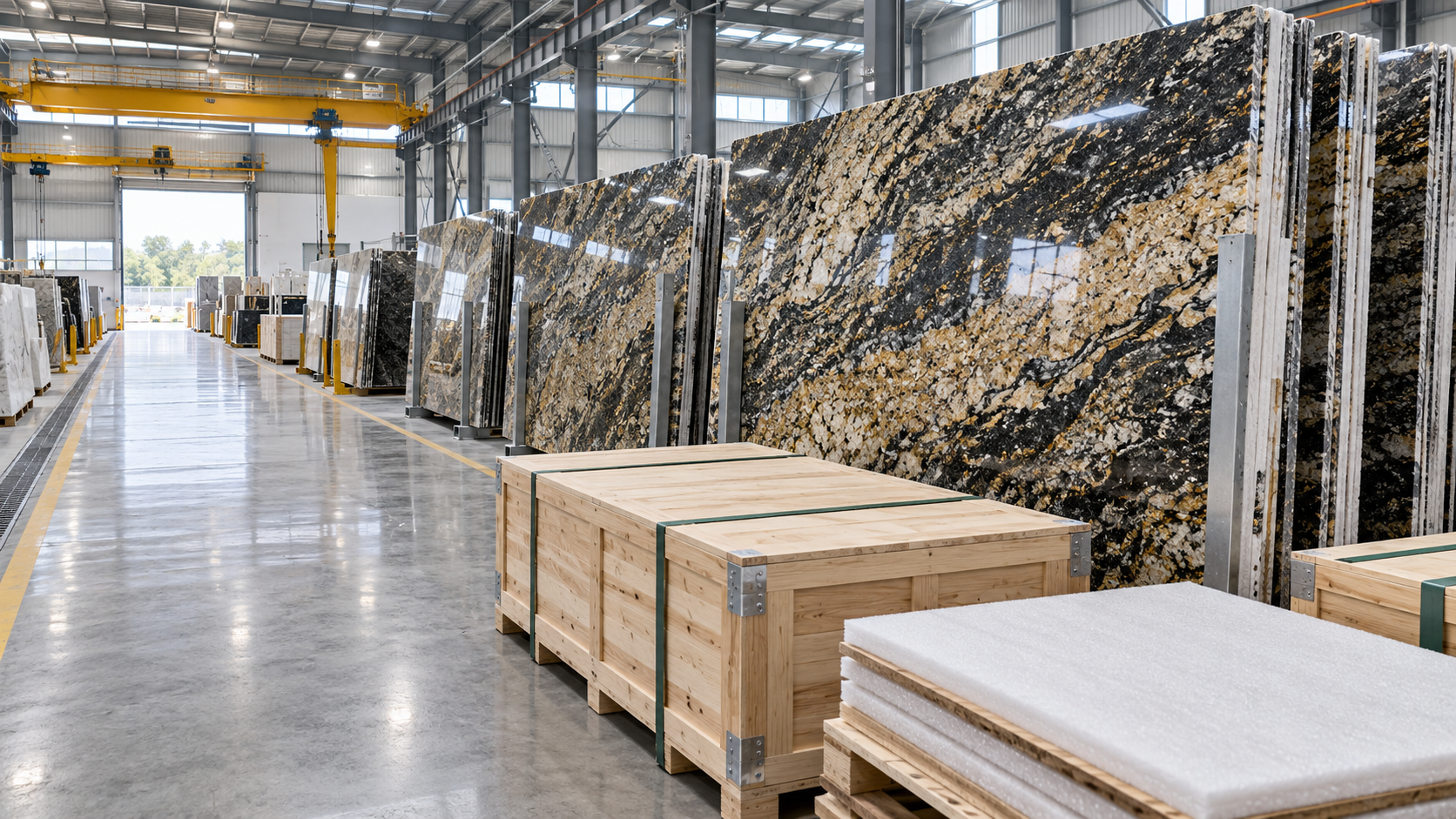
- Inconsistent slab batches can create visible variation.
- Weak installation systems may lead to cracking or edge failure.
- Highly glossy granite may reveal dirt, scuffs, and moisture marks faster.
- Some imported granite options carry longer lead times or certification questions.
These issues do not make granite unsuitable.
They simply mean sourcing and specification must be handled with discipline.
A Practical Selection Framework for Commercial Projects
When evaluating granite for a high-traffic commercial space, a simple checklist helps avoid expensive corrections later.
- Define the traffic level, wheeled load exposure, and cleaning frequency.
- Match the granite finish to slip resistance and maintenance expectations.
- Check stone consistency, test reports, and supply reliability.
- Confirm thickness, edge details, and installation method with the substrate condition.
- Plan sealing, cleaning products, and replacement strategy before operation begins.
This approach keeps the granite decision tied to real operating conditions.
It also improves budget control because upfront choices reduce avoidable repair and downtime.
Final Takeaway
Granite remains one of the more reliable surface materials for high-traffic commercial spaces.
Its value comes from durability, solid visual retention, and flexibility across many building types.
The better signal is not whether granite is good in general.
It is whether the selected granite matches traffic, safety, maintenance, and sourcing realities.
When performance criteria are defined early, granite can support a longer service life and a more stable operating cost profile.
Technical Specifications
- How to test melt flow consistency in batches of recycled plasticsAuthor :Polymers & Rubber Editorial Team
- When does a cast resin transformer need high-altitude derating?Author :Electrical Components Editorial Team
- How to verify Global Industrial Insights sourcing informationAuthor :Industrial Machinery Editorial Team
Expert Insights

Chief Security Architect
Dr. Thorne specializes in the intersection of structural engineering and digital resilience. He has advised three G7 governments on industrial infrastructure security.
Core Sector // 01
Security & Safety
- How to measure for cut-to-size marble before placing an orderAuthor :Construction Materials Editorial Team

- What to verify before placing an order with a ceramic tiles supplierAuthor :Construction Materials Editorial Team

- How to prevent outdoor porcelain tiles from cracking in freeze-thaw conditionsAuthor :Construction Materials Editorial Team

- How to assess quality consistency from a granite exporter in BrazilAuthor :Construction Materials Editorial Team

- Which compliance standards apply to imported granite for building projects?Author :Construction Materials Editorial Team

- How to choose ceramic tiles for bathroom floors with better slip resistanceAuthor :Construction Materials Editorial Team

- When are porcelain wall tiles the right choice for shower walls?Author :Construction Materials Editorial Team

- How to choose porcelain floor tiles for high-traffic areasAuthor :Construction Materials Editorial Team